


An individual differences approach to semantic cognition: Divergent effects of age on representation, retrieval and selection
- PMID: 29802344
- PMCID: PMC5970266
- DOI: 10.1038/s41598-018-26569-0
An individual differences approach to semantic cognition: Divergent effects of age on representation, retrieval and selection
Abstract
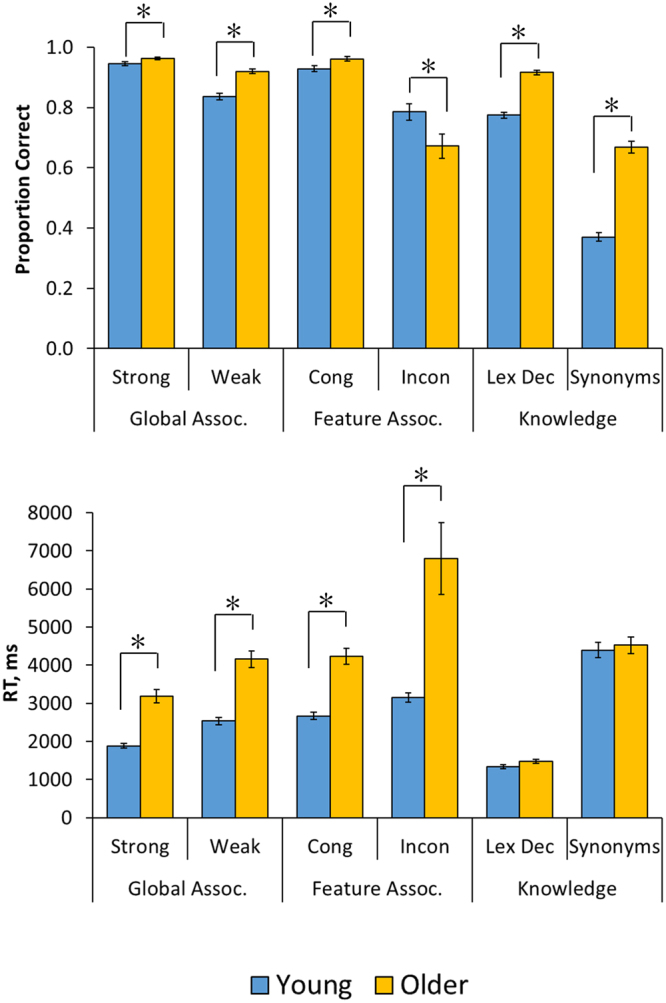
Semantic cognition refers to the appropriate use of acquired knowledge about the world. This requires representation of knowledge as well as control processes which ensure that currently-relevant aspects of knowledge are retrieved and selected. Although these abilities can be impaired selectively following brain damage, the relationship between them in healthy individuals is unclear. It is also commonly assumed that semantic cognition is preserved in later life, because older people have greater reserves of knowledge. However, this claim overlooks the possibility of decline in semantic control processes. Here, semantic cognition was assessed in 100 young and older adults. Despite having a broader knowledge base, older people showed specific impairments in semantic control, performing more poorly than young people when selecting among competing semantic representations. Conversely, they showed preserved controlled retrieval of less salient information from the semantic store. Breadth of semantic knowledge was positively correlated with controlled retrieval but was unrelated to semantic selection ability, which was instead correlated with non-semantic executive function. These findings indicate that three distinct elements contribute to semantic cognition: semantic representations that accumulate throughout the lifespan, processes for controlled retrieval of less salient semantic information, which appear age-invariant, and mechanisms for selecting task-relevant aspects of semantic knowledge, which decline with age and may relate more closely to domain-general executive control.
Conflict of interest statement
The author declares no competing interests.
Figures

References
Publication types
MeSH terms
Grants and funding
LinkOut - more resources
Full Text Sources
Other Literature Sources
Medical
