


A new, simple, automatic vitrification device: preliminary results with murine and bovine oocytes and embryos
- PMID: 29802518
- PMCID: PMC6063841
- DOI: 10.1007/s10815-018-1210-9
A new, simple, automatic vitrification device: preliminary results with murine and bovine oocytes and embryos
Abstract
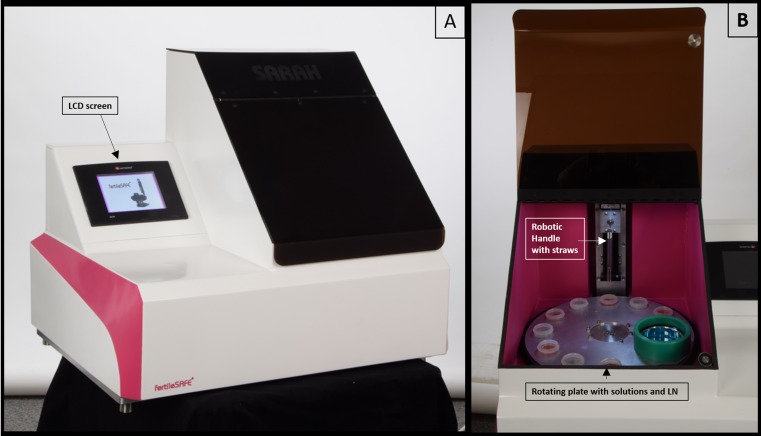
Purpose: This paper reports the use of a novel automatic vitrification device (Sarah, Fertilesafe, Israel) for cryopreservation of oocytes and embryos.
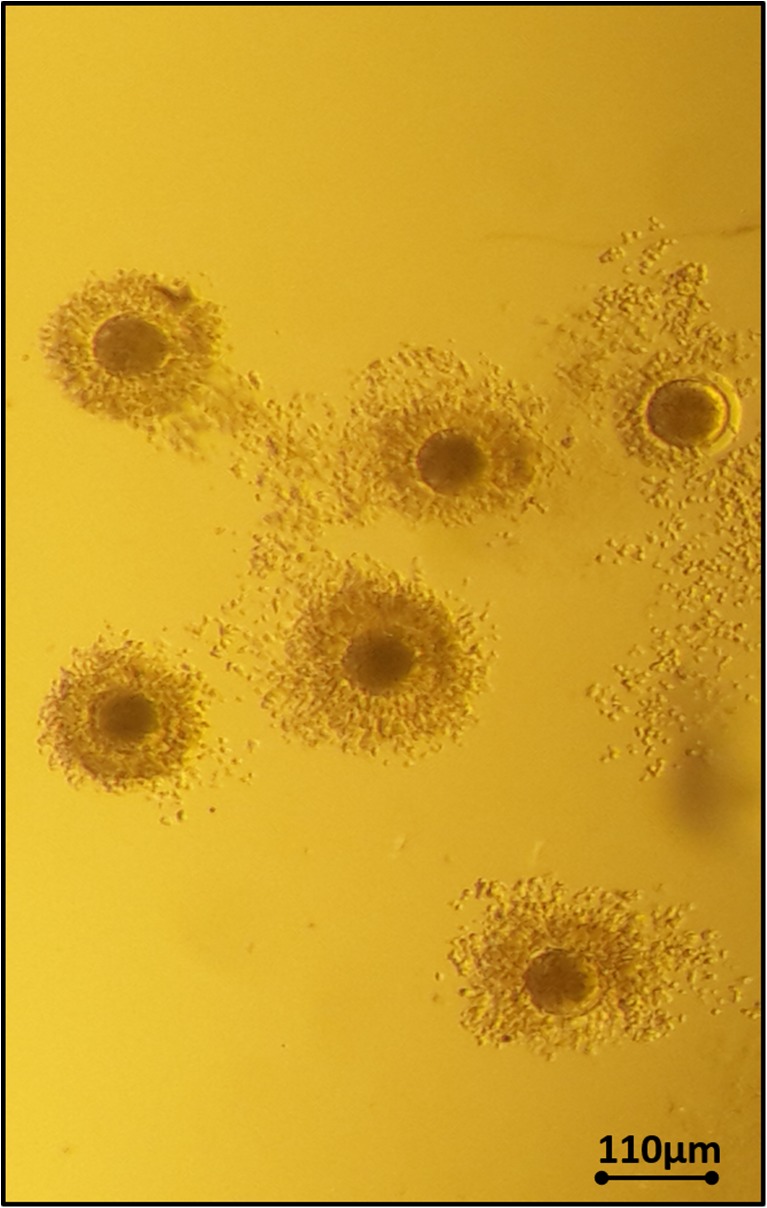
Methods: Mice oocytes (n = 40) and embryos (8 cells, n = 35 and blastocysts, n = 165), bovine embryos (2PN, n = 35), and MII oocytes (n = 84) were vitrified using this automated device. A total of 42 (2 cells) mice embryos, 20 (2PN) bovine embryos, and 150 MII bovine oocytes were used as fresh controls and grown to blastocysts. Upon rewarming, all were assessed for viability, cleavage, blastocyst, and hatching rates.
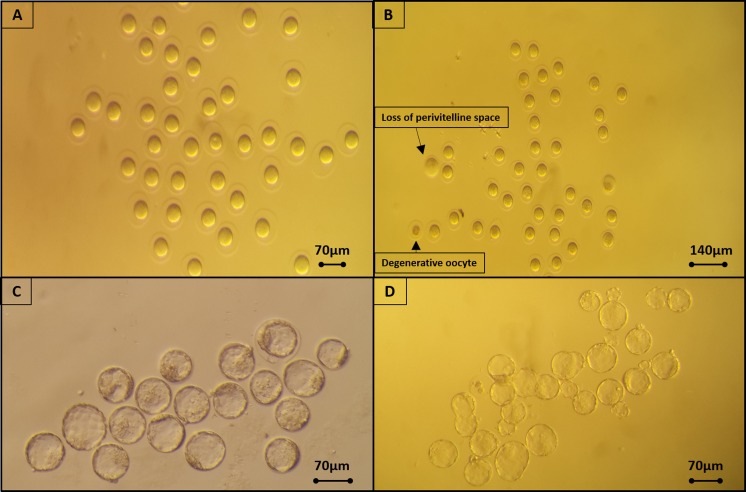
Results: Ninety-five % (38/40) of the mice MII oocytes regained isotonic volumes and all (100%) the surviving were viable. Rewarmed 8-cell mice embryos had 95% (33/35) blastulation rate and 80% (28/35) hatched. Rewarmed mice blastocysts had 97% survival rate (160/165) and 81% (135/165) hatched. Fresh control mice embryos had 100% (42/42) blastulation and 73% (21/42) hatching rates. Bovine embryos' survival was 100% with 54% (19/35) cleavage and 9% (3/35) blastulation rate. Fresh control bovine embryos had 65% (13/20) cleavage and 20% (4/20) blastulation rate. Vitrified bovine oocytes had 100% survival (84/84), 73% (61/84) cleavage, and 7% (6/84) blastocysts' rates; fresh control had 83% (125/150) cleavage and 11% (17/150) blastocysts' rates.
Conclusion: This novel automatic vitrification device is capable to produce high survival rates of oocytes and embryos. We anticipate that as the demand for vitrification of gametes, embryos, and reproductive tissues increases worldwide, the availability of an automated vitrification device will become indispensable for standardization, simplification, and reproducibility of the entire process.
Keywords: Automation; Cryopreservation; Embryos; Oocytes; Vitrification.
Figures
References
-
- Rienzi L, Gracia C, Maggiulli R, LaBarbera AR, Kaser DJ, Ubaldi FM, Vanderpoel S, Racowsky C. Oocyte, embryo and blastocyst cryopreservation in ART: systematic review and meta-analysis comparing slow freezing versus vitrification to produce evidence for the development of global guidance. Hum Reprod Update. 2017;23(2):139–155. - PMC - PubMed
MeSH terms
LinkOut - more resources
Full Text Sources
Other Literature Sources
