


Resilience and White Matter Integrity in Geriatric Depression
- PMID: 29803529
- PMCID: PMC6086733
- DOI: 10.1016/j.jagp.2018.04.004
Resilience and White Matter Integrity in Geriatric Depression
Abstract
Objective: Greater psychological resilience may protect against developing depression in a growing geriatric population. Identifying the neural correlates of resilience in geriatric depression could provide neurobiologic targets to inform clinical interventions. However, most prior neuroimaging studies have only considered the presence or absence of resilience and have not addressed the multifactorial nature of resilience. The current study aimed to establish the neural correlates of four factors of resilience in the depressed elderly.
Methods: White matter integrity was assessed using diffusion-weighted magnetic resonance imaging data collected from 70 older adults with major depressive disorder. We used four resilience factors previously derived in an exploratory factor analysis of the Connor-Davidson Resilience Scale in a large sample of depressed older adults: 1, grit; 2, active coping self-efficacy; 3, accommodative coping self-efficacy; and 4, spirituality.
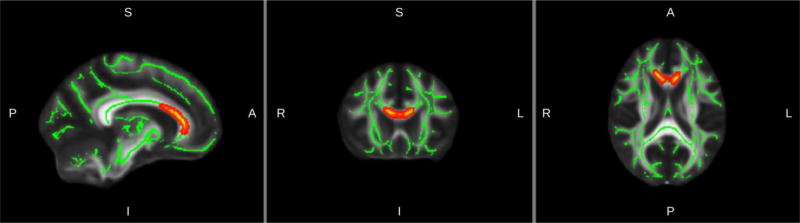
Results: The resilience factor "grit" was positively associated with fractional anisotropy in the callosal region connecting prefrontal cortex and fractional anisotropy in cingulum fibers; however, the latter did not survive correction for multiple comparisons.
Conclusion: Structural integrity of major white matter pathways implicated in cognitive control and emotion regulation (i.e., connecting prefrontal cortex) was positively associated with the resilience factor "grit" in our sample of older adults with depression. Prospective studies are needed to determine the utility of the structural integrity of these pathways as a biomarker in predicting risk for depression and treatment response.
Keywords: Connor-Davidson Resilience Scale; DTI; MRI; White matter; geriatric depression; grit; major depressive disorder.
Copyright © 2018 American Association for Geriatric Psychiatry. Published by Elsevier Inc. All rights reserved.
Conflict of interest statement
Conflicts of interest: Dr. Lavretsky received research support from Allergan/ Forest Laboratories. The remaining authors declare no conflicts of interest.
Figures

Comment in
-
Commentary on "Resilience and White Matter Integrity in Geriatric Depression".Am J Geriatr Psychiatry. 2018 Aug;26(8):884-885. doi: 10.1016/j.jagp.2018.05.009. Epub 2018 Jun 18. Am J Geriatr Psychiatry. 2018. PMID: 30001925 No abstract available.
References
-
- He W, Goodkind D, Kowal P. An Aging World 2015 [updated March 2016. United States Census Bureau website.] Available from: https://www.census.gov/library/publications/2016/demo/P95-16-1.html.
-
- Luppa M, Sikorski C, Luck T, Ehreke L, Konnopka A, Wiese B, et al. Age- and gender-specific prevalence of depression in latest-life--systematic review and meta-analysis. Journal of affective disorders. 2012;136:212–21. - PubMed
-
- Wald J, Taylor S, Asmundson GJG, Jang L, Stapleton J, editors. Literature review of concepts: psychological resiliency. Toronto (ON): Defence R&D Canada: 2006.
-
- MacLeod S, Musich S, Hawkins K, Alsgaard K, Wicker ER. The impact of resilience among older adults. Geriatric nursing (New York, NY) 2016;37:266–72. - PubMed
Publication types
MeSH terms
Grants and funding
LinkOut - more resources
Full Text Sources
Other Literature Sources
Miscellaneous
