


Motherhood increases support for family planning among Kenyan adolescents
- PMID: 29804756
- PMCID: PMC5975971
- DOI: 10.1016/j.srhc.2018.03.002
Motherhood increases support for family planning among Kenyan adolescents
Abstract
Objective: Adolescent fertility rates are high in Kenya, and increase the risks of unintended repeat pregnancies and maternal and infant morbidity and mortality. Our objective was to examine knowledge, practices, and influences surrounding contraceptive access and use among Kenyan postpartum adolescents.
Study design: We conducted a mixed methods study (surveys and focus group discussions) with postpartum adolescents and family planning (FP) providers at two maternal and child health clinics in Kenya.
Main outcome measures: Four focus group discussions (FGDs) were conducted with postpartum adolescents (stratified by age and site), and two FGDs were conducted with FP providers (stratified by site). Transcripts were analyzed for prevalent themes. The participants also completed individual surveys that were analyzed for contraceptive knowledge.
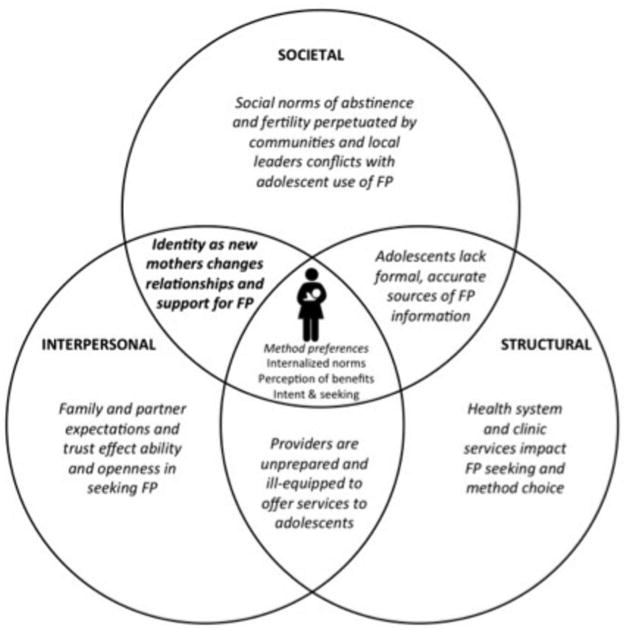
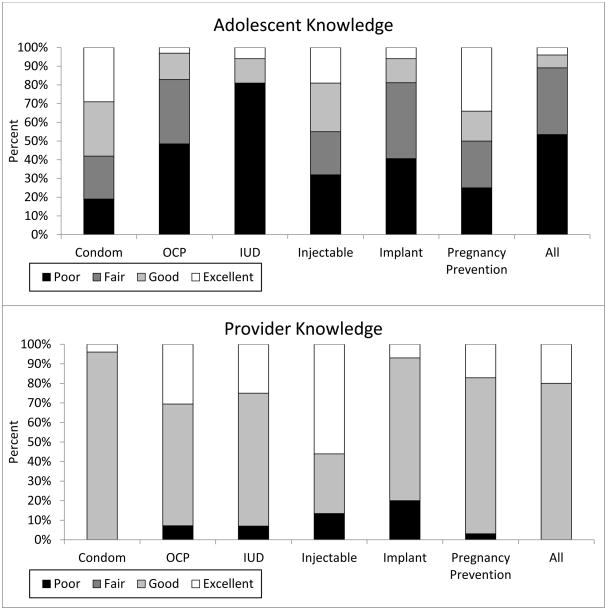
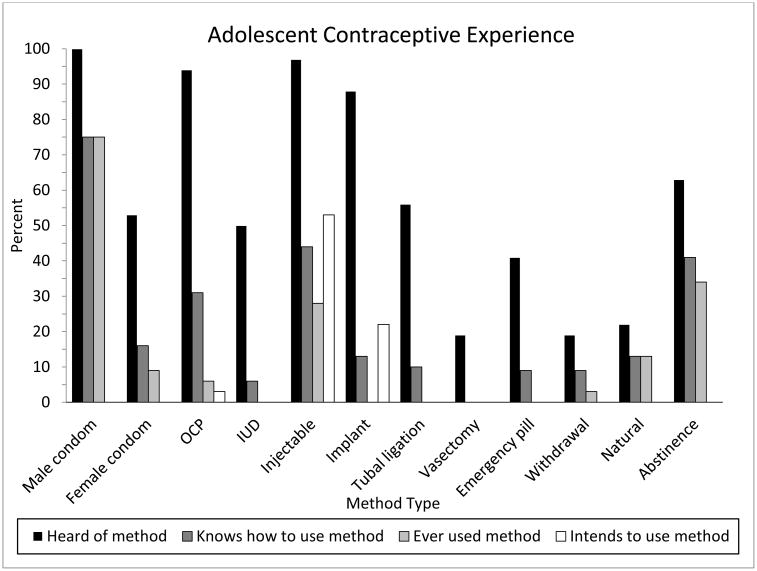
Results: Adolescent contraceptive decision-making and use were shaped by social norms of adolescent sexual behaviour. Lack of FP knowledge, community misinformation, and insufficient counselling and time with providers all contributed to adolescent concerns about FP. However, as adolescents transitioned to motherhood, they felt more encouraged to use FP and had increased awareness of FP benefits.
Conclusion: Both postpartum adolescents and providers felt delivery of FP services could be improved if providers had better training and counselling tools.
Keywords: Adolescent; Contraception; Family planning; Kenya; Postpartum.
Copyright © 2018 Elsevier B.V. All rights reserved.
Figures
References
-
- DHS (Demographic Health Services) Program. [accessed 4 August 2016];Statcompiler. 2014 http://beta.statcompiler.com/
MeSH terms
Grants and funding
LinkOut - more resources
Full Text Sources
Other Literature Sources
