Current situation and future prospects for beef production in Europe - A review
- PMID: 29807416
- PMCID: PMC6039334
- DOI: 10.5713/ajas.18.0196
Current situation and future prospects for beef production in Europe - A review
Abstract
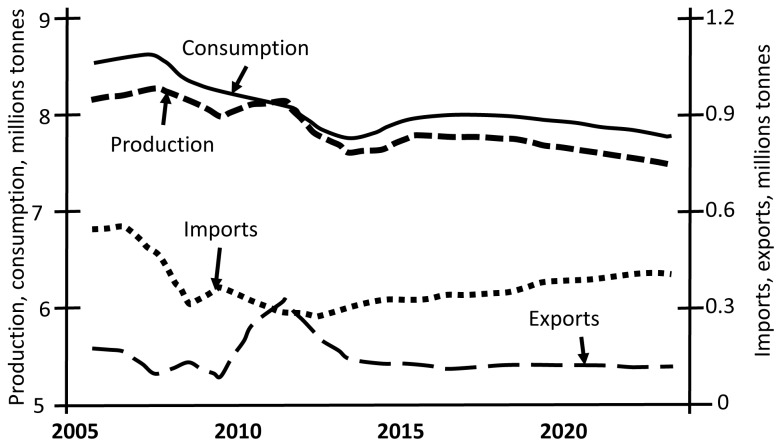
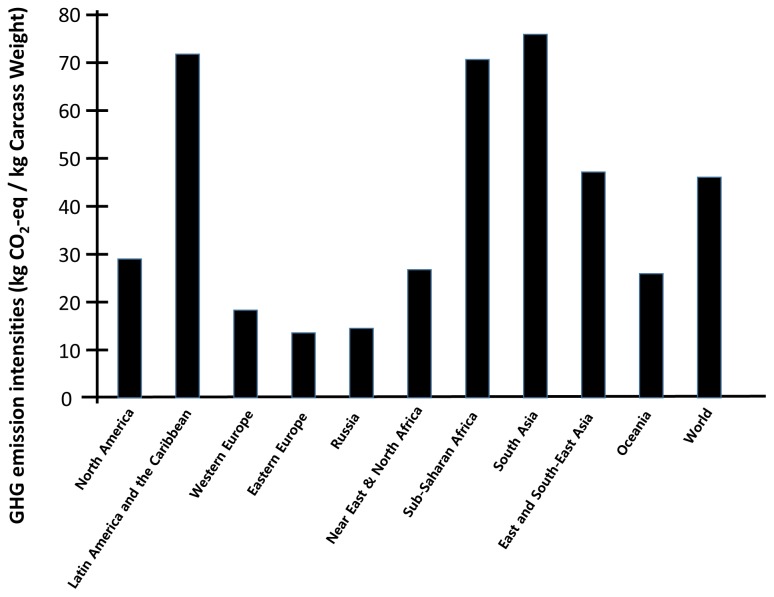
The European Union (EU) is the world's third largest producer of beef. This contributes to the economy, rural development, social life, culture and gastronomy of Europe. The diversity of breeds, animal types (cows, bulls, steers, heifers) and farming systems (intensive, extensive on permanent or temporary pastures, mixed, breeders, feeders, etc) is a strength, and a weakness as the industry is often fragmented and poorly connected. There are also societal concerns regarding animal welfare and environmental issues, despite some positive environmental impacts of farming systems. The EU is amongst the most efficient for beef production as demonstrated by a relative low production of greenhouse gases. Due to regional differences in terms of climate, pasture availability, livestock practices and farms characteristics, productivity and incomes of beef producers vary widely across regions, being among the lowest of the agricultural systems. The beef industry is facing unprecedented challenges related to animal welfare, environmental impact, origin, authenticity, nutritional benefits and eating quality of beef. These may affect the whole industry, especially its farmers. It is therefore essential to bring the beef industry together to spread best practice and better exploit research to maintain and develop an economically viable and sustainable beef industry. Meeting consumers' expectations may be achieved by a better prediction of beef palatability using a modelling approach, such as in Australia. There is a need for accurate information and dissemination on the benefits and issues of beef for human health and for environmental impact. A better objective description of goods and services derived from livestock farming is also required. Putting into practice "agroecology" and organic farming principles are other potential avenues for the future. Different future scenarios can be written depending on the major driving forces, notably meat consumption, climate change, environmental policies and future organization of the supply chain.
Keywords: Consumer; Europe; Prospects; Supply Chain; Beef.
Conflict of interest statement
We certify that there is no conflict of interest with any financial organization regarding the material discussed in the manuscript.
Figures




References
-
- FAPRI US and World Agricultural Outlook [Internet] Ames, IA and Columbia, MO, USA: Iowa State University and University of Missouri; 2012. [cited 2018 Apr 24]. Available from: http://www.fapri.iastate.edu/outlook/2012/
-
- Metzger MJ, Murray-Rust D, Houtkamp J, et al. How do Europeans want to live in 2040? Citizen visions and their consequences for European land use. Reg Environ Change. 2018;18:789–802.
-
- Gerber PJ, Steinfeld H, Henderson B, et al. Tackling climate change through livestock – A global assessment of emissions and mitigation opportunities. Rome, Italy: Food and Agriculture Organization of the United Nations (FAO); 2013.
-
- Ryschawy J, Disenhaus C, Bertrand S, et al. Assessing multiple goods and services derived from livestock farming on a nation-wide gradient. Animal. 2017;11:1861–72. - PubMed
-
- Bouvard V, Loomis D, Guyton KZ, et al. International agency for research on cancer monograph working group. Carcinogenicity of consumption of red and processed meat. Lancet Oncol. 2015;16:1599–600. - PubMed
LinkOut - more resources
Full Text Sources
Other Literature Sources