


Accuracy of the Bayley-II mental development index at 2 years as a predictor of cognitive impairment at school age among children born extremely preterm
- PMID: 29808002
- PMCID: PMC6070417
- DOI: 10.1038/s41372-017-0020-8
Accuracy of the Bayley-II mental development index at 2 years as a predictor of cognitive impairment at school age among children born extremely preterm
Abstract
Objective: To describe the accuracy of the Bayley Scales of Infant Development-Second Edition (BSID-II) Mental Development Index (MDI) at 2 years of age for prediction of cognitive function at school age of children born extremely preterm.
Design: Study participants were enrolled in the Extremely Low Gestational Age Newborn Study between 2002 and 2004. Two-thirds of surviving children (n = 795) were assessed at 2 years with the BSID-II and at 10 years with an intelligence quotient (IQ) test. We computed test characteristics for a low MDI (<70), including predictive value positive.
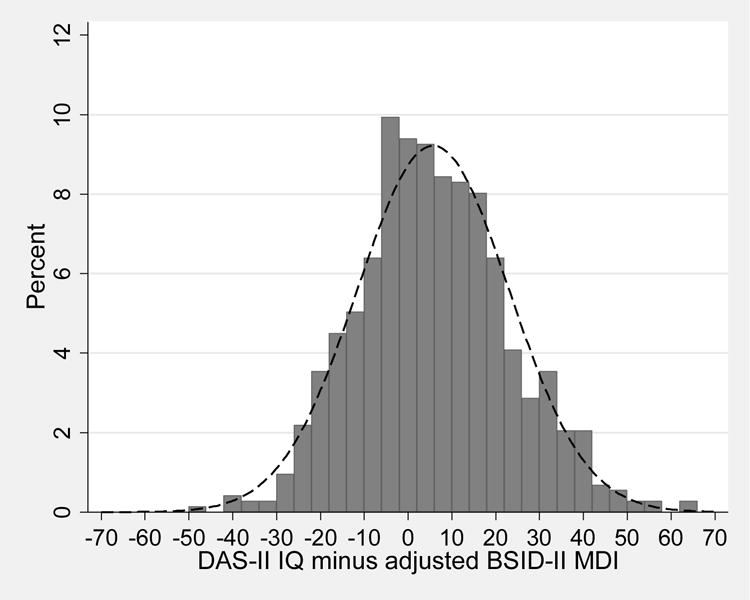
Results: Almost two-thirds of children with a low MDI had a normal IQ (≥ 70) at 10 years. Concordance between MDI and IQ was highest among children with major motor and/or sensory impairment, and when MDI was adjusted for gestational age.
Conclusion: Most children born extremely preterm with low BSID-II MDI at 2 years have normal intelligence at school age.
Conflict of interest statement
None of the authors has relevant financial interests, activities, relationships, or affiliations.
Figures
References
-
- Serenius F, Kallen K, Blennow M, Ewald U, Fellman V, Holmstrom G, et al. Neurodevelopmental Outcome in Extremely Preterm Infants at 2.5 Years After Active Perinatal Care in Sweden. Jama-Journal of the American Medical Association. 2013;309(17):1810–20. - PubMed
-
- Johnson S, Fawke J, Hennessy E, Rowell V, Thomas S, Wolke D, et al. Neurodevelopmental Disability Through 11 Years of Age in Children Born Before 26 Weeks of Gestation. Pediatrics. 2009;124(2):E249–E57. - PubMed
Publication types
MeSH terms
Grants and funding
LinkOut - more resources
Full Text Sources
Other Literature Sources
Medical
