


Genome-wide association meta-analysis highlights light-induced signaling as a driver for refractive error
- PMID: 29808027
- PMCID: PMC5980758
- DOI: 10.1038/s41588-018-0127-7
Genome-wide association meta-analysis highlights light-induced signaling as a driver for refractive error
Abstract
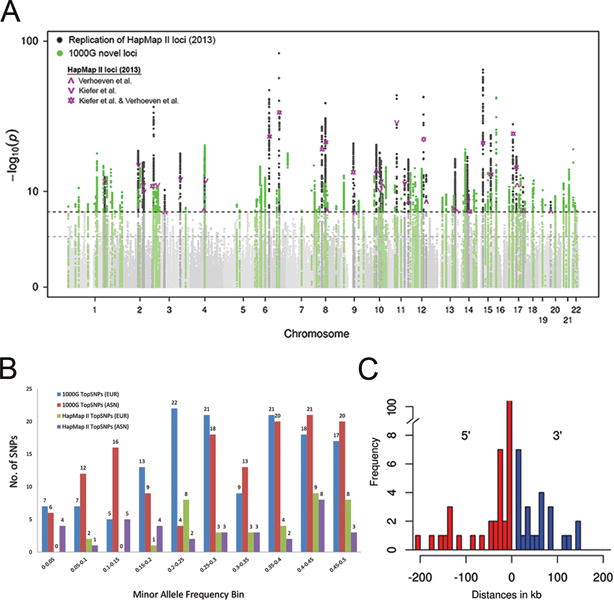
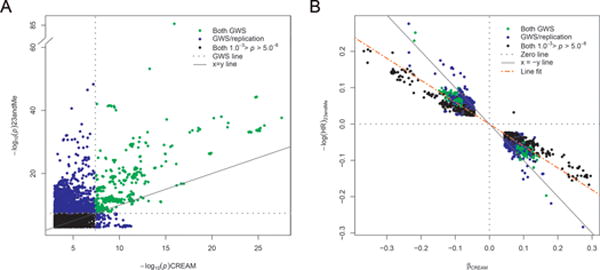
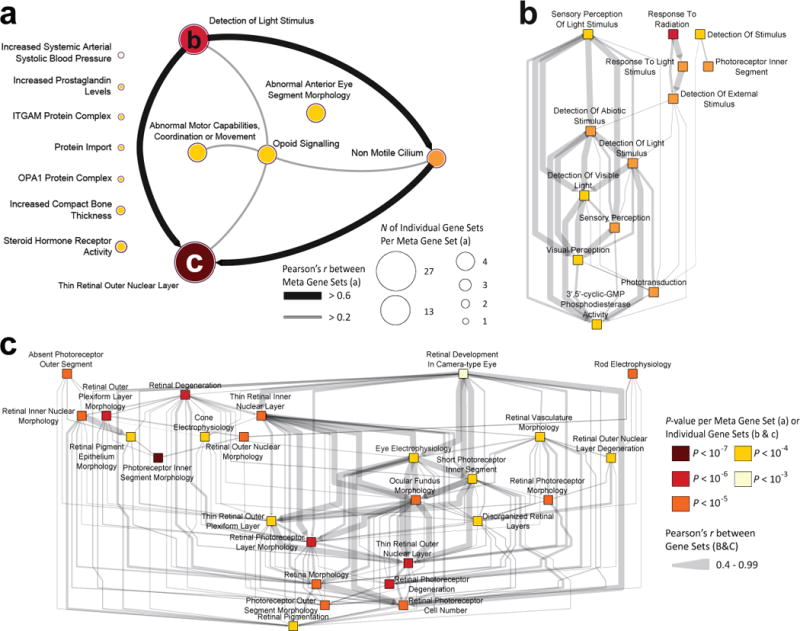
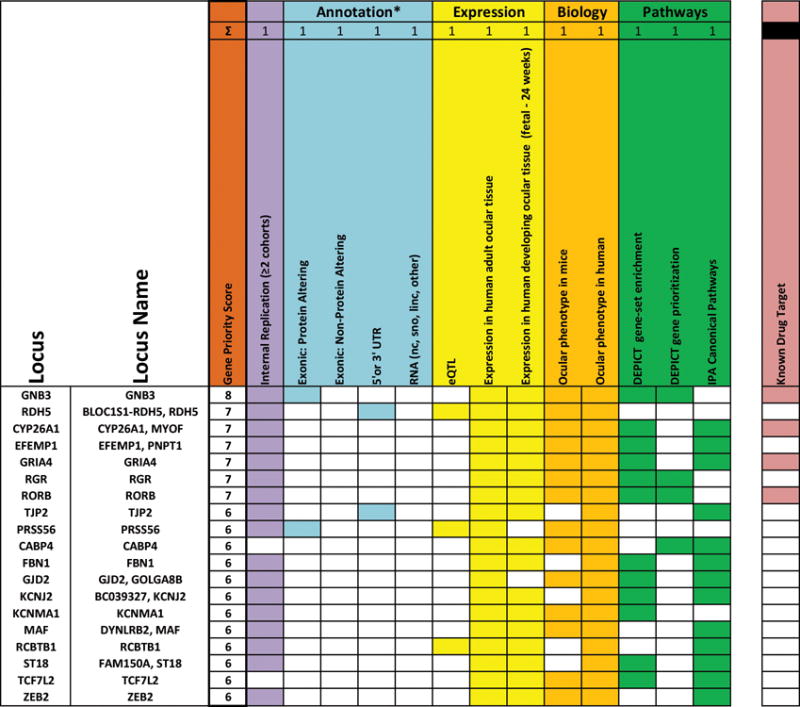
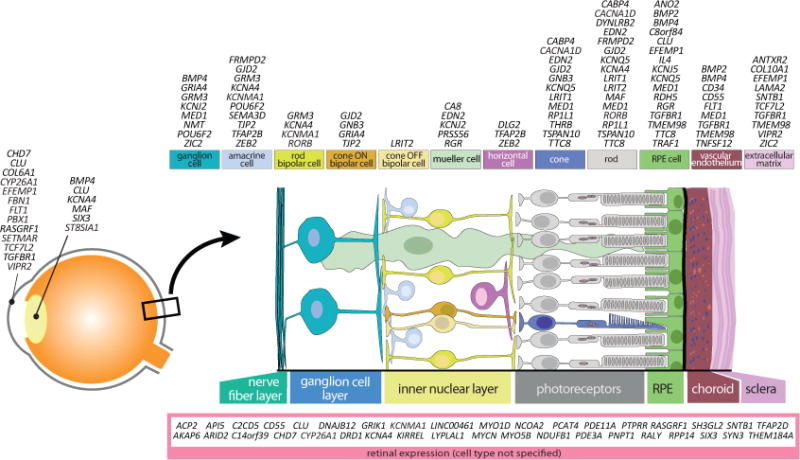
Refractive errors, including myopia, are the most frequent eye disorders worldwide and an increasingly common cause of blindness. This genome-wide association meta-analysis in 160,420 participants and replication in 95,505 participants increased the number of established independent signals from 37 to 161 and showed high genetic correlation between Europeans and Asians (>0.78). Expression experiments and comprehensive in silico analyses identified retinal cell physiology and light processing as prominent mechanisms, and also identified functional contributions to refractive-error development in all cell types of the neurosensory retina, retinal pigment epithelium, vascular endothelium and extracellular matrix. Newly identified genes implicate novel mechanisms such as rod-and-cone bipolar synaptic neurotransmission, anterior-segment morphology and angiogenesis. Thirty-one loci resided in or near regions transcribing small RNAs, thus suggesting a role for post-transcriptional regulation. Our results support the notion that refractive errors are caused by a light-dependent retina-to-sclera signaling cascade and delineate potential pathobiological molecular drivers.
Conflict of interest statement
N.A.F., N.E., J.Y.T., and the 23andMe Research Team are current or former employees of 23andMe, Inc., and hold stock or stock options in 23andMe. J.B. J. is a patent holder with Biocompatibles UK Ltd. (Franham, Surrey, UK) (Title: Treatment of eye diseases using encapsulated cells encoding and secreting neuroprotective factor and/or anti-angiogenic factor; Patent number: 20120263794), and patent application with University of Heidelberg (Heidelberg, Germany) (Title: Agents for use in the therapeutic or prophylactic treatment of myopia or hyperopia; European Patent Number: 3 070 101). The other authors declare no competing financial interests.
Figures
References
-
- Pan CW, Ramamurthy D, Saw SM. Worldwide prevalence and risk factors for myopia. Ophthalmic Physiol Opt. 2012;32:3–16. - PubMed
-
- Morgan IG. What Public Policies Should Be Developed to Deal with the Epidemic of Myopia? Optom Vis Sci. 2016;93:1058–60. - PubMed
-
- Morgan I, Rose K. How genetic is school myopia? Prog Retin Eye Res. 2005;24:1–38. - PubMed
-
- Morgan IG, Ohno-Matsui K, Saw SM. Myopia. Lancet. 2012;379:1739–48. - PubMed
Publication types
MeSH terms
Grants and funding
- MC_UU_00007/10/MRC_/Medical Research Council/United Kingdom
- CS-2014-14-023/DH_/Department of Health/United Kingdom
- MR/N003284/1/MRC_/Medical Research Council/United Kingdom
- R21 EY027880/EY/NEI NIH HHS/United States
- R01 EY024233/EY/NEI NIH HHS/United States
- MC_UU_12015/1/MRC_/Medical Research Council/United Kingdom
- 14136/CRUK_/Cancer Research UK/United Kingdom
- MC_UU_12013/4/MRC_/Medical Research Council/United Kingdom
- R01 EY014685/EY/NEI NIH HHS/United States
- G9815508/MRC_/Medical Research Council/United Kingdom
- G1000143/MRC_/Medical Research Council/United Kingdom
- K08 EY022943/EY/NEI NIH HHS/United States
- G19/2/MRC_/Medical Research Council/United Kingdom
- R01 EY020483/EY/NEI NIH HHS/United States
- G0401527/MRC_/Medical Research Council/United Kingdom
LinkOut - more resources
Full Text Sources
Other Literature Sources
Medical
