


Risk-reducing mastectomy rates in the US: a closer examination of the Angelina Jolie effect
- PMID: 29808287
- PMCID: PMC6096880
- DOI: 10.1007/s10549-018-4824-9
Risk-reducing mastectomy rates in the US: a closer examination of the Angelina Jolie effect
Abstract
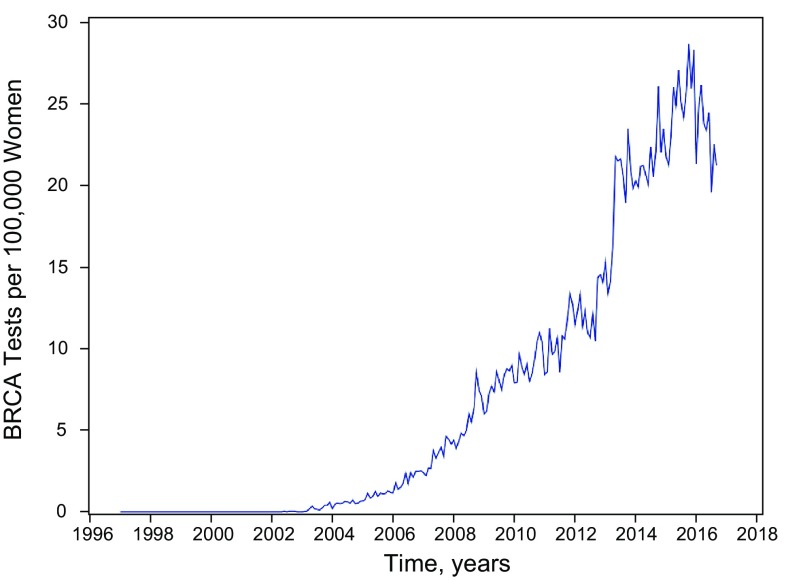
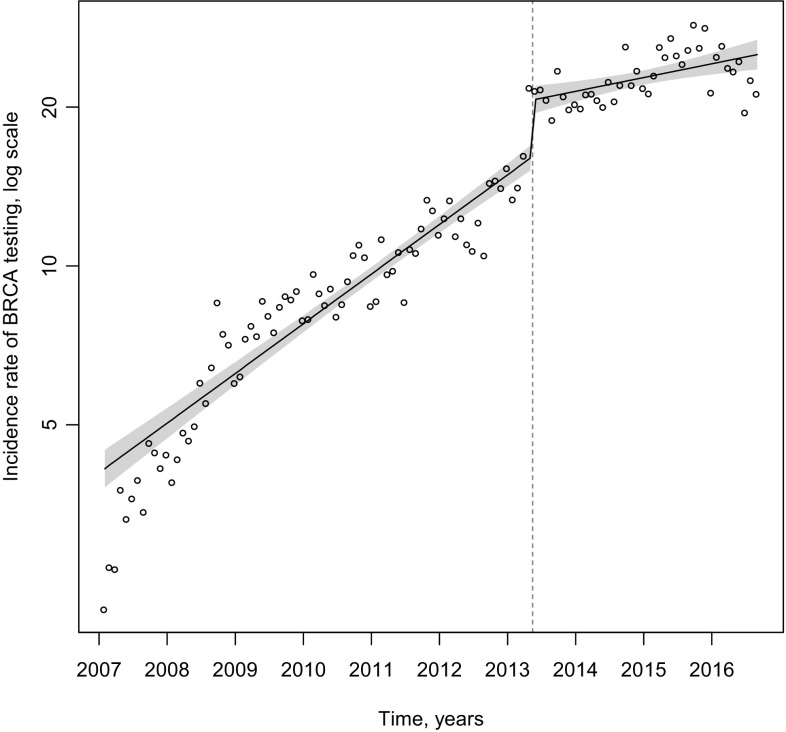
Purpose: In 2013, Angelina Jolie disclosed in the New York Times (NYT) that she had undergone risk-reducing bilateral mastectomy (RRBM) after learning that she was a BRCA1 mutation carrier. We examined the rates of BRCA testing and RRBM from 1997 to 2016, and quantified trends before and after the Jolie op-ed.
Methods: This observational study of insurance claims data representative of the commercially-insured US population (Truven MarketScan® database) measured BRCA testing and RRBM rates among females ≥ 18 years. Censoring events were breast cancer or ovarian cancer diagnosis, last follow-up date (September 2016), or death. Interrupted time series analyses were used to quantify trends before and after the op-ed.
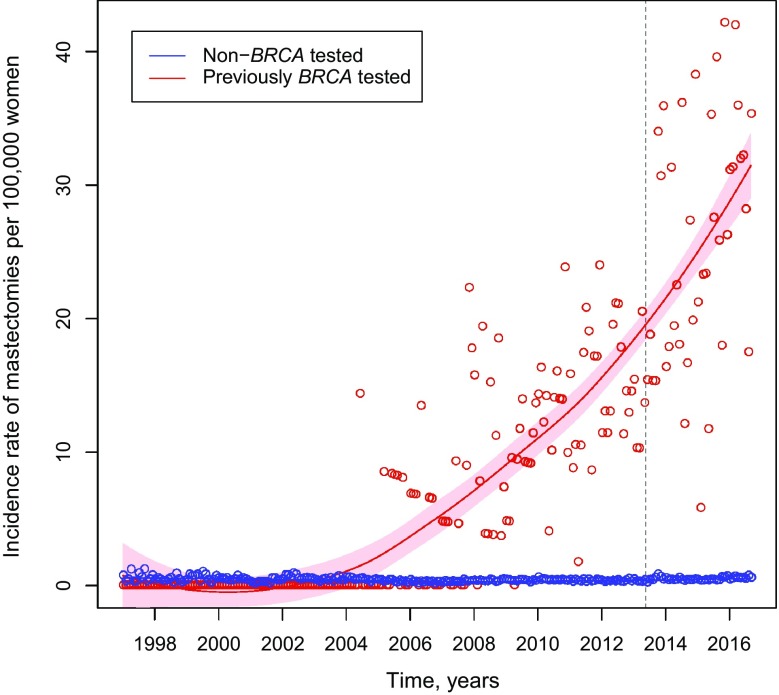
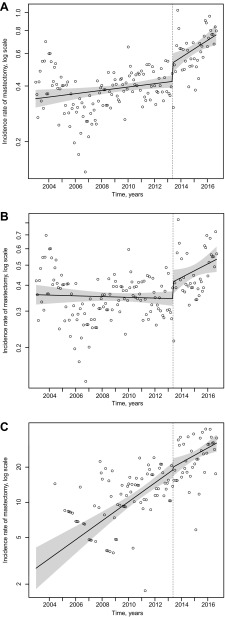
Results: Angelina Jolie's NYT op-ed led to a statistically significant increase in the uptake of genetic testing and in RRBM among women without previous diagnosis of breast or ovarian cancer in the US population, and in women who did not undergo testing for BRCA (P < 0.0001 for both). The rate (slope) of RRBM among women who were previously tested for BRCA (P = 0.70) was unchanged. After excluding women with in-situ tumors, the editorial's effect became less pronounced, suggesting that high-risk women with in-situ breast cancers were most influenced by Jolie's announcement.
Conclusion: The Angelina Effect-a term coined by Time magazine to describe the rise in internet searches related to breast cancer genetics and counseling-represents a long-lasting impact of celebrity on public health awareness as significant increases in genetic testing and mastectomy rates were observed and sustained in subsequent years.
Keywords: BRCA mutation; Bilateral mastectomy; Genetic testing.
Conflict of interest statement
This research was not supported by any specific funding. Statistical analysis and writing support provided by Amgen Inc.
Figures
References
-
- Jolie A (2013) My medical choice. New York Times, May 14, 2013. http://www.nytimes.com/2013/05/14/opinion/my-medical-choice.html. Accessed 20 May 2013
-
- Antoniou AC, Hardy R, Walker L, Evans DG, Shenton A, Eeles R, Shanley S, Pichert G, Izatt L, Rose S, et al. Predicting the likelihood of carrying a BRCA1 or BRCA2 mutation: validation of BOADICEA, BRCAPRO, IBIS, Myriad and the Manchester scoring system using data from UK genetics clinics. J Med Genet. 2008;45(7):425–431. doi: 10.1136/jmg.2007.056556. - DOI - PubMed
MeSH terms
LinkOut - more resources
Full Text Sources
Other Literature Sources
Medical
Miscellaneous
