


Curcuminoid Content and Safety-Related Markers of Quality of Turmeric Dietary Supplements Sold in an Urban Retail Marketplace in the United States
- PMID: 29808963
- PMCID: PMC6277232
- DOI: 10.1002/mnfr.201800143
Curcuminoid Content and Safety-Related Markers of Quality of Turmeric Dietary Supplements Sold in an Urban Retail Marketplace in the United States
Abstract
Scope: Turmeric is a top selling dietary supplement (DS) in the United States with rapidly expanding usage. Therefore, turmeric DS formulations available for sale in an urban US retail marketplace are analyzed, and point of sale information is related to measures of quality relevant to safety.
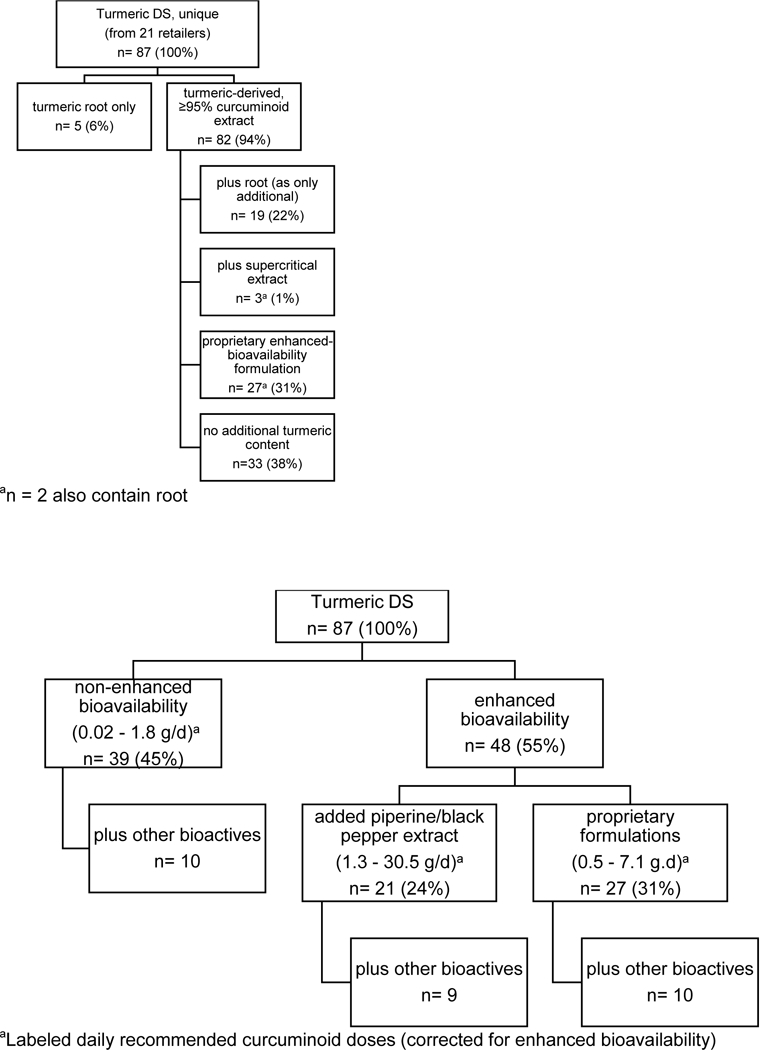
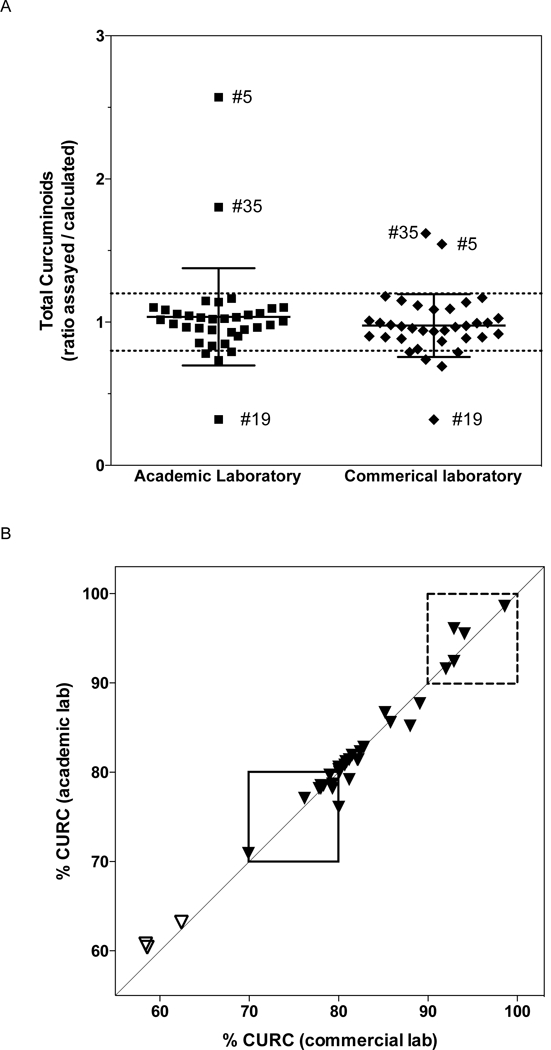
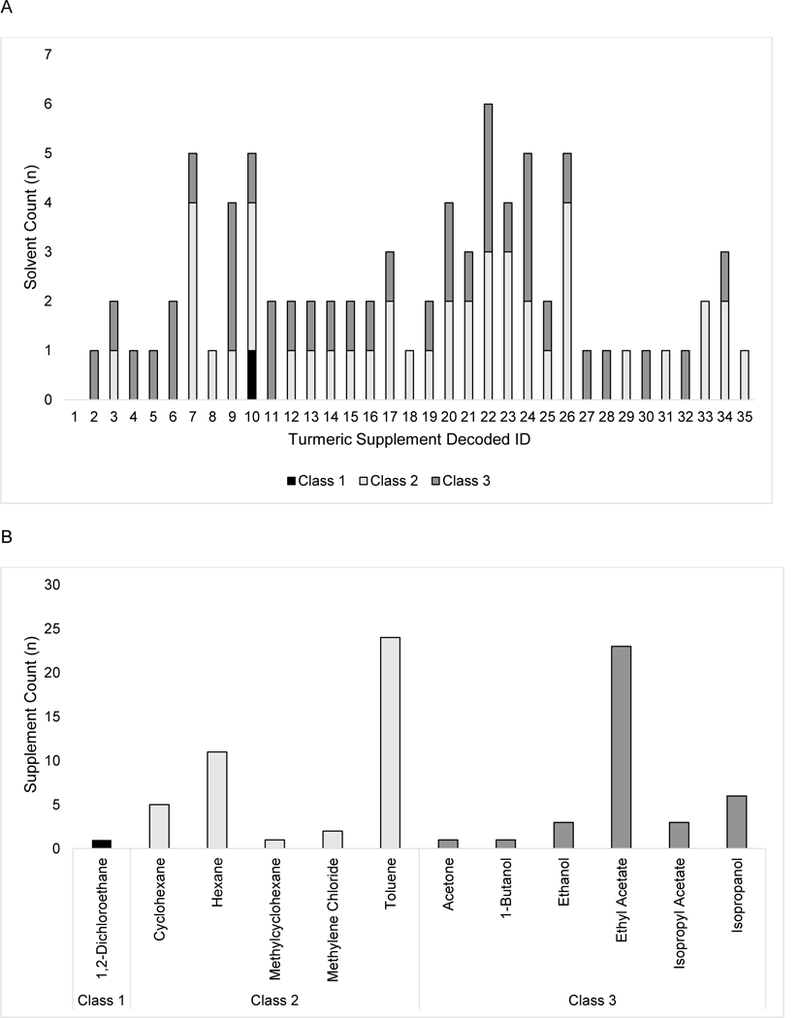
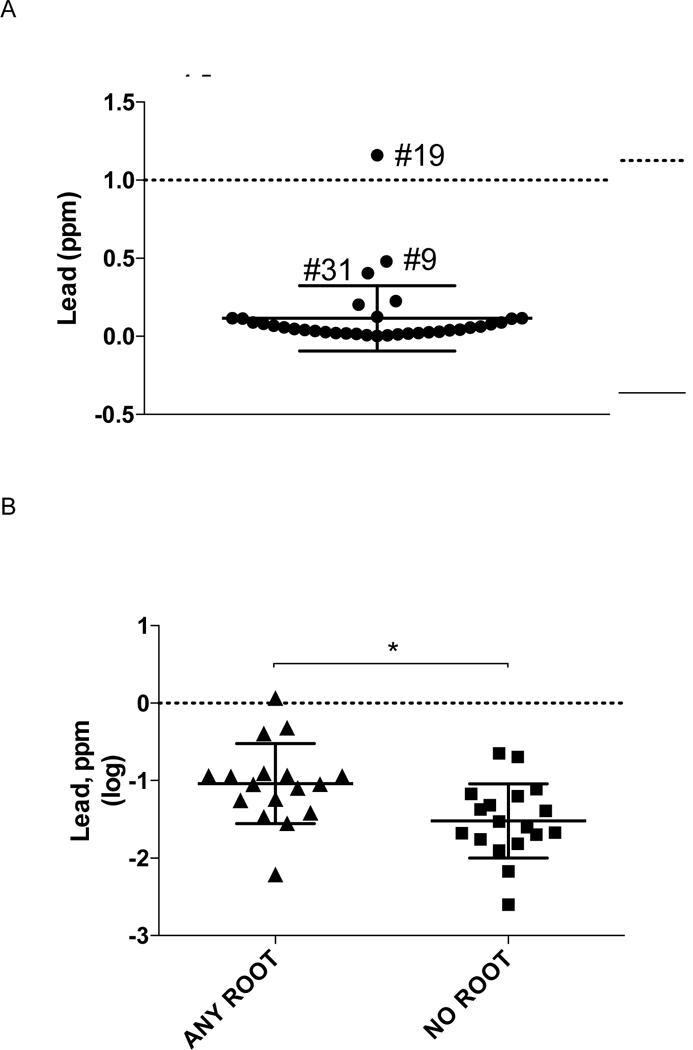
Methods and results: Eighty-seven unique turmeric DS are identified; a majority (94%) contained turmeric-derived curcuminoid extracts (TD-CE), which are combined with other bioactives in 47% of products, including piperine (24%), an additive that could alter the metabolism of concurrent medications. While curcuminoid content is within 80% of anticipated for a majority of products analyzed (n = 35), curcuminoid composition (% curcumin) did not meet US Pharmacopeia (USP) criteria for TD-CE in 59% and is suggestive of possible unlabeled use of synthetic curcumin in some. Lead content is associated with the inclusion of turmeric root and exceeded USP limits in one product. Residues of toxic class 1 or 2 solvents, which are not needed for TD-CE isolation, are present in 71% of products, although quantified levels were within USP-specified limits.
Conclusion: Assessment of turmeric DS quality at point of sale is difficult for consumers and may best be managed in partnership with knowledgeable healthcare professionals.
Keywords: curcumin; curcuminoids; dietary supplements; lead; solvents; turmeric.
© 2018 WILEY-VCH Verlag GmbH & Co. KGaA, Weinheim.
Conflict of interest statement
Figures
References
-
- Smith T, Kawa K, Eckl V, Johnson J, Sales of Herbal Dietary Supplements in Us Increased 7.5% in 2015. Consumers Spent $6.92 Billon on Herbal Supplements in 2015, Marking the 12th Consectuive Year of Growth. HerbalGram 2016, 67–73.
-
- Smith T, Kawa K, Eckl V, Morton C, Stredney R, Herbal Supplement Sales in Us Increase 7.7% in 2016. Consumer Preferences Shifting toward Ingredients with General Wellness Benefits, Driving Growth of Adaptogens and Digestive Health Products. HerbalGram 2017, 56–65.
-
- Pawar H, Karde M, Mundle N, Jadhav P, Mehra K, Phytochemical Evaluation and Curcumin Content Determination Ofturmeric Rhizomes Collected from Bhandara District of Maharashtra(India). Medicinal Chemistry 2014, 4.
-
- Ashraf K, Mujeeb M, Ahmad A, Ahmad N, Amir M, Determination of Curcuminoids in Curcuma Longa Linn. By Uplc/Q-Tof-Ms: An Application in Turmeric Cultivation. J Chromatogr Sci 2015, 53, 1346–1352. - PubMed
-
- Funk JL, Frye JB, Oyarzo JN, Kuscuoglu N, Wilson J, McCaffrey G, Stafford G, Chen G, Lantz RC, Jolad SD, Solyom AM, Kiela PR, Timmermann BN, Efficacy and Mechanism of Action of Turmeric Supplements in the Treatment of Experimental Arthritis. Arthritis Rheum 2006, 54, 3452–3464. - PubMed
Grants and funding
LinkOut - more resources
Full Text Sources
Other Literature Sources
