


Pericardial Effusion in Obstructive Sleep Apnea without Pulmonary Arterial Hypertension and Daily Hypoxemia - is it Unusual?
- PMID: 29808980
- PMCID: PMC5981119
- DOI: 10.4274/balkanmedj.2017.0580
Pericardial Effusion in Obstructive Sleep Apnea without Pulmonary Arterial Hypertension and Daily Hypoxemia - is it Unusual?
Abstract
Background: Pericardial effusion in chronic hypoxemic lung diseases, such as Obstructive Sleep Apnea syndrome, usually occurs after the development of severe pulmonary arterial hypertension. However, data about the frequency of pericardial effusions in Obstructive Sleep Apnea syndrome without pulmonary arterial hypertension and/or daytime hypoxemia are still scarce, and their pathogenesis is unclear.
Aims: To assess the prevalence of pericardial effusions and their volume and location in patients with obesity and Obstructive Sleep Apnea syndrome without pulmonary arterial hypertension and/or hypoxemia.
Study design: Cross-sectional study.
Methods: We included 279 consecutive patients (162 males) with newly diagnosed Obstructive Sleep Apnea syndrome having a mean age of 42.8±12.4 years and a mean body mass index of 37.3±7.8 kg/m2. Obstructive Sleep Apnea syndrome was confirmed by polysomnography. Main exclusion criteria were concomitant inflammatory diseases, thyroid dysfunction, daytime hypoxemia, nephrotic syndrome, left ventricular systolic dysfunction and pulmonary arterial hypertension.
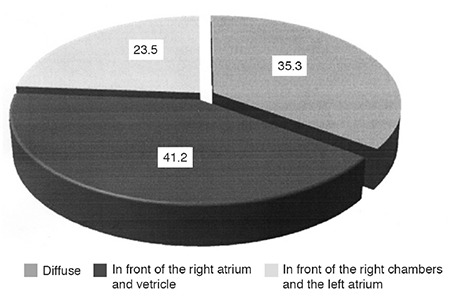
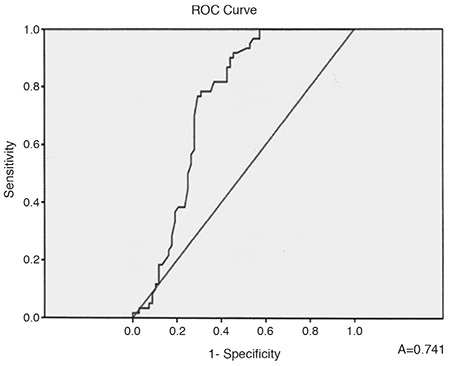
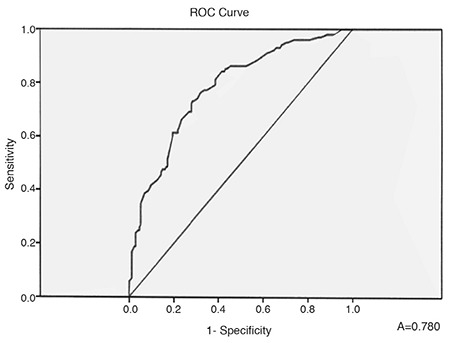
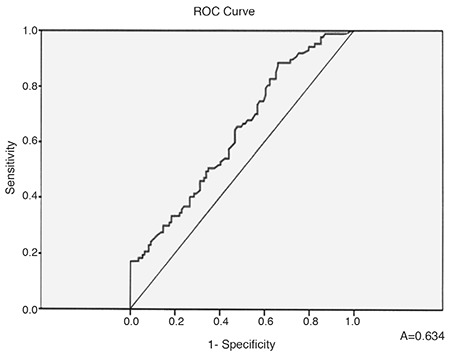
Results: Pericardial effusion was found in 102 (36.56%) -all of them with moderate to severe obstructive Sleep Apnea syndrome. The mean effusion volume was mild to moderate (up to 250 mL). In 36 patients (35.3%) the pericardial effusion was diffuse, in 42 (41.2%), the pericardial effusion was located in front of the right atrium and the right ventricle, and in 24 (23.5%) the pericardial effusion was situated in front of the right cardiac cavities and the left atrium. We found a significant positive correlation between the presence of pericardial effusion and apnea-hypopnea index (r=0.374, p<0.001), body mass index (r=0.473, p<0.001), and desaturation time during sleep (r=0.289, p<0.001).
Conclusion: Pericardial effusion in patients with obesity and moderate to severe Obstructive Sleep Apnea syndrome without daily hypoxemia and/or pulmonary hypertension is a relatively common finding. The occurrence of pericardial effusions is dependent mostly on the grade of Obstructive Sleep Apnea syndrome, degree of obesity, and duration of sleep desaturation.
Keywords: Obesity; obstructive sleep apnea; pericardial effusion.
Conflict of interest statement
Figures
References
-
- Guilleminault C, Tilkian A, Dement WC. The sleep apnea syndromes. Annu Rev Med. 1976;27:465–84. - PubMed
-
- Marin JM, Carrizo SJ, Vicente E, Agusti AG. Long-term cardiovascular outcomes in men with obstructive sleep apnoea-hypopnoea with or without treatment with continuous positive airway pressure: an observational study. Lancet. 2005;365:1046–53. - PubMed
-
- Natanzon A, Kronzon I. Pericardial and pleural effusions in congestive heart failure - anatomical, pathophysiologic, and clinical considerations. Am J Med Sci. 2009;338:211–6. - PubMed
-
- Johnson JL. Pleural effusions in cardiovascular disease. Pearls for correlating the evidence with the cause. Postgrad Med. 2000;107:95–101. - PubMed
MeSH terms
LinkOut - more resources
Full Text Sources
Other Literature Sources
Medical
