


Post-trial follow-up methodology in large randomised controlled trials: a systematic review
- PMID: 29843774
- PMCID: PMC5975470
- DOI: 10.1186/s13063-018-2653-0
Post-trial follow-up methodology in large randomised controlled trials: a systematic review
Abstract
Background: Randomised controlled clinical trials typically have a relatively brief in-trial follow-up period which can underestimate safety signals and fail to detect long-term hazards, which may take years to appear. Extended follow-up after the scheduled closure of the trial allows detection of both persistent or enhanced beneficial effects following cessation of study treatment (i.e. a legacy effect) and the emergence of possible adverse effects (e.g. development of cancer).
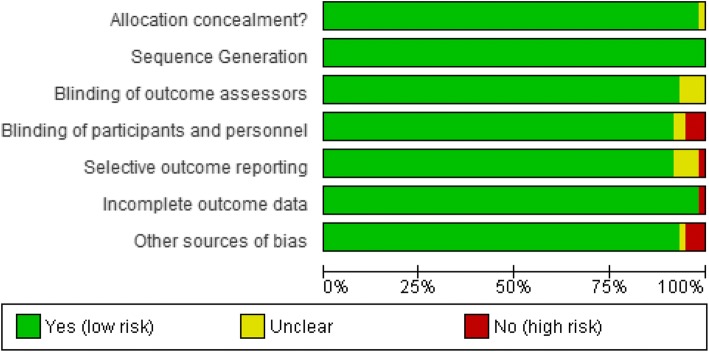
Methods: A systematic review was conducted following PRISMA guidelines to qualitatively compare post-trial follow-up methods used in large randomised controlled trials. Five bibliographic databases, including Medline and the Cochrane Library, and one trial registry were searched. All large randomised controlled trials (more than 1000 adult participants) published from March 2006 to April 2017 were evaluated. Two reviewers screened and extracted data attaining > 95% concordance of papers checked. Assessment of bias in the trials was evaluated using the Cochrane Risk of Bias tool.
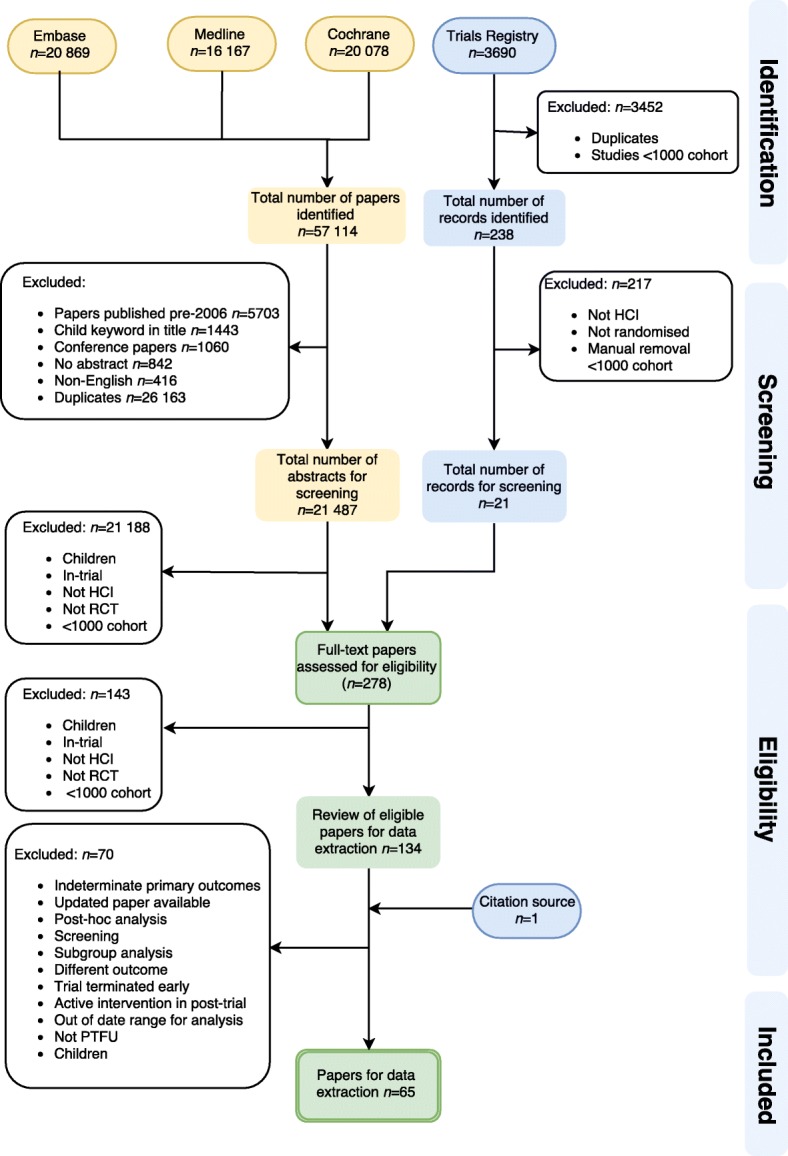
Results: Fifty-seven thousand three hundred and fifty-two papers were identified and 65 trials which had post-trial follow-up (PTFU) were included in the analysis. The majority of trials used more than one type of follow-up. There was no evidence of an association between the retention rates of participants in the PTFU period and the type of follow-up used. Costs of PTFU varied widely with data linkage being the most economical. It was not possible to assess associations between risk of bias during the in-trial period and proportions lost to follow-up during the PTFU period.
Discussion: Data captured during the post-trial follow-up period can add scientific value to a trial. However, there are logistical and financial barriers to overcome. Where available, data linkage via electronic registries and records is a cost-effective method which can provide data on a range of endpoints.
Systematic review registration: Not applicable for PROSPERO registration.
Keywords: Cost; Effective; Follow-up; Long-term; Methodology; Post-trial; Randomised controlled trial; Retention.
Conflict of interest statement
Ethics approval and consent to participate
Not applicable.
Consent for publication
RLB, DE, NR, AH, LB and RB consent for publication.
Competing interests
The authors declare that they have no competing interests.
Publisher’s Note
Springer Nature remains neutral with regard to jurisdictional claims in published maps and institutional affiliations.
Figures
References
-
- Heart Protection Study Collaborative Group et al. Effects on 11-year mortality and morbidity of lowering LDL cholesterol with simvastatin for about 5 years in 20,536 high-risk individuals: a randomised controlled trial. Lancet. 2011;378(9808):2013–2020. doi: 10.1016/S0140-6736(11)61125-2. - DOI - PMC - PubMed
-
- Barton J, Young A, Lay M., Introduction of electronic data capture method using participant-completed online web-based follow up questionnaire in mail-based study achieves expected benefits and positive participant feedback. Trials, 2015. 16(2): p44.
Publication types
MeSH terms
Grants and funding
LinkOut - more resources
Full Text Sources
Other Literature Sources
Molecular Biology Databases
Miscellaneous
