


Anti-Inflammatory Effect of Gallic Acid-Eluting Stent in a Porcine Coronary Restenosis Model
- PMID: 29844643
- PMCID: PMC5968338
- DOI: 10.6515/ACS.201805_34(3).20171204A
Anti-Inflammatory Effect of Gallic Acid-Eluting Stent in a Porcine Coronary Restenosis Model
Abstract
Background: Gallic acid (3,4,5-trihydroxybenzoic acid) is a natural polyphenol and strong natural antioxidant found abundantly in red wine and green tea. The aim of this study was to examine the anti-inflammatory effect of a novel gallic acid-eluting stent in a porcine coronary restenosis model.
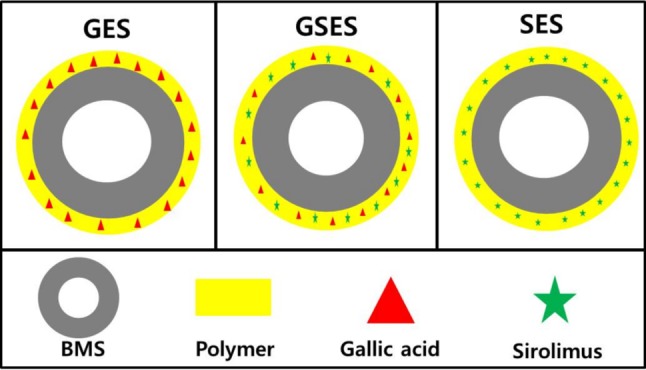
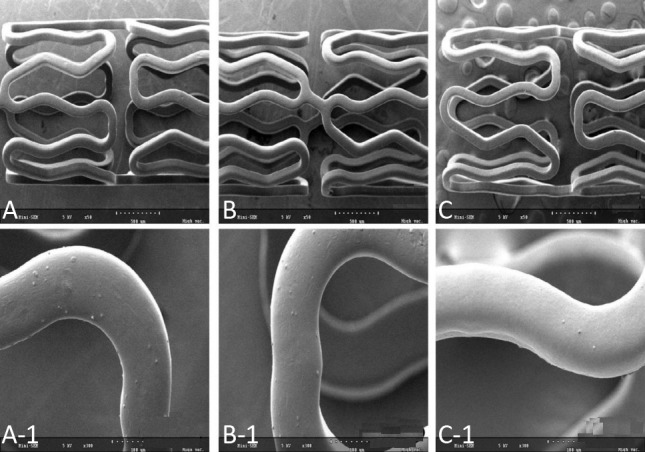
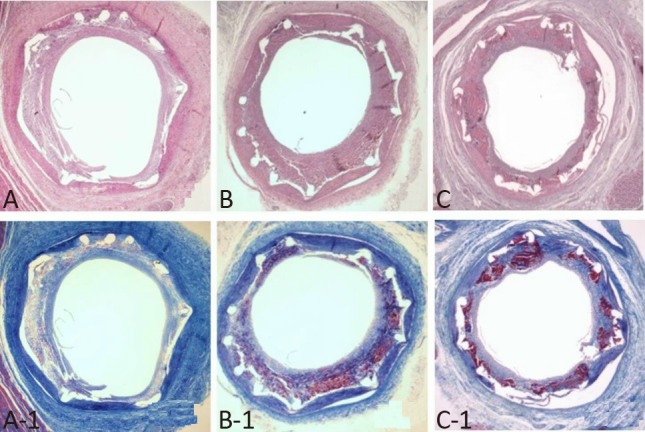
Methods: Fifteen pigs were randomized into three groups; in which a total of 30 coronary arteries (10 in each group) were implanted with gallic acid-eluting stents (GESs, n = 10), gallic acid and sirolimus-eluting stents (GSESs, n = 10), or sirolimus-eluting stents (SESs, n = 10). Histopathologic analysis was performed 28 days after stenting.
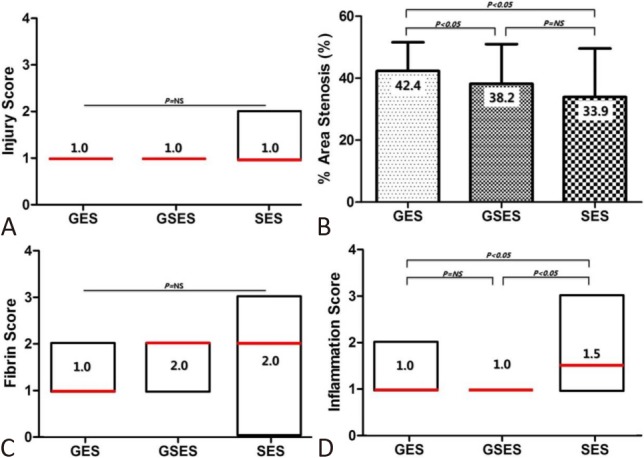
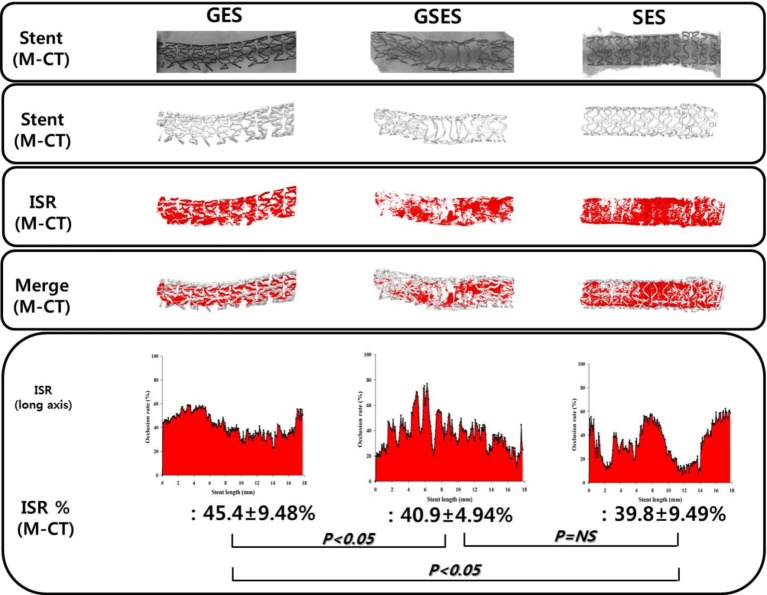
Results: There were no significant differences in injury score and fibrin score among the groups, however there were significant differences in the internal elastic lamina (4.0 ± 0.83 mm2 in GES vs. 3.0 ± 0.53 mm2 in GSES vs. 4.6 ± 1.43 mm2 in SES, p < 0.0001), lumen area (2.3 ± 0.49 mm2 in GES vs. 1.9 ± 0.67 mm2 in GSES vs. 2.9 ± 0.56 mm2 in SES, p < 0.0001), neointimal area (1.7 ± 0.63 mm2 in GES vs. 1.1 ± 0.28 mm2 in GSES vs. 1.7 ± 1.17 mm2 in SES, p < 0.05), and percent area of stenosis (42.4% ± 9.22% in GES vs. 38.2% ± 12.77% in GSES vs. 33.9% ± 15.64% in SES, p < 0.05). The inflammation score was significantly lower in the GES and GSES groups compared to that in the SES group [1.0 (range: 1.0 to 2.0) in GES vs. 1.0 (range: 1.0 to 1.0) in GSES vs. 1.5 (range: 1.0 to 3.0) in SES, p < 0.05].
Conclusions: The GES group had a greater percent area of stenosis than the SES group. Although gallic acid in the GES and GSES groups did not show a synergistic effect in suppressing neointimal hyperplasia, it resulted in greater inhibition of the inflammatory reaction in the porcine coronary restenosis model than in the SES group.
Keywords: Inflammation; Percutaneous coronary intervention; Restenosis; Stent.
Figures
References
-
- Vezina C, Kudelski A, Sehgal SN. Rapamycin (AY-22,989), a new antifungal antibiotic. I. Taxonomy of the producing streptomycete and isolation of the active principle. J Antibiot (Tokyo) 1975;28:721–726. - PubMed
-
- Cutlip DE, Chauhan MS, Baim DS, et al. Clinical restenosis after coronary stenting: perspectives from multicenter clinical trials. J Am Coll Cardiol. 2002;40:2082–2089. - PubMed
LinkOut - more resources
Full Text Sources