


The impact of pelvic floor muscle training on the quality of life of women with urinary incontinence: a systematic literature review
- PMID: 29844662
- PMCID: PMC5962309
- DOI: 10.2147/CIA.S160057
The impact of pelvic floor muscle training on the quality of life of women with urinary incontinence: a systematic literature review
Abstract
Purpose: The purpose of this review was to assess the effectiveness of pelvic floor muscle training (PFMT) in the treatment of urinary incontinence (UI) in women, with a particular focus on the impact of this form of therapy on the patients' quality of life (QoL).
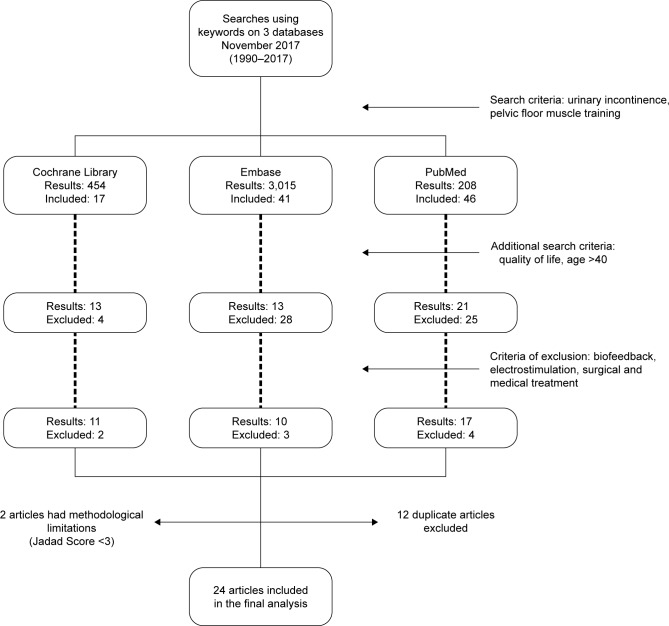
Methods: The following electronic databases were searched: PubMed, Embase, and Cochrane Library (articles only in English, 1990-2017). Search terms were as follows: urinary incontinence, pelvic floor muscle training, pelvic floor exercises, quality of life. Systematic review methods were based on the PRISMA (Preferred Reporting Items for Systematic Reviews and Meta-Analyses) statement.
Results: The assessment of the impact of PFMT on the QoL of women with UI was conducted among 2,394 women in 24 selected studies. After the end of treatment, the majority of patients in the experimental groups noted a statistically significant improvement in QoL.
Conclusion: The results of this literature review demonstrate that PFMT is an effective treatment for UI in women. PFMT significantly improves the QoL of women with UI, which is an important determinant of their physical, mental, and social functioning.
Keywords: pelvic floor muscle training; quality of life; urinary incontinence.
Conflict of interest statement
Disclosure The authors report no conflicts of interest in this work.
Figures
References
-
- The Global Forum on Incontinence About incontinence. [Accessed January 15, 2018]. Available from: http://www.gfiforum.com/incontinence.
-
- Abrams P, Cardozo L, Wagg A, Wein A. Incontinence. 6th International Consultation on Incontinence; Tokyo. 2017. Sep, pp. s. 22pp. 87–88.
-
- Edwall L, Carlstrom K, Jonasson AF. Different estrogen sensitivity of urogenital tissue from women with and without stress urinary incontinence. Neurourol Urodyn. 2009;28:516–520. - PubMed
-
- Melville JL, Fan MY, Rau H, Nygaard IE, Katon WJ. Major depression and urinary incontinence in women: temporal associations in an epidemiologic sample. Am J Obstet Gynecol. 2009;201(5):490–497. - PubMed
-
- van der Vaart CH, Roovers JP, de Leeuw JR, Heintz AP. Association between urogenital symptoms and depression in community-dwelling women aged 20 to 70 years. Urology. 2007;69(4):691–696. - PubMed
Publication types
MeSH terms
LinkOut - more resources
Full Text Sources
Other Literature Sources
Medical
