


Role of Lactobacillus in cervical cancer
- PMID: 29844701
- PMCID: PMC5962305
- DOI: 10.2147/CMAR.S165228
Role of Lactobacillus in cervical cancer
Abstract
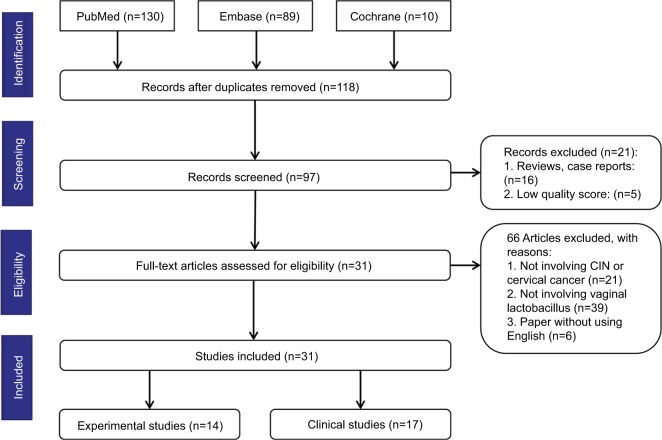
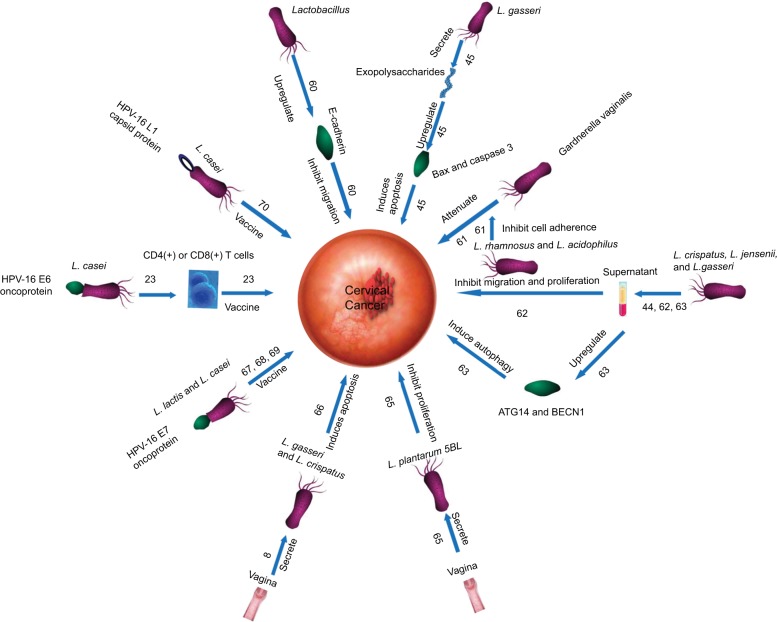
Cervical cancer is a common malignant cancer among women worldwide. Changes in the vaginal microecological environment lead to multiple gynecological diseases, including cervical cancer. Recent research has shown that Lactobacillus may play an important role in the occurrence and development of cervical cancer. This review explores the role of Lactobacillus in cervical cancer. A total of 29 articles were included after identification and screening. The pertinent literature on Lactobacillus in cervical cancer from two perspectives, including clinical studies and experimental studies, was analyzed. An association network for the mechanism by which Lactobacillus induces cervical cancer was constructed. In addition, we provide direction and insight for further research on the role of Lactobacillus in cervical cancer.
Keywords: CIN; Lactobacillus; cervical cancer; microorganism.
Conflict of interest statement
Disclosure The authors report no conflicts of interest in this work.
Figures
References
-
- Yang J, Nolte FS, Chajewski OS, et al. Cytology and high risk HPV testing in cervical cancer screening program: outcome of 3-year follow-up in an academic institute. Diagn Cytopathol. 2017;46(1):22–27. - PubMed
-
- Chase D, Goulder A, Zenhausern F, Monk B, Herbst-Kralovetz M. The vaginal and gastrointestinal microbiomes in gynecologic cancers: a review of applications in etiology, symptoms and treatment. Gynecol Oncol. 2015;138(1):190–200. - PubMed
Publication types
LinkOut - more resources
Full Text Sources
Other Literature Sources
