Meta-Analysis
. 2019 Feb;47(2):221-243.
doi: 10.1007/s10802-018-0445-3.

Childhood Maltreatment and Impulsivity: A Meta-Analysis and Recommendations for Future Study

Affiliations
Meta-Analysis

Childhood Maltreatment and Impulsivity: A Meta-Analysis and Recommendations for Future Study

Richard T Liu. J Abnorm Child Psychol. 2019 Feb.

Abstract

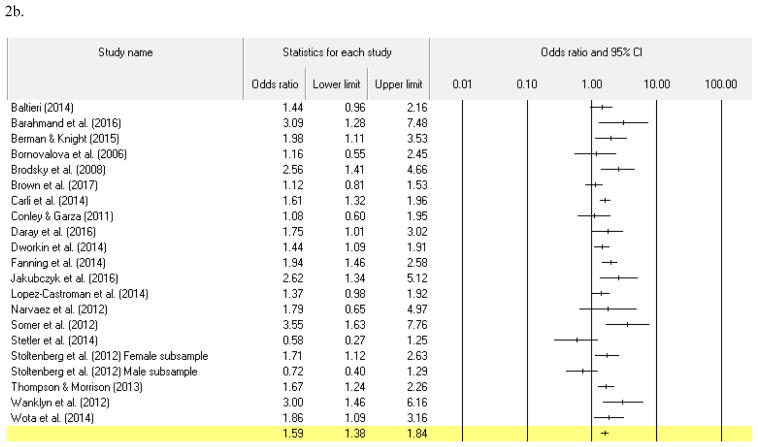
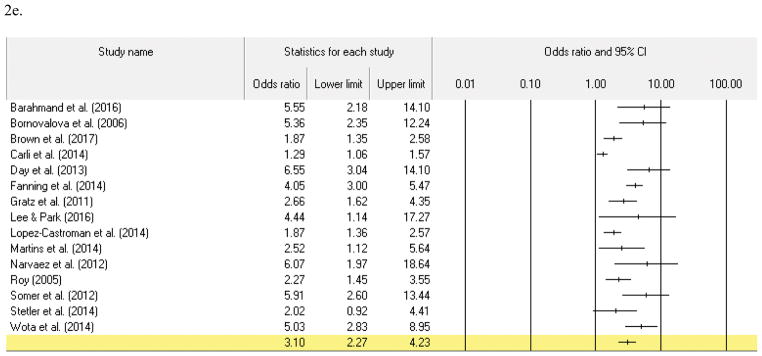
Both childhood maltreatment and impulsivity have been implicated in a broad array of negative public health outcomes and have been much studied in relation to each other. Characterizing this relationship, and the processes underlying it, are important for informing intervention efforts targeting this association and its psychopathological sequelae. The current review presented a systematic meta-analysis of the empirical literature on childhood maltreatment and impulsivity. In all, 55 eligible studies were identified and included in this review. General support was found for a positive association between childhood maltreatment, including its specific subtypes, and general trait impulsivity, with pooled effect sizes ranging from small in the case of childhood sexual abuse (OR = 1.59 [95% CI = 1.38-1.84]) to medium-to-large in the case of childhood emotional abuse (OR = 3.10 [95% CI = 2.27-4.23]). Support for a relationship between childhood maltreatment and laboratory-based measures of impulsive behavior was generally lacking. The current findings must be interpreted with a degree of caution, given several methodological limitations characterizing much of the empirical literature. Recommendations for addressing these limitations and directions for future research are provided.

Keywords: Child abuse; Child maltreatment; Impulsivity; Meta-analysis; Neglect.


Figures
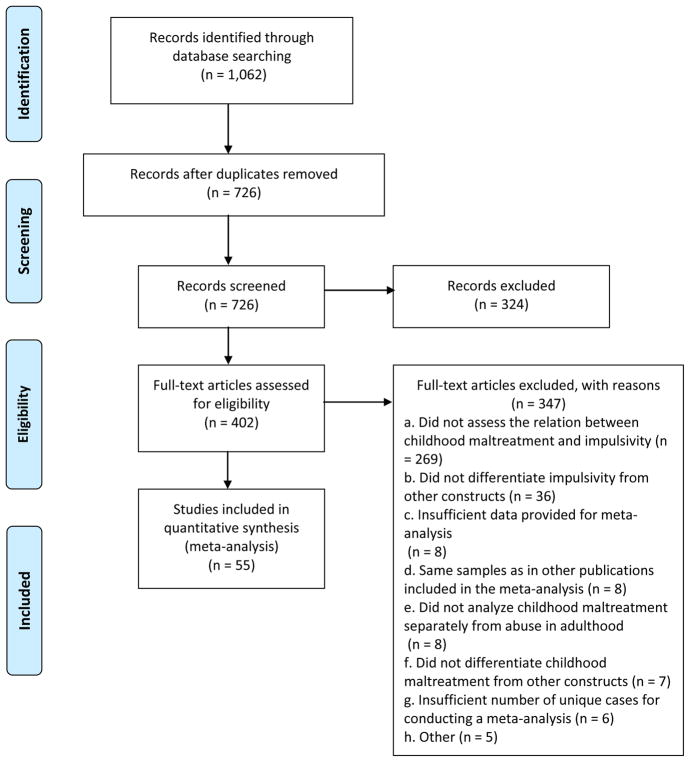
Figure 1
Figure 1
PRISMA flow chart of literature search
Figure 2
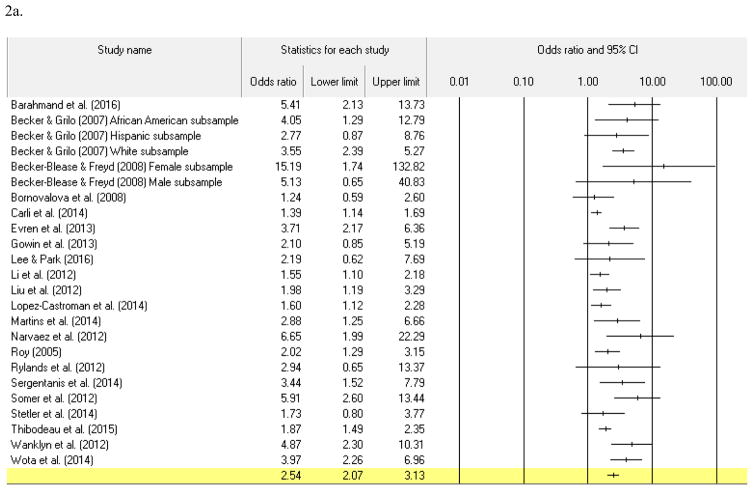
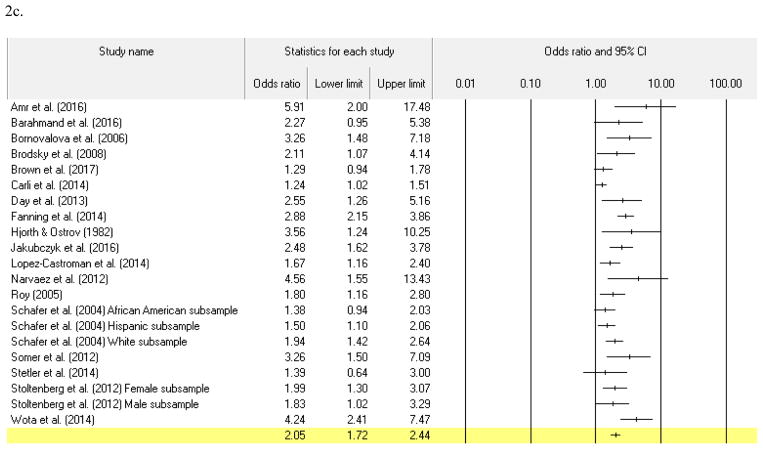
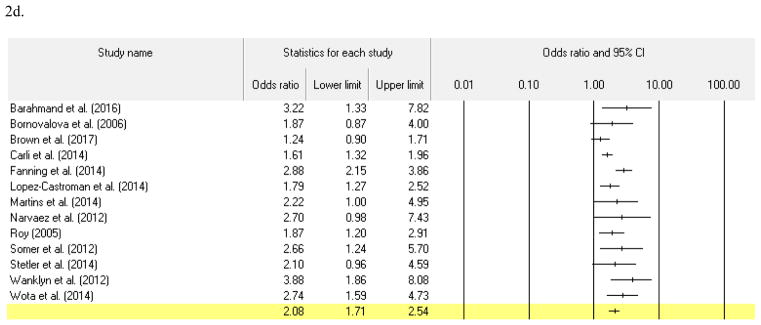
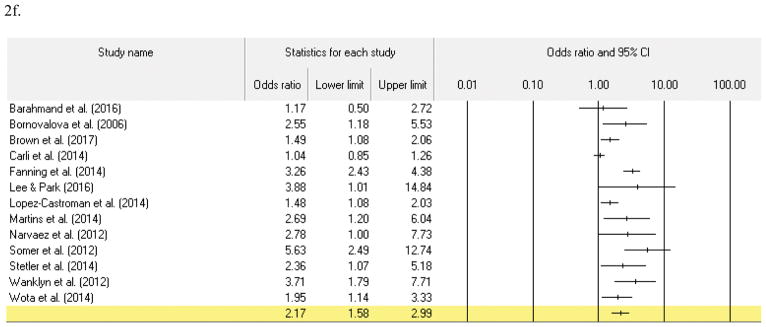
Figure 2. Forest plots for childhood maltreatment in relation to general trait impulsivity
2a. Overall childhood maltreatment and general trait impulsivity 2b. Childhood sexual abuse and general trait impulsivity 2c. Childhood physical abuse and general trait impulsivity 2d. Childhood physical neglect and general trait impulsivity 2e. Childhood emotional abuse and general trait impulsivity 2f. Childhood emotional neglect and general trait impulsivity
Figure 2
Figure 2. Forest plots for childhood maltreatment in relation to general trait impulsivity
2a. Overall childhood maltreatment and general trait impulsivity 2b. Childhood sexual abuse and general trait impulsivity 2c. Childhood physical abuse and general trait impulsivity 2d. Childhood physical neglect and general trait impulsivity 2e. Childhood emotional abuse and general trait impulsivity 2f. Childhood emotional neglect and general trait impulsivity
Figure 2
Figure 2. Forest plots for childhood maltreatment in relation to general trait impulsivity
2a. Overall childhood maltreatment and general trait impulsivity 2b. Childhood sexual abuse and general trait impulsivity 2c. Childhood physical abuse and general trait impulsivity 2d. Childhood physical neglect and general trait impulsivity 2e. Childhood emotional abuse and general trait impulsivity 2f. Childhood emotional neglect and general trait impulsivity
Figure 2
Figure 2. Forest plots for childhood maltreatment in relation to general trait impulsivity
2a. Overall childhood maltreatment and general trait impulsivity 2b. Childhood sexual abuse and general trait impulsivity 2c. Childhood physical abuse and general trait impulsivity 2d. Childhood physical neglect and general trait impulsivity 2e. Childhood emotional abuse and general trait impulsivity 2f. Childhood emotional neglect and general trait impulsivity
Figure 2
Figure 2. Forest plots for childhood maltreatment in relation to general trait impulsivity
2a. Overall childhood maltreatment and general trait impulsivity 2b. Childhood sexual abuse and general trait impulsivity 2c. Childhood physical abuse and general trait impulsivity 2d. Childhood physical neglect and general trait impulsivity 2e. Childhood emotional abuse and general trait impulsivity 2f. Childhood emotional neglect and general trait impulsivity
Figure 2
Figure 2. Forest plots for childhood maltreatment in relation to general trait impulsivity
2a. Overall childhood maltreatment and general trait impulsivity 2b. Childhood sexual abuse and general trait impulsivity 2c. Childhood physical abuse and general trait impulsivity 2d. Childhood physical neglect and general trait impulsivity 2e. Childhood emotional abuse and general trait impulsivity 2f. Childhood emotional neglect and general trait impulsivity
Figure 3
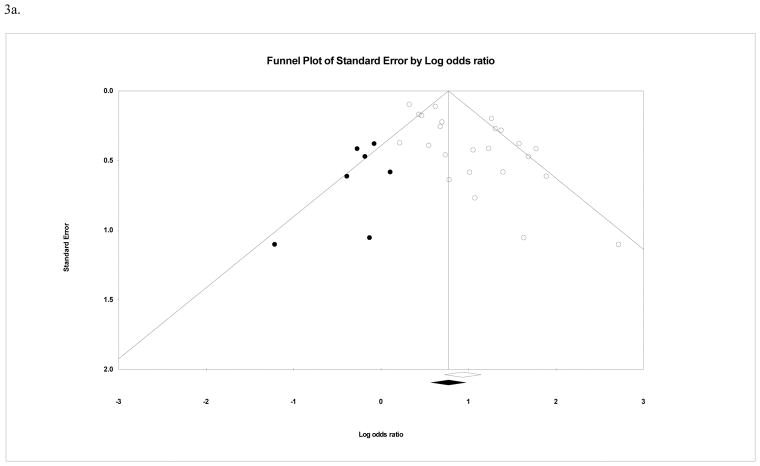
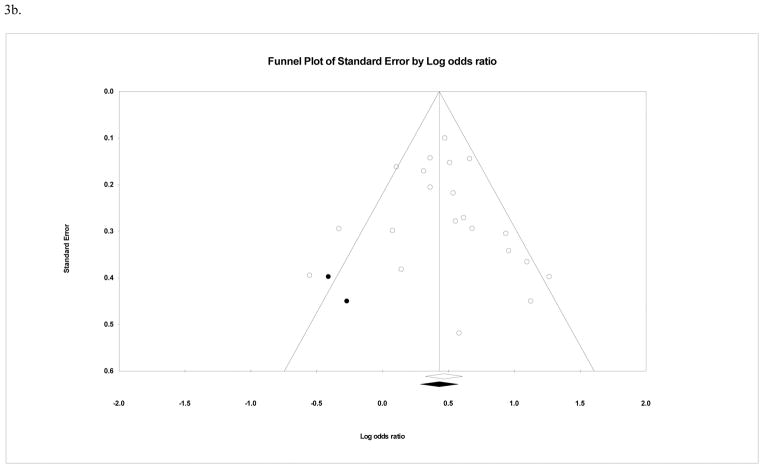
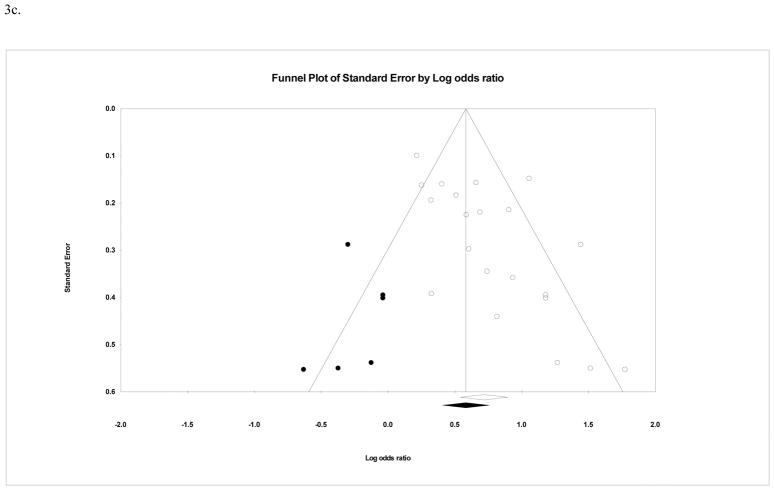
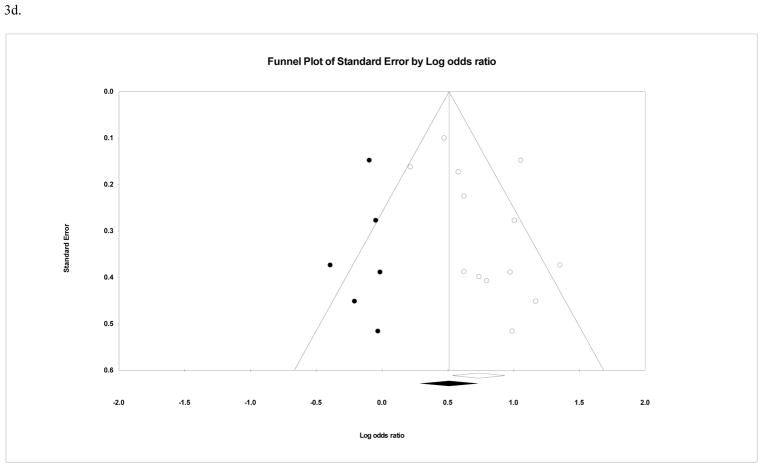
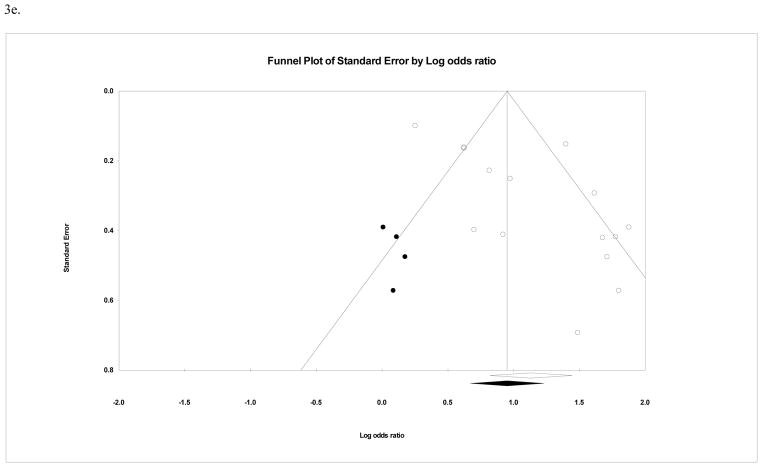
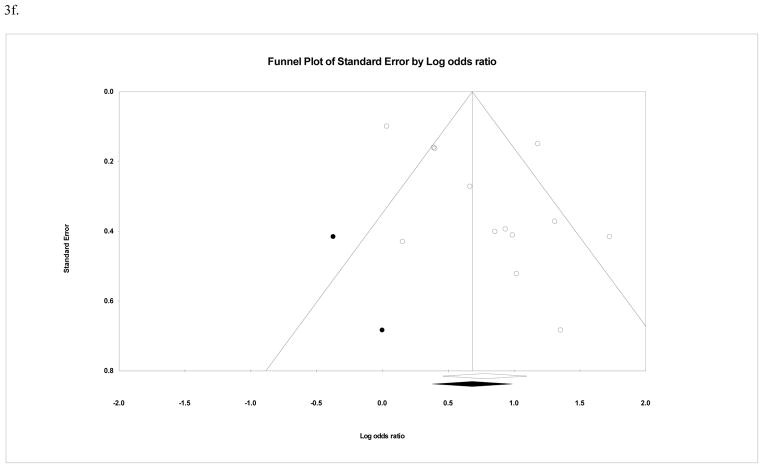
Figure 3. Funnel plot for effect sizes in the meta-analyses. The vertical line indicates the weighted mean effect. Open circles indicate observed effects for actual studies, and closed circles indicate imputed effects for studies believed to be missing due to publication bias. The clear diamond reflects the unadjusted weighted mean effect size, whereas the black diamond reflects the weighted mean effect size after adjusting for publication bias
3a. Overall childhood maltreatment and general trait impulsivity 3b. Childhood sexual abuse and general trait impulsivity 3c. Childhood physical abuse and general trait impulsivity 3d. Childhood physical neglect and general trait impulsivity 3e. Childhood emotional abuse and general trait impulsivity 3f. Childhood emotional neglect and general trait impulsivity
Figure 3
Figure 3. Funnel plot for effect sizes in the meta-analyses. The vertical line indicates the weighted mean effect. Open circles indicate observed effects for actual studies, and closed circles indicate imputed effects for studies believed to be missing due to publication bias. The clear diamond reflects the unadjusted weighted mean effect size, whereas the black diamond reflects the weighted mean effect size after adjusting for publication bias
3a. Overall childhood maltreatment and general trait impulsivity 3b. Childhood sexual abuse and general trait impulsivity 3c. Childhood physical abuse and general trait impulsivity 3d. Childhood physical neglect and general trait impulsivity 3e. Childhood emotional abuse and general trait impulsivity 3f. Childhood emotional neglect and general trait impulsivity
Figure 3
Figure 3. Funnel plot for effect sizes in the meta-analyses. The vertical line indicates the weighted mean effect. Open circles indicate observed effects for actual studies, and closed circles indicate imputed effects for studies believed to be missing due to publication bias. The clear diamond reflects the unadjusted weighted mean effect size, whereas the black diamond reflects the weighted mean effect size after adjusting for publication bias
3a. Overall childhood maltreatment and general trait impulsivity 3b. Childhood sexual abuse and general trait impulsivity 3c. Childhood physical abuse and general trait impulsivity 3d. Childhood physical neglect and general trait impulsivity 3e. Childhood emotional abuse and general trait impulsivity 3f. Childhood emotional neglect and general trait impulsivity
Figure 3
Figure 3. Funnel plot for effect sizes in the meta-analyses. The vertical line indicates the weighted mean effect. Open circles indicate observed effects for actual studies, and closed circles indicate imputed effects for studies believed to be missing due to publication bias. The clear diamond reflects the unadjusted weighted mean effect size, whereas the black diamond reflects the weighted mean effect size after adjusting for publication bias
3a. Overall childhood maltreatment and general trait impulsivity 3b. Childhood sexual abuse and general trait impulsivity 3c. Childhood physical abuse and general trait impulsivity 3d. Childhood physical neglect and general trait impulsivity 3e. Childhood emotional abuse and general trait impulsivity 3f. Childhood emotional neglect and general trait impulsivity
Figure 3
Figure 3. Funnel plot for effect sizes in the meta-analyses. The vertical line indicates the weighted mean effect. Open circles indicate observed effects for actual studies, and closed circles indicate imputed effects for studies believed to be missing due to publication bias. The clear diamond reflects the unadjusted weighted mean effect size, whereas the black diamond reflects the weighted mean effect size after adjusting for publication bias
3a. Overall childhood maltreatment and general trait impulsivity 3b. Childhood sexual abuse and general trait impulsivity 3c. Childhood physical abuse and general trait impulsivity 3d. Childhood physical neglect and general trait impulsivity 3e. Childhood emotional abuse and general trait impulsivity 3f. Childhood emotional neglect and general trait impulsivity
Figure 3
Figure 3. Funnel plot for effect sizes in the meta-analyses. The vertical line indicates the weighted mean effect. Open circles indicate observed effects for actual studies, and closed circles indicate imputed effects for studies believed to be missing due to publication bias. The clear diamond reflects the unadjusted weighted mean effect size, whereas the black diamond reflects the weighted mean effect size after adjusting for publication bias
3a. Overall childhood maltreatment and general trait impulsivity 3b. Childhood sexual abuse and general trait impulsivity 3c. Childhood physical abuse and general trait impulsivity 3d. Childhood physical neglect and general trait impulsivity 3e. Childhood emotional abuse and general trait impulsivity 3f. Childhood emotional neglect and general trait impulsivity

References

    1. Alloy LB, Abramson LY. The role of the Behavioral Approach System (BAS) in bipolar spectrum disorders. Current Directions in Psychological Science. 2010;19:189–194. doi: 10.1177/0963721410370292. - DOI - PMC - PubMed
    1. Amr M, Elsayed H, Ibrahim IMA. Impulsive behavior and its correlates among patients with schizophrenia in a tertiary care psychiatry setting in Mansoura. Asian Journal of Psychiatry. 2016;22:111–115. doi: 10.1016/j.ajp.2016.06.009. - DOI - PubMed
    1. Aron AR, Fletcher PC, Bullmore ET, Sahakian BJ, Robbins TW. Stop-signal inhibition disrupted by damage to right inferior frontal gyrus in humans. Nature Neuroscience. 2003;6:115–116. doi: 10.1038/nn1003. - DOI - PubMed
    1. Bari A, Robbins TW. Inhibition and impulsivity: behavioral and neural basis of response control. Progress in Neurobiology. 2013;108:44–79. doi: 10.1016/j.pneurobio.2013.06.005. - DOI - PubMed
    1. Becker-Blease KA, Freyd JJ. A preliminary study of ADHD symptoms and correlates: Do abused children differ from nonabused children? Journal of Aggression, Maltreatment & Trauma. 2008;17:133–140. doi: 10.1080/10926770802250736. - DOI

Publication types

LinkOut - more resources