Review
. 2018 Dec;64(6):1221-1228.
doi: 10.1007/s00294-018-0849-1. Epub 2018 May 30.

Mechanisms for the epigenetic inheritance of stress response in single cells

Affiliations
Review

Mechanisms for the epigenetic inheritance of stress response in single cells

Yuan Xue et al. Curr Genet. 2018 Dec.

Abstract

Cells have evolved to dynamically respond to different types of environmental and physiological stress conditions. The information about a previous stress stimulus experience by a mother cell can be passed to its descendants, allowing them to better adapt to and survive in new environments. In recent years, live-cell imaging combined with cell-lineage tracking approaches has elucidated many important principles that guide stress inheritance at the single-cell and population level. In this review, we summarize different strategies that cells can employ to pass the 'memory' of previous stress responses to their descendants. Among these strategies, we focus on a recent discovery of how specific features of Msn2 nucleo-cytoplasmic shuttling dynamics could be inherited across cell lineages. We also discuss how stress response can be transmitted to progenies through changes in chromatin and through partitioning of anti-stress factors and/or damaged macromolecules between mother and daughter cells during cell division. Finally, we highlight how emergent technologies will help address open questions in the field.

Keywords: Epigenetic inheritance; Mammalian cells; Msn2; Single cells; Stress response; Yeast.


Figures
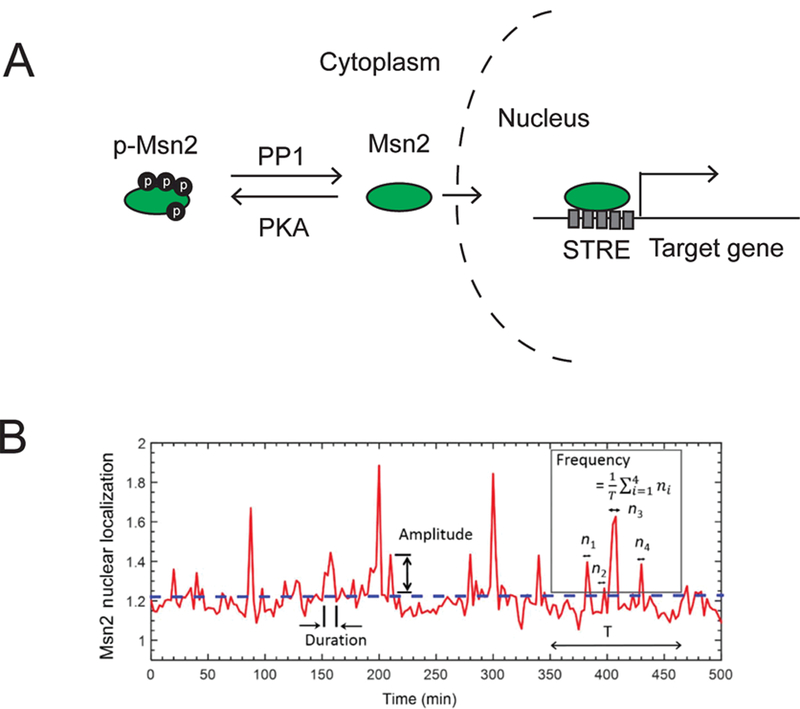
Figure 1.
Figure 1.. Stress induces dynamic changes in Msn2 nuclear localization.
A. In response to various stress stimuli, Msn2 proteins become dephosphorylated and translocate into the nucleus to activate downstream gene expression. PP1: Protein phosphatase 1, PKA: cAMP-dependent protein kinase A, STRE: stress response element. B. Msn2 nuclear localization trajectory of a cell, showing how amplitude, frequency, and duration of Msn2 nuclear localization are quantified. The dashed horizontal line denotes the threshold level above which there would be an Msn2 nuclear localization event. ni denotes the number of above-the-threshold localization events. T denotes the length of time interval used for the calculation of frequency. Figure panel was taken from .
Figure 2.
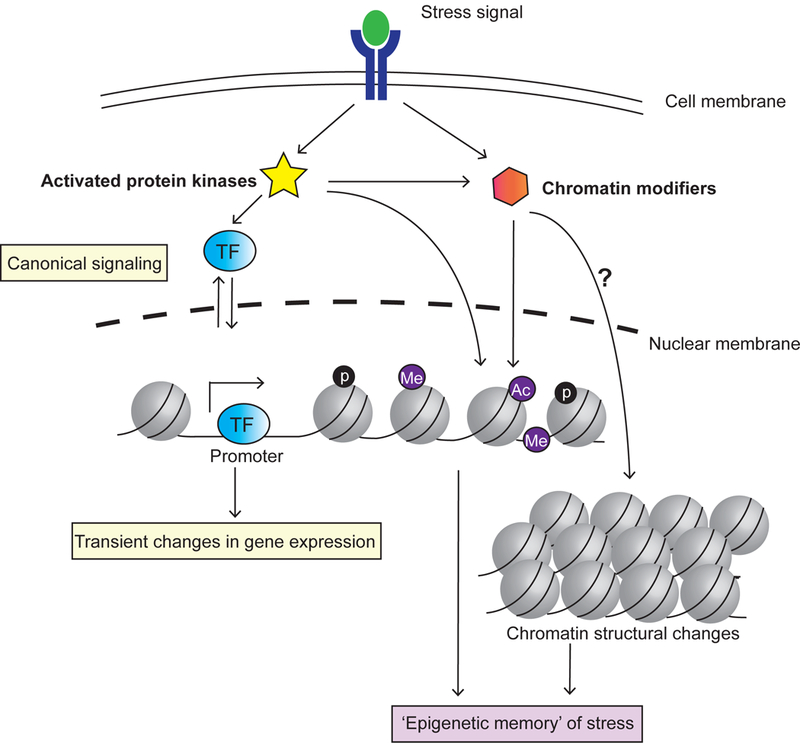
Figure 2.. Stress can cause heritable changes in chromatin structure and biochemistry.
Activated protein kinases can directly or indirectly change epigenetic marks on DNA and histones. Stress response can also change the 3D structure of chromatin. If sufficiently stable, these epigenetic changes can be heritable by daughter cells, corresponding to passing an ‘epigenetic memory’ of mother’s specific transcriptional states. p: phosphorylation; Me: Methylation; Ac: Acetylation.
Figure 3.
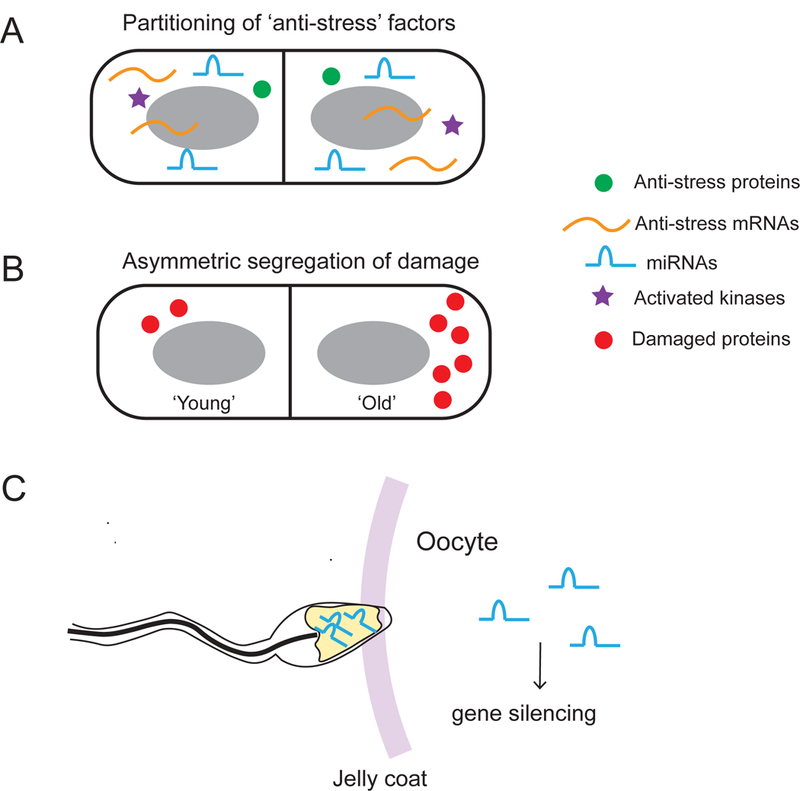
Figure 3.. Cell division and cell-to-cell fusion propagate stress response to descendants.
A. Anti-stress proteins, mRNAs and miRNAs are passed on to daughter cells during cell division. B. Asymmetrical segregation of damaged molecules generates a ‘damage-protected’ daughter cell at the expense of the mother cell’s being burdened with more damage. C. Sperm carrying miRNAs produced as a result of stress-induction transmits the stress signal to an oocyte during fertilization.

References

    1. Estruch F Stress-controlled transcription factors, stress-induced genes and stress tolerance in budding yeast. FEMS Microbiol. Rev 24, 469–486 (2000). - PubMed
    1. Liu F, Wang L, Perna F & Nimer SD Beyond transcription factors: How oncogenic signalling reshapes the epigenetic landscape. Nat. Rev. Cancer 16, 359–372 (2016). - PMC - PubMed
    1. D’Urso A & Brickner JH Epigenetic transcriptional memory. Curr. Genet 63, 435–439 (2017). - PMC - PubMed
    1. Woodford N & Ellington MJ The emergence of antibiotic resistance by mutation. Clin. Microbiol. Infect 13, 5–18 (2007). - PubMed
    1. Brouns SJJ et al. Small CRISPR RNAs guide antiviral defense in prokaryotes. Science 321, 960–4 (2008). - PMC - PubMed

MeSH terms

Substances

LinkOut - more resources