


Comprehensive Molecular Profiling of Intrahepatic and Extrahepatic Cholangiocarcinomas: Potential Targets for Intervention
- PMID: 29848569
- PMCID: PMC6642361
- DOI: 10.1158/1078-0432.CCR-18-0078
Comprehensive Molecular Profiling of Intrahepatic and Extrahepatic Cholangiocarcinomas: Potential Targets for Intervention
Abstract
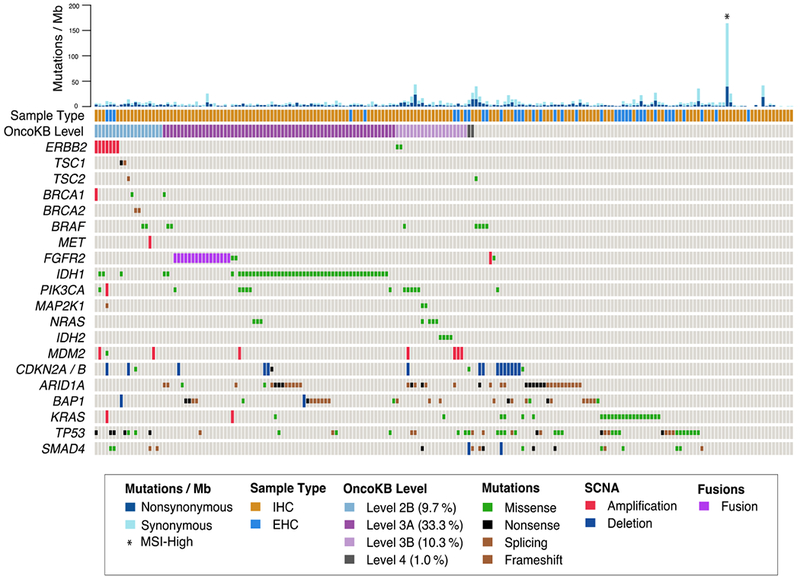
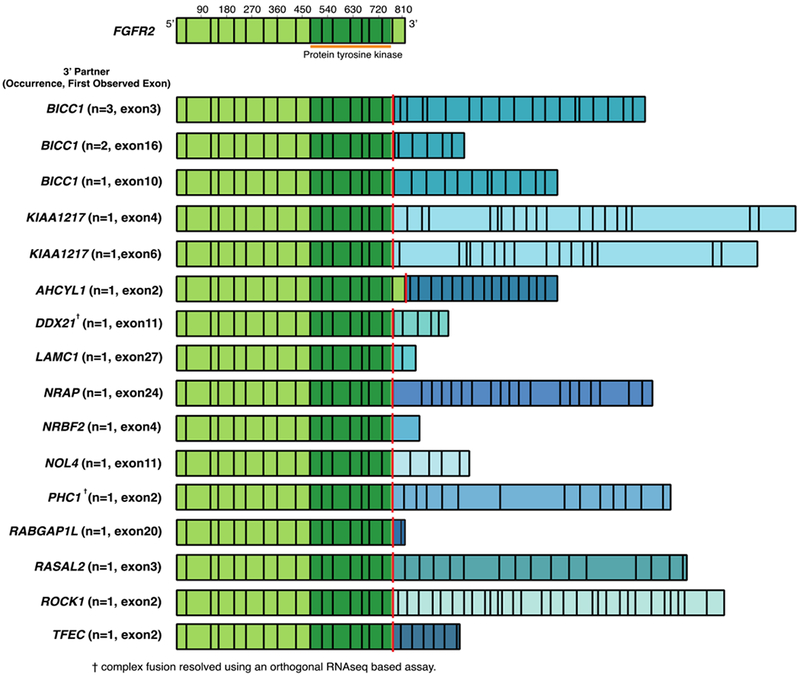
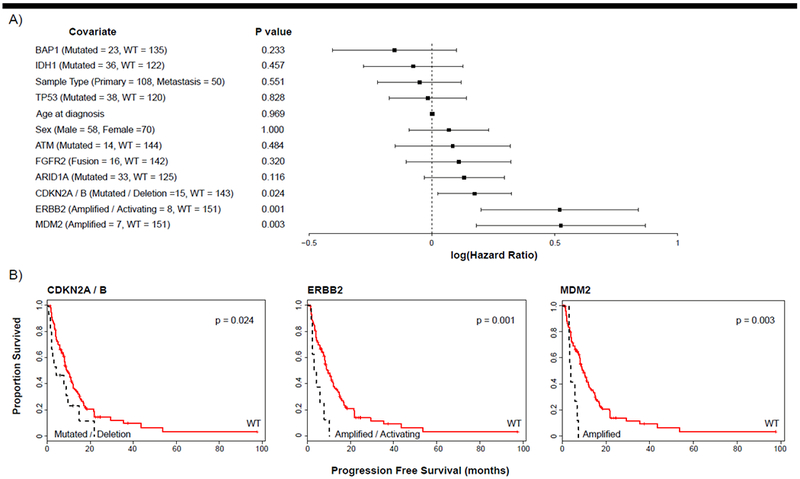
Purpose: Various genetic driver aberrations have been identified among distinct anatomic and clinical subtypes of intrahepatic and extrahepatic cholangiocarcinoma, and these molecular alterations may be prognostic biomarkers and/or predictive of drug response.Experimental Design: Tumor samples from patients with cholangiocarcinoma who consented prospectively were analyzed using the MSK-IMPACT platform, a targeted next-generation sequencing assay that analyzes all exons and selected introns of 410 cancer-associated genes. Fisher exact tests were performed to identify associations between clinical characteristics and genetic alterations.Results: A total of 195 patients were studied: 78% intrahepatic and 22% extrahepatic cholangiocarcinoma. The most commonly altered genes in intrahepatic cholangiocarcinoma were IDH1 (30%), ARID1A (23%), BAP1 (20%), TP53 (20%), and FGFR2 gene fusions (14%). A tendency toward mutual exclusivity was seen between multiple genes in intrahepatic cholangiocarcinoma including TP53:IDH1, IDH1:KRAS, TP53:BAP1, and IDH1:FGFR2 Alterations in CDKN2A/B and ERBB2 were associated with reduced survival and time to progression on chemotherapy in patients with locally advanced or metastatic disease. Genetic alterations with potential therapeutic implications were identified in 47% of patients, leading to biomarker-directed therapy or clinical trial enrollment in 16% of patients.Conclusions: Cholangiocarcinoma is a genetically diverse cancer. Alterations in CDKN2A/B and ERBB2 are associated with negative prognostic implications in patients with advanced disease. Somatic alterations with therapeutic implications were identified in almost half of patients. These prospective data provide a contemporary benchmark for guiding the development of targeted therapies in molecularly profiled cholangiocarcinoma, and support to the use of molecular profiling to guide therapy selection in patients with advanced biliary cancers. Clin Cancer Res; 24(17); 4154-61. ©2018 AACR.
©2018 American Association for Cancer Research.
Conflict of interest statement
Figures
References
-
- Kim YMD, Zhang XF, Bagante F, Spolverato G, Schmidt C, Dilhoff M, Pawlik TM.: Evaluation of the 8th edition American Joint Commission on Cancer (AJCC) staging system for patients with intrahepatic cholangiocarcinoma: A surveillance, epidemiology, and end results (SEER) analysis. J Surg Oncol. 2017. June 12. doi: 10.1002/jso.24720. - DOI - PubMed
Publication types
MeSH terms
Substances
Grants and funding
LinkOut - more resources
Full Text Sources
Other Literature Sources
Research Materials
Miscellaneous
