


Burnout Risk and Protection Factors in Certified Nursing Aides
- PMID: 29848982
- PMCID: PMC6025175
- DOI: 10.3390/ijerph15061116
Burnout Risk and Protection Factors in Certified Nursing Aides
Abstract
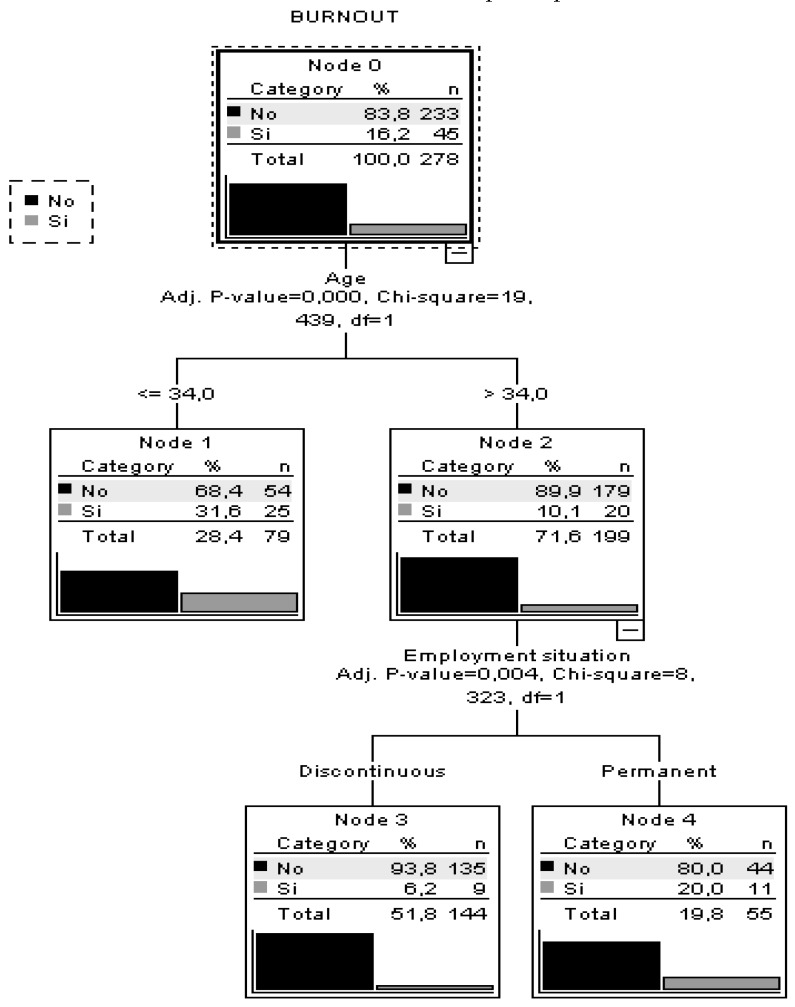
Studies have found a higher risk of burnout among employees in the healthcare sector. As such, this study focused on Certified Nursing Aides (CNAs) who have shown a high prevalence of burnout and are therefore considered an especially vulnerable group. The objective of this study was to identify the relationships between some organizational, personal, and sociodemographic factors and burnout. The final study sample included 278 working CNAs with a mean age of 40.88 (SD = 9.41). To compile the data, an ad hoc questionnaire was used to collect sociodemographic information. To collect professional and employment information, we used the Brief Emotional Intelligence Inventory for Adults, the Brief Questionnaire on Perceived Social Support, and the General Self-Efficacy Scale. The results showed that Burnout Syndrome is significantly and negatively related to all the emotional intelligence factors, self-efficacy, and perceived social support. The risk of burnout is higher in younger persons and in permanently employed professionals. General self-efficacy and stress management act as protective factors against the likelihood of burnout. This study suggests that organizations should urge coaching and transformational leadership training programs to promote the wellbeing and organizational commitment of workers.
Keywords: burnout; nursing; protective factors; risks.
Conflict of interest statement
The authors declare no conflict of interest.
Figures
References
-
- World Health Organization ICD-10: Version 2016. Recuperado 10 de marzo de 2018, a partir de. [(accessed on 30 May 2018)];2016 Available online: http://apps.who.int/classifications/icd10/browse/2016/en#/Z73.0.
Publication types
MeSH terms
LinkOut - more resources
Full Text Sources
Other Literature Sources
