Vitamin D assays and the definition of hypovitaminosis D: results from the First International Conference on Controversies in Vitamin D
- PMID: 29851137
- PMCID: PMC6138489
- DOI: 10.1111/bcp.13652
Vitamin D assays and the definition of hypovitaminosis D: results from the First International Conference on Controversies in Vitamin D
Abstract
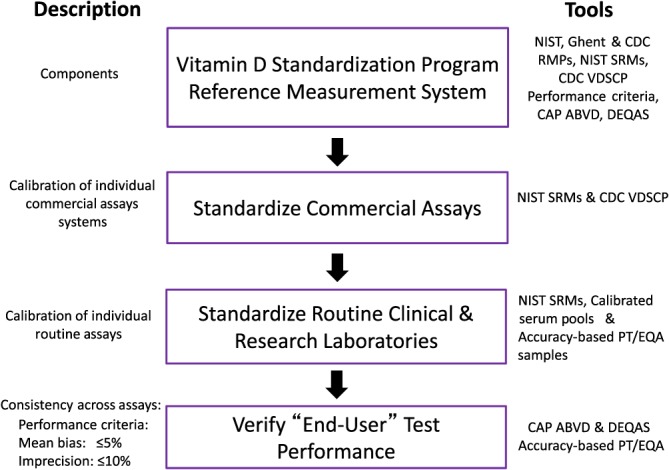
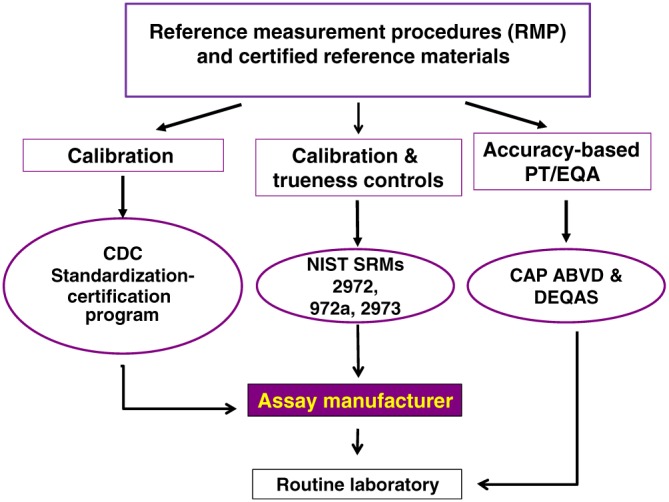
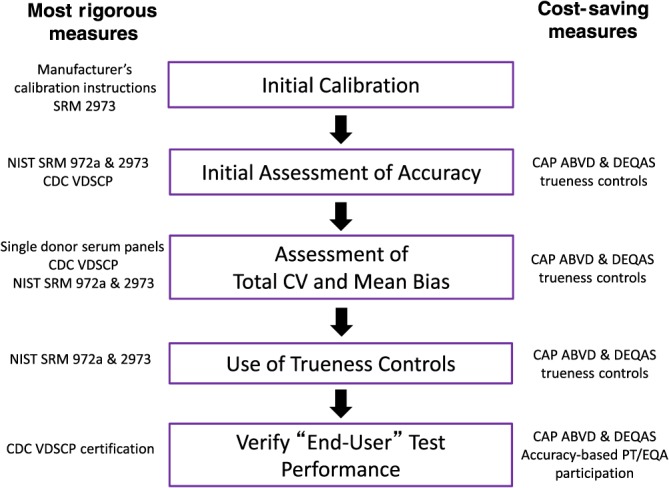
The First International Conference on Controversies in Vitamin D was held in Pisa, Italy, 14-16 June 2017. The meeting's purpose was to address controversies in vitamin D research, review the data available, to help resolve them, and suggest a research agenda to clarify areas of uncertainty. The serum 25-hydroxyvitamin D [25(OH)D] concentration [i.e. the sum of 25(OH)D3 and 25(OH)D2 ] remains the critical measurement for defining vitamin D status. Assay variation for 25(OH)D has contributed to the current chaos surrounding efforts to define hypovitaminosis D. An essential requirement to develop a consensus on vitamin D status is that measurement of 25(OH)D and, in the future, other potential vitamin D biomarkers [e.g. 1α,25(OH)2 D3 , 3-epi-25(OH)D, 24,25(OH)2 D3, vitamin D-binding protein, free/bioavailable 25(OH)D and parathyroid hormone] be standardized/harmonized, to allow pooling of research data. Vitamin D Standardization Program tools are described and recommended for standardizing 25(OH)D measurement in research. In the future, similar methodology, based on National Institute for Standards and Technology standard reference materials, must be developed for other candidate markers of vitamin D status. Failure to standardize/harmonize vitamin D metabolite measurements is destined to promulgate continued chaos. At this time, 25(OH)D values below 12 ng ml-1 (30 nmol l-1 ) should be considered to be associated with an increased risk of rickets/osteomalacia, whereas 25(OH)D concentrations between 20 ng ml-1 and 50 ng ml-1 (50-125 nmol l-1 ) appear to be safe and sufficient in the general population for skeletal health. In an effort to bridge knowledge gaps in defining hypovitaminosis D, an international study on rickets as a multifactorial disease is proposed.
Keywords: 25-hydroxyvitamin D; Fibroblast Growth Factor (FGF23); Parathyroid Hormone (PTH); Vitamin D; Vitamin D Standardization Program (VDSP); Vitamin D-binding protein (DBP).
© 2018 The British Pharmacological Society.
Figures
Comment in
-
Lack of vitamin D predicts impaired long-term immune response to COVID-19 vaccination.Endocrine. 2023 Dec;82(3):536-541. doi: 10.1007/s12020-023-03481-w. Epub 2023 Aug 17. Endocrine. 2023. PMID: 37592162 Free PMC article.
References
-
- Bouillon R. Comparative analysis of nutritional guidelines for vitamin D. Nat Rev Endocrinol 2017; 13: 466–479. - PubMed
-
- Institute of Medicine (US) Committee to Review Dietary Reference Intakes for Vitamin D and Calcium. Dietary Reference Intakes for Calcium and Vitamin D. Ross AC, Taylor CL, Yaktine AL, Del Valle HB, editors. Washington, DC: National Academies Press. 2011. pp. 1115. - PubMed
-
- Holick MF, Binkley N, Bischoff‐Ferrari HA, Gordon CM, Hanley DA, Heaney RP, et al Evaluation, treatment, and prevention of vitamin D deficiency: an Endocrine Society Clinical Practice Guideline. J Clin Endocrinol Metab 2011; 96: 1911–1930. - PubMed
-
- Scientific Advisory Committee on Nutrition (SACN) . SACN vitamin D and health report. Public Health England, 2016.
-
- Binkley N, Dawson‐Hughes B, Durazo‐Arvizu R, Thamm M, Tian L, Merkel JM, et al Vitamin D measurement standardization: the way out of the chaos. J Steroid Biochem Mol Biol 2017; 173: 117–121. - PubMed
Publication types
MeSH terms
Substances
Grants and funding
LinkOut - more resources
Full Text Sources
Other Literature Sources
Medical