


Effects of cognitive-motor dual-task training combined with auditory motor synchronization training on cognitive functioning in individuals with chronic stroke: A pilot randomized controlled trial
- PMID: 29851819
- PMCID: PMC6392809
- DOI: 10.1097/MD.0000000000010910
Effects of cognitive-motor dual-task training combined with auditory motor synchronization training on cognitive functioning in individuals with chronic stroke: A pilot randomized controlled trial
Abstract
Background: Preservation and enhancement of cognitive function are essential for the restoration of functional abilities and independence following stroke. While cognitive-motor dual-task training (CMDT) has been utilized in rehabilitation settings, many patients with stroke experience impairments in cognitive function that can interfere with dual-task performance. In the present study, we investigated the effects of CMDT combined with auditory motor synchronization training (AMST) utilizing rhythmic cues on cognitive function in patients with stroke.
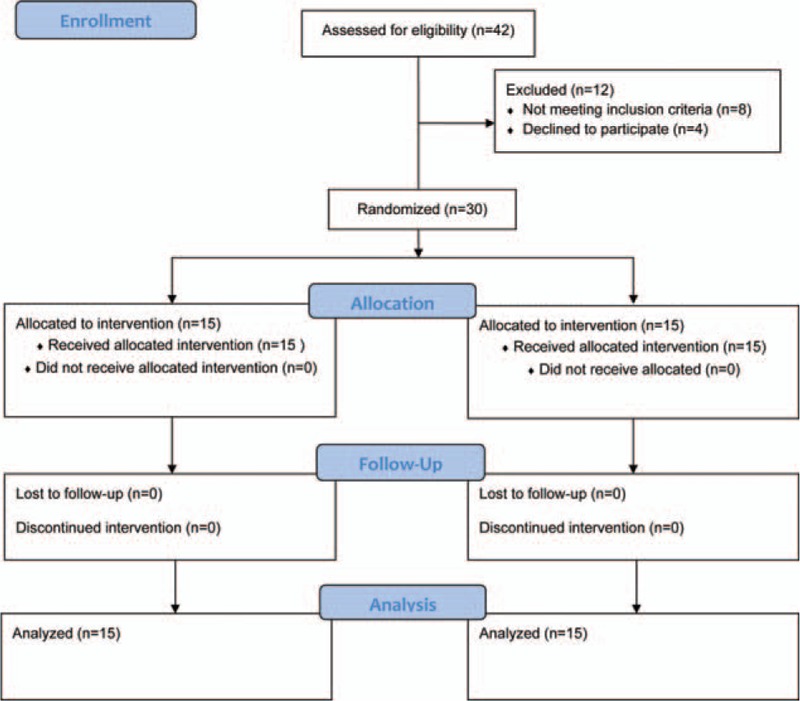
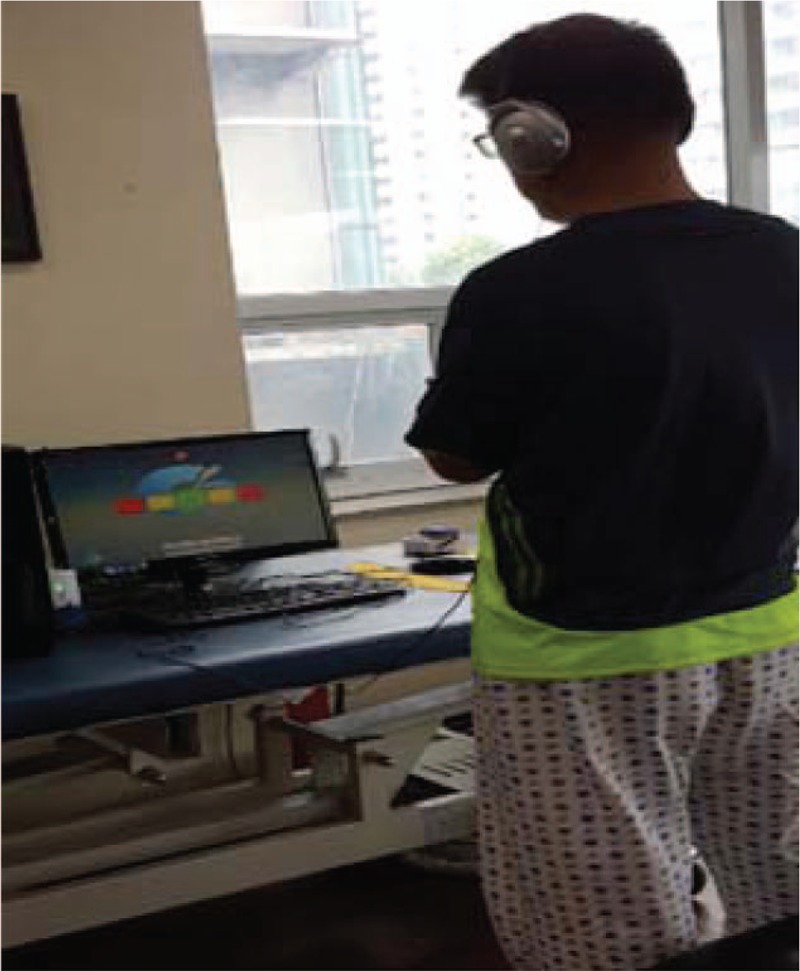
Methods: The present randomized controlled trial was conducted at a single rehabilitation hospital. Thirty patients with chronic stroke were randomly divided an experimental group (n = 15) and a control group (n = 15). The experimental group received 3 CMDT + AMST sessions per week for 6 weeks, whereas the control group received CMDT only 3 times per week for 6 weeks. Changes in cognitive function were evaluated using the trail making test (TMT), digit span test (DST), and stroop test (ST).
Results: Significant differences in TMT-A and B (P = .001, P = .001), DST-forward (P = .001, P = .001), DST-backward (P = .000, P = .001), ST-word (P = .001, P = .001), and ST-color (P = .002, P = .001) scores were observed in both the control and experimental groups, respectively. Significant differences in TMT-A (P = .001), DST-forward (P = .027), DST-backward (P = .002), and ST-word (P = .025) scores were observed between the 2 groups. Performance speed on the TMT-A was faster in the CMDT + AMST group than in the CMDT group. Moreover, DST-forward and DST-backward scores were higher in the CMDT + AMST group than in the CDMT group. Although ST-color results were similar in the 2 groups, ST-word scores were higher in the CMDT + AMST group than in the CMDT group.
Conclusion: This finding indicates that the combined therapy CMDT and AMST can be used to increase attention, memory, and executive function for people with stroke.
Conflict of interest statement
The authors have no conflicts of interest to disclose.
Figures
References
-
- Bonita R. Epidemiology of stroke. Lancet 1992;339:342–4. - PubMed
-
- Desmond DW, Moroney JT, Paik MC, et al. Frequency and clinical determinants of dementia after ischemic stroke. Neurology 2000;54:1124–31. - PubMed
-
- Zorowitz RD, Gross E, Polinski DM. The stroke survivor. Disabil Rehabil 2002;24:666–79. - PubMed
-
- Mercier L, Audet T, Hebert R, et al. Impact of motor, cognitive and perceptual disorders on ability to perform activities of daily living after stroke. Stroke 2001;32:2602–8. - PubMed
-
- McDowell S, Whyte J, D’Esposito M. Working memory impairments in traumatic brain injury: evidence from a dual-task paradigm. Neuropsychologia 1997;35:1341–53. - PubMed
Publication types
MeSH terms
LinkOut - more resources
Full Text Sources
Other Literature Sources
Medical
