


Detection and phylogenetic characterization of arbovirus dual-infections among persons during a chikungunya fever outbreak, Haiti 2014
- PMID: 29851952
- PMCID: PMC5997359
- DOI: 10.1371/journal.pntd.0006505
Detection and phylogenetic characterization of arbovirus dual-infections among persons during a chikungunya fever outbreak, Haiti 2014
Abstract
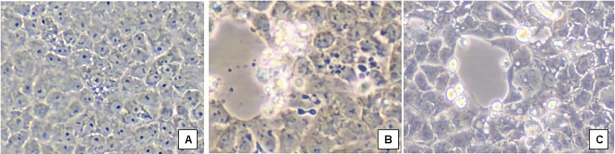
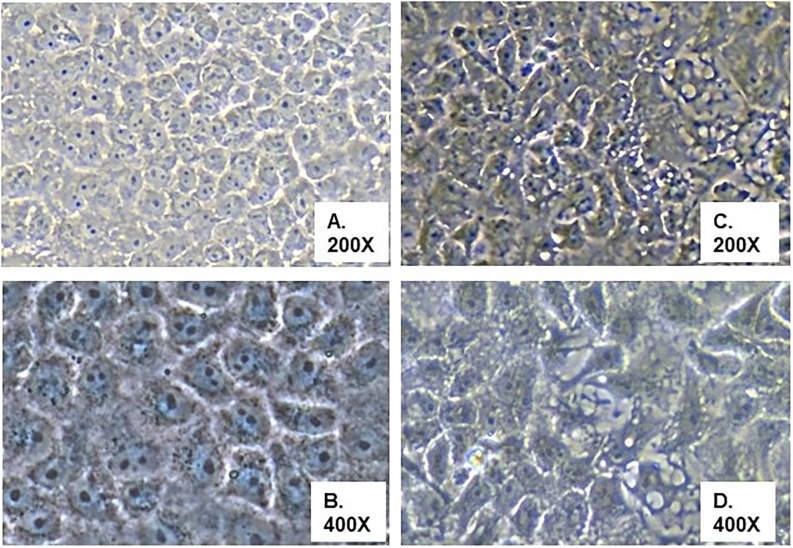
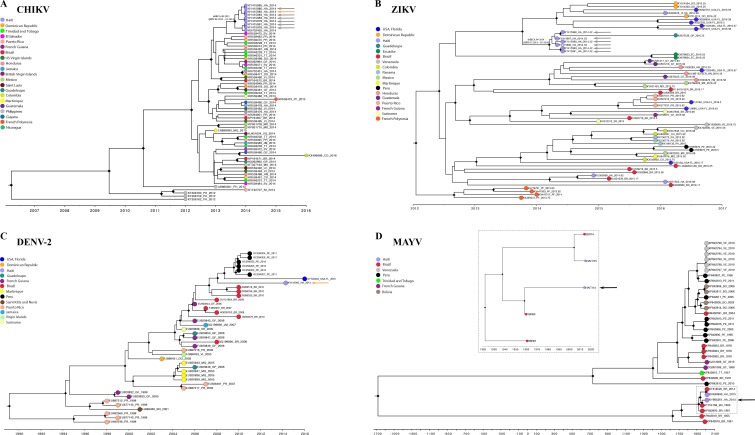
In the context of recent arbovirus epidemics, questions about the frequency of simultaneous infection of patients with different arbovirus species have been raised. In 2014, a major Chikungunya virus (CHIKV) epidemic impacted the Caribbean and South America. As part of ongoing screening of schoolchildren presenting with acute undifferentiated febrile illness in rural Haiti, we used RT-PCR to identify CHIKV infections in 82 of 100 children with this diagnosis during May-August 2014. Among these, eight were infected with a second arbovirus: six with Zika virus (ZIKV), one with Dengue virus serotype 2, and one with Mayaro virus (MAYV). These dual infections were only detected following culture of the specimen, suggesting low viral loads of the co-infecting species. Phylogenetic analyses indicated that the ZIKV and MAYV strains differ from those detected later in 2014 and 2015, respectively. Moreover, CHIKV and ZIKV strains from co-infected patients clustered monophyletically in their respective phylogeny, and clock calibration traced back the common ancestor of each clade to an overlapping timeframe of introduction of these arboviruses onto the island.
Conflict of interest statement
The authors have declared that no competing interests exist.
Figures
References
-
- Stapleford KA, Moratorio G, Henningsson R, Chen R, Matheus S, et al. (2016) Whole-Genome Sequencing Analysis from the Chikungunya Virus Caribbean Outbreak Reveals Novel Evolutionary Genomic Elements. PLoS Negl Trop Dis 10: e0004402 doi: 10.1371/journal.pntd.0004402 - DOI - PMC - PubMed
-
- Vasconcelos PF, Calisher CH (2016) Emergence of Human Arboviral Diseases in the Americas, 2000–2016. Vector Borne Zoonotic Dis. - PubMed
-
- Caglioti C, Lalle E, Castilletti C, Carletti F, Capobianchi MR, et al. (2013) Chikungunya virus infection: an overview. New Microbiol 36: 211–227. - PubMed
-
- Nasci RS (2014) Movement of chikungunya virus into the Western hemisphere. Emerg Infect Dis 20: 1394–1395. doi: 10.3201/eid2008.140333 - DOI - PMC - PubMed
Publication types
MeSH terms
Substances
Grants and funding
LinkOut - more resources
Full Text Sources
Other Literature Sources
Medical
Research Materials
