


Change in anxiety sensitivity and substance use coping motives as putative mediators of treatment efficacy among substance users
- PMID: 29852309
- PMCID: PMC10980288
- DOI: 10.1016/j.brat.2018.05.010
Change in anxiety sensitivity and substance use coping motives as putative mediators of treatment efficacy among substance users
Abstract
Objective: Anxiety sensitivity and coping motives for substance use are processes implicated in anxiety and substance use disorder (SUD) comorbidity, and are malleable treatment targets. Little is known about whether changes in anxiety sensitivity or coping motives during cognitive behavioral therapy (CBT) for anxiety disorders (with or without CBT for SUD) mediate substance use outcomes among patients with comorbid anxiety disorders and SUD. We examined whether changes in anxiety sensitivity and coping motives during treatment for comorbid SUD and anxiety disorders (either CBT for SUD only or CBT for SUD and anxiety disorders) were associated with substance use outcomes.
Methods: Repeated measurements of anxiety sensitivity and coping motives throughout treatment were examined from a randomized clinical trial comparing usual, CBT-based treatment at a substance use disorder specialty clinic (UC) to that usual care plus a brief CBT for anxiety program for patients with comorbid anxiety and substance use disorders (CALM ARC).
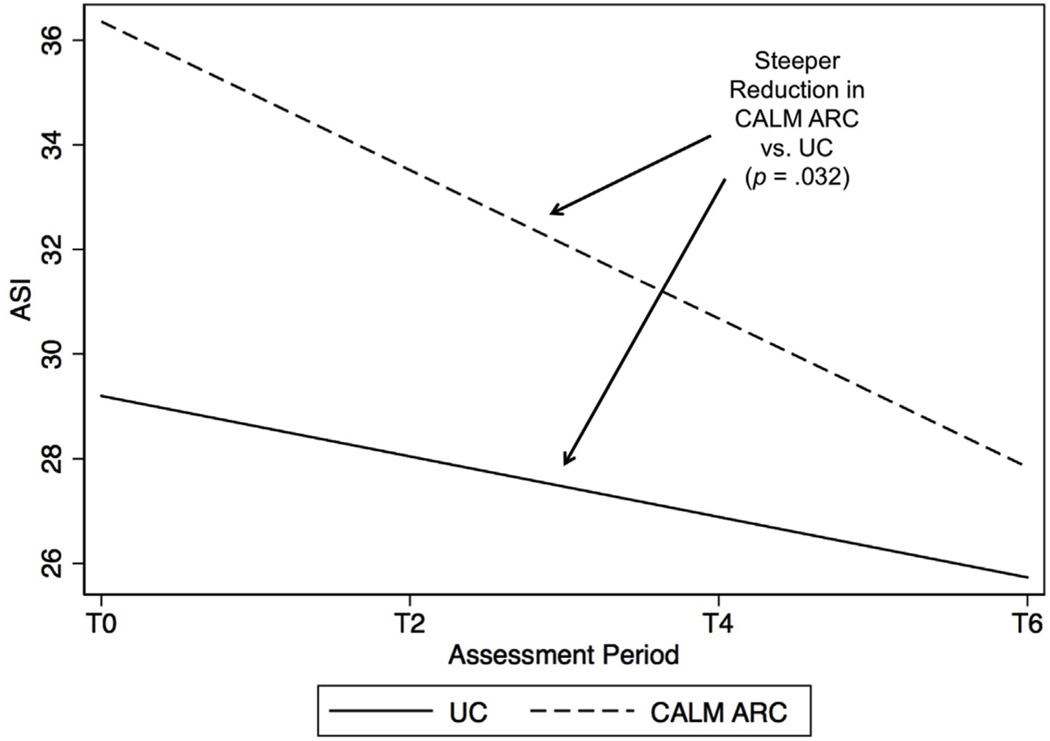
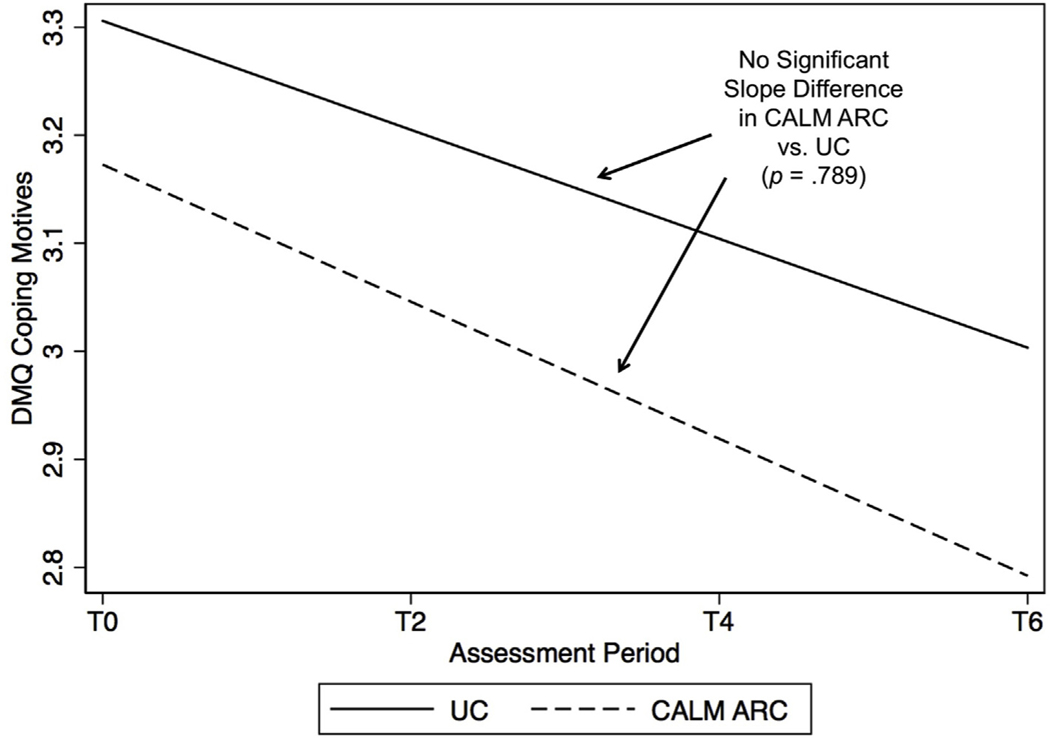
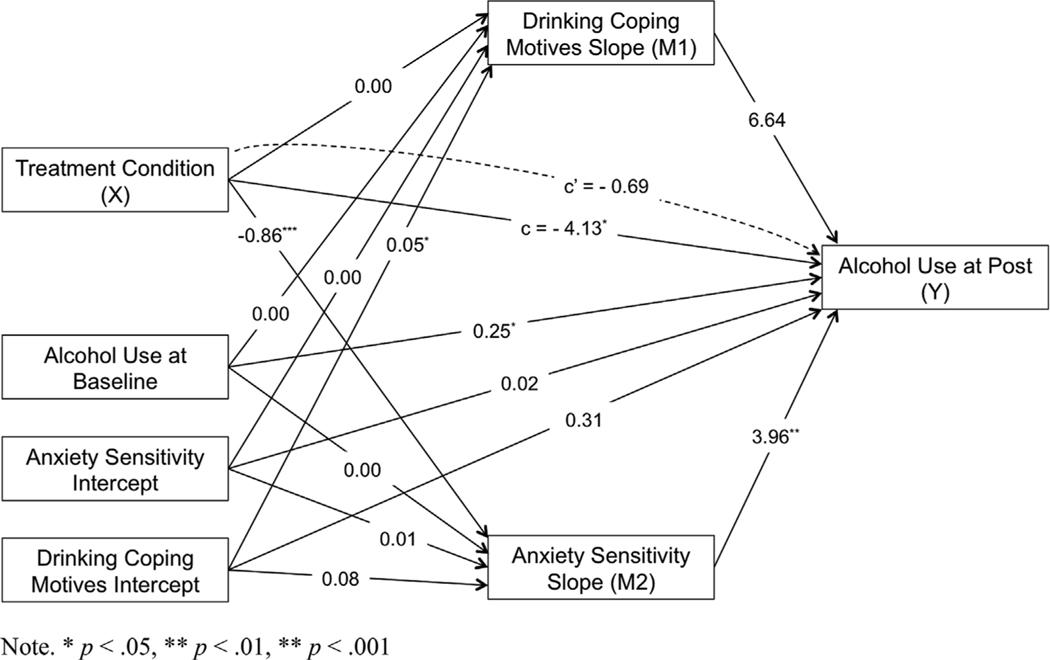
Results: Anxiety sensitivity decline during treatment was significantly steeper among those who received CALM ARC than those in UC. Decreases in anxiety sensitivity mediated the effect of treatment group on alcohol use following treatment such that the greater reduction in anxiety sensitivity in CALM ARC explained the superior outcomes for alcohol use in CALM ARC compared to UC. Declines in substance use coping motives were not observed in either condition, and did not differ between CALM ARC and UC. Thus, declines in coping motives did not mediate substance use after treatment.
Conclusions: These findings provide preliminary evidence suggesting alcohol use outcomes were related to decreasing anxiety sensitivity rather than decreasing coping motives. Implications and future directions are discussed.
Trial registration: ClinicalTrials.gov NCT01764698.
Copyright © 2018. Published by Elsevier Ltd.
Figures
References
-
- Arch JJ, Wolitzky-Taylor KB, Eifert GH, & Craske MG. (2012). Longitudinal treatment mediation of traditional cognitive behavioral therapy and acceptance and commitment therapy for anxiety disorders. Behaviour Research and Therapy, 50, 469–478. - PubMed
-
- Baker TB, Piper ME, McCarthy DE, Majeskie MR, & Fiore MC. (2004). Addiction motivation reformulated: An affective processing model of negative reinforcement. Psychological Review, 111, 33–51. - PubMed
Publication types
MeSH terms
Associated data
Grants and funding
LinkOut - more resources
Full Text Sources
Other Literature Sources
Medical
