


The nutrient environment affects therapy
- PMID: 29853672
- PMCID: PMC6368963
- DOI: 10.1126/science.aar5986
The nutrient environment affects therapy
Abstract
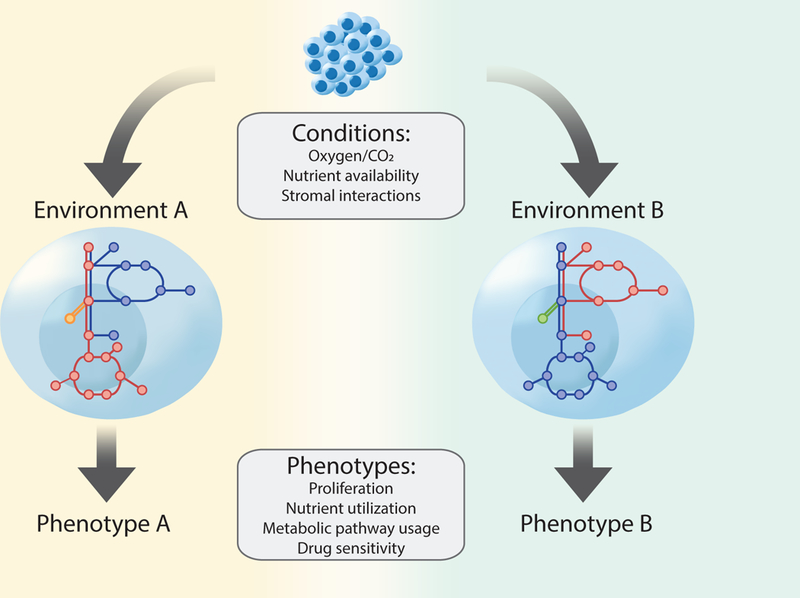
Understanding the molecular basis of cancer has led to a revolution in how cancers are classified and treated. Subsets of patients with specific genetic lesions are benefiting from precision medicine approaches utilizing the explosion of new drugs that target growth-promoting signaling networks. Unfortunately, relatively few cancer patients benefit from these approaches to target driver oncogenes [1]. Precision medicine is largely built on the assumption that cancer cell-intrinsic factors, such as genetic mutations or epigenetic identity, are the dominant determinants of which pathways and processes are required in cells and therefore determine response to therapies. However, in many cases, the presence of particular genetic lesions is insufficient to identify patients that will respond to a drug [1]. For instance, standard cell culture models have not been able to identify the subsets of cancer patients that respond to most conventional chemotherapies [1]. Nevertheless, these chemotherapy drugs remain standard of care for many cancers and in some cases contribute to curative regimens. Emerging data suggests that beyond cell-intrinsic factors, nutrient availability in the tumor microenvironment can also influence response to drugs. These results highlight the importance of understanding the microenvironmental factors that dictate which cellular processes are essential for disease progression and ultimately how tumors respond to treatments targeting these processes.
Figures
References
Publication types
MeSH terms
Grants and funding
LinkOut - more resources
Full Text Sources
Other Literature Sources
