


Characteristics and predictors of gastric cancer after Helicobacter pylori eradication
- PMID: 29853734
- PMCID: PMC5974578
- DOI: 10.3748/wjg.v24.i20.2163
Characteristics and predictors of gastric cancer after Helicobacter pylori eradication
Abstract
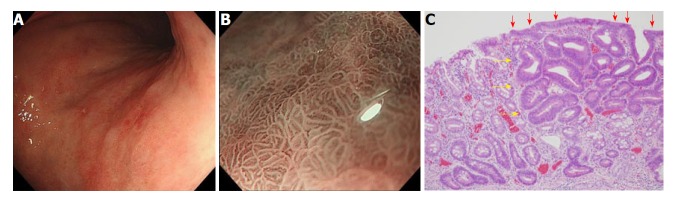
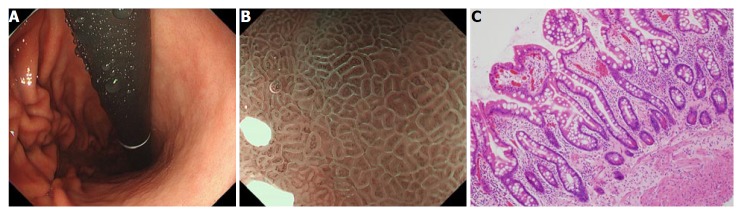
Helicobacter pylori (H. pylori) eradication can reduce gastric cancer. However, gastric cancer still develops after eradication, and cases who received eradication therapy are increasing. In this study, we have reviewed the characteristics and predictors of primary gastric cancer developing after H. pylori eradication. In terms of the characteristics, endoscopic, histologic, and molecular characteristics are reported. Endoscopically, gastric cancer after eradication is often depressed-type and shows a gastritis-like appearance, which sometimes makes the diagnosis difficult. Histologically, most gastric cancer after eradication is intestinal type, and non-neoplastic epithelium, also called epithelium with low-grade atypia, is frequently seen over the tumor, which is presumably the cause of the endoscopic gastritis-like appearance. As for molecular characteristics, some markers, such as Ki67, MUC2, and Wnt5a expression, are lower in cancer from patients in whom H. pylori has been eradicated. In terms of predictors, several Japanese studies have reported that severe endoscopic atrophy at eradication is a risk factor for gastric cancer development. Histologic intestinal metaplasia, especially in the corpus, and long-term use of proton pump inhibitors, are also reported as risk factors for gastric cancer after H. pylori eradication. These studies on the characteristics and predictors of gastric cancer development will become the cornerstone for establishing a novel surveillance program based on the gastric cancer risk stratification specific to H. pylori-eradicated patients.
Keywords: Characteristic; Eradication; Gastric cancer; Helicobacter pylori; Predictor.
Conflict of interest statement
Conflict-of-interest statement: The authors declare that no competing interests exist.
Figures
References
-
- Uedo N, Jung HY, Fujishiro M, Lee IL, Zhou PH, Chiu PW, Chang D, Goda K. Current situation of endoscopic submucosal dissection for superficial neoplasms in the upper digestive tract in East Asian countries: a questionnaire survey. Dig Endosc. 2012;24 Suppl 1:124–128. - PubMed
-
- Rugge M, Genta RM, Di Mario F, El-Omar EM, El-Serag HB, Fassan M, Hunt RH, Kuipers EJ, Malfertheiner P, Sugano K, et al. Gastric Cancer as Preventable Disease. Clin Gastroenterol Hepatol. 2017;15:1833–1843. - PubMed
-
- Warren JR, Marshall B. Unidentified curved bacilli on gastric epithelium in active chronic gastritis. Lancet. 1983;1:1273–1275. - PubMed
-
- Leodolter A, Kulig M, Brasch H, Meyer-Sabellek W, Willich SN, Malfertheiner P. A meta-analysis comparing eradication, healing and relapse rates in patients with Helicobacter pylori-associated gastric or duodenal ulcer. Aliment Pharmacol Ther. 2001;15:1949–1958. - PubMed
Publication types
MeSH terms
Substances
LinkOut - more resources
Full Text Sources
Other Literature Sources
Medical
Research Materials
Miscellaneous
