


Astragalin: A Bioactive Phytochemical with Potential Therapeutic Activities
- PMID: 29853868
- PMCID: PMC5954929
- DOI: 10.1155/2018/9794625
Astragalin: A Bioactive Phytochemical with Potential Therapeutic Activities
Abstract
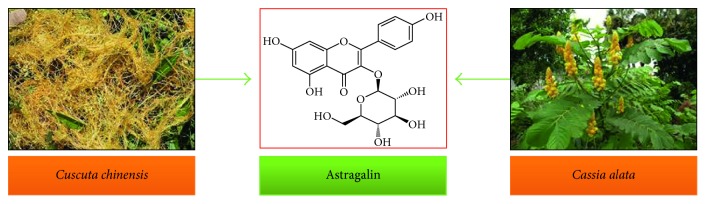
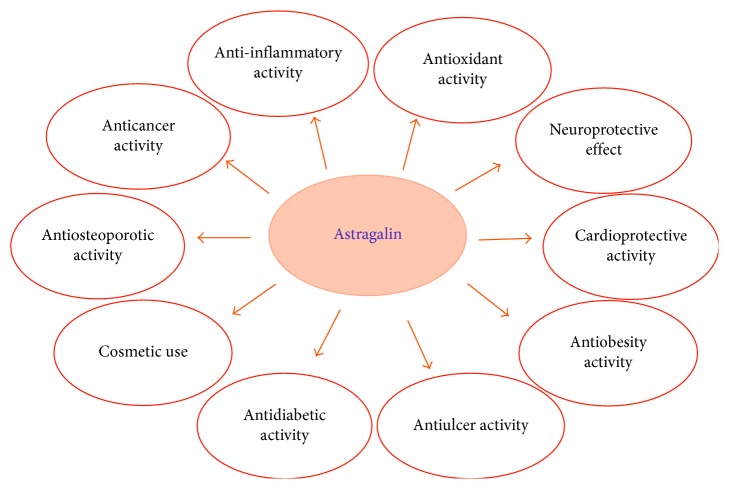
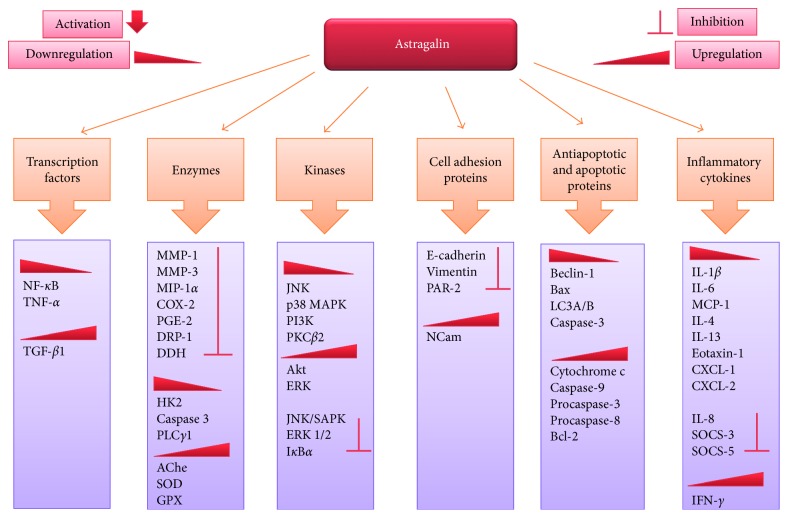
Natural products, an infinite treasure of bioactive chemical entities, persist as an inexhaustible resource for discovery of drugs. This review article intends to emphasize on one of the naturally occurring flavonoids, astragalin (kaempferol 3-glucoside), which is a bioactive constituent of various traditional medicinal plants such as Cuscuta chinensis. This multifaceted compound is well known for its diversified pharmacological applications such as anti-inflammatory, antioxidant, neuroprotective, cardioprotective, antiobesity, antiosteoporotic, anticancer, antiulcer, and antidiabetic properties. It carries out the aforementioned activities by the regulation and modulation of various molecular targets such as transcription factors (NF-κB, TNF-α, and TGF-β1), enzymes (iNOS, COX-2, PGE2, MMP-1, MMP-3, MIP-1α, COX-2, PGE-2, HK2, AChe, SOD, DRP-1, DDH, PLCγ1, and GPX), kinases (JNK, MAPK, Akt, ERK, SAPK, IκBα, PI3K, and PKCβ2), cell adhesion proteins (E-cadherin, vimentin PAR-2, and NCam), apoptotic and antiapoptotic proteins (Beclin-1, Bcl-2, Bax, Bcl-xL, cytochrome c, LC3A/B, caspase-3, caspase-9, procaspase-3, procaspase-8, and IgE), and inflammatory cytokines (SOCS-3, SOCS-5, IL-1β, IL-4, IL-6, IL-8, IL-13, MCP-1, CXCL-1, CXCL-2, and IFN-γ). Although researchers have reported multiple pharmacological applications of astragalin in various diseased conditions, further experimental investigations are still mandatory to fully understand its mechanism of action. It is contemplated that astragalin could be subjected to structural optimization to ameliorate its chemical accessibility, to optimize its absorption profiles, and to synthesize its more effective analogues which will ultimately lead towards potent drug candidates.
Figures
References
Publication types
LinkOut - more resources
Full Text Sources
Other Literature Sources
Research Materials
Miscellaneous
