


Self-Care for Common Colds: The Pivotal Role of Vitamin D, Vitamin C, Zinc, and Echinacea in Three Main Immune Interactive Clusters (Physical Barriers, Innate and Adaptive Immunity) Involved during an Episode of Common Colds-Practical Advice on Dosages and on the Time to Take These Nutrients/Botanicals in order to Prevent or Treat Common Colds
- PMID: 29853961
- PMCID: PMC5949172
- DOI: 10.1155/2018/5813095
Self-Care for Common Colds: The Pivotal Role of Vitamin D, Vitamin C, Zinc, and Echinacea in Three Main Immune Interactive Clusters (Physical Barriers, Innate and Adaptive Immunity) Involved during an Episode of Common Colds-Practical Advice on Dosages and on the Time to Take These Nutrients/Botanicals in order to Prevent or Treat Common Colds
Abstract
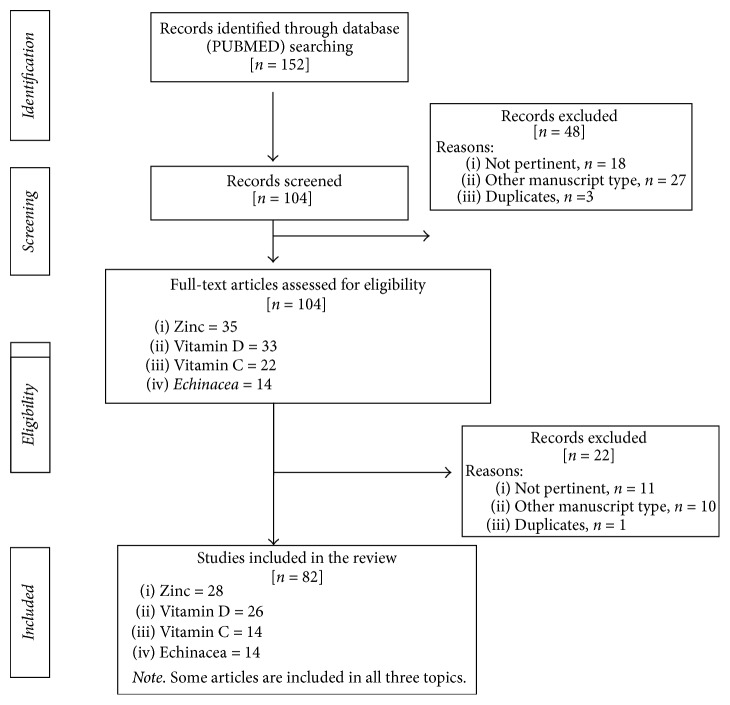
Maintaining a normal healthy immune defense system lowers the incidence and/or the severity of symptoms and/or the duration of common cold (CC). Physical barriers and innate and adaptive immunity have been involved during a CC episode. Vitamins C and D, zinc, and Echinacea have evidence-based efficacy on these immune system barriers. This review includes 82 eligible studies to consider the preventive role of these nutrients in immune clusters and in CC to provide advice on dosage and assumption of these nutrients. Regarding vitamin C, regular supplementation (1 to 2 g/day) has shown that vitamin C reduces the duration (in adults by 8%, in children by 14%) and the severity of CC. Considering zinc, the supplementation may shorten the duration of colds by approximately 33%. CC patients may be instructed to try zinc within 24 hours of onset of symptoms. As for vitamin D, the supplementation protected against CC overall, considering baseline levels and age. Patients with vitamin D deficiency and those not receiving bolus doses experienced the most benefit. Regarding Echinacea, prophylactic treatment with this extract (2400 mg/day) over 4 months appeared to be beneficial for preventing/treating CC. In conclusion, the current evidence of efficacy for zinc, vitamins D and C, and Echinacea is so interesting that CC patients may be encouraged to try them for preventing/treating their colds, although further studies are needed on this topic.
Figures
References
Publication types
LinkOut - more resources
Full Text Sources
Other Literature Sources
Research Materials
