


Acetonic extract of Vernonia amygdalina (Del.) attenuates Cd-induced liver injury: Potential application in adjuvant heavy metal therapy
- PMID: 29854601
- PMCID: PMC5977375
- DOI: 10.1016/j.toxrep.2018.02.009
Acetonic extract of Vernonia amygdalina (Del.) attenuates Cd-induced liver injury: Potential application in adjuvant heavy metal therapy
Abstract
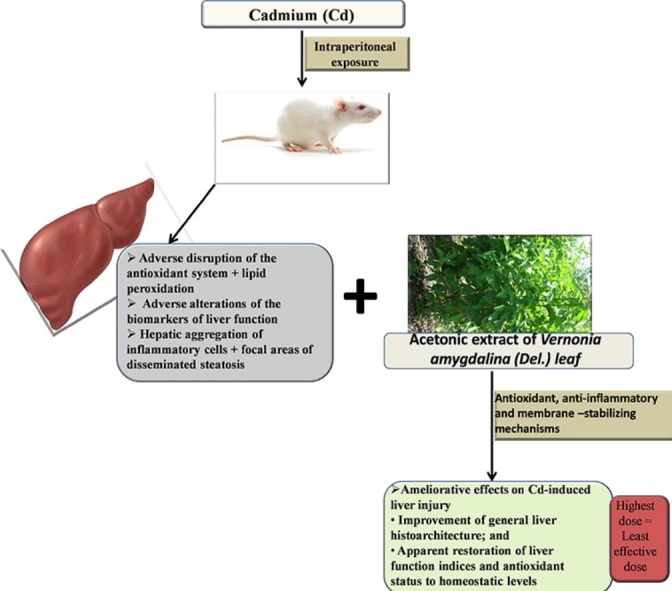
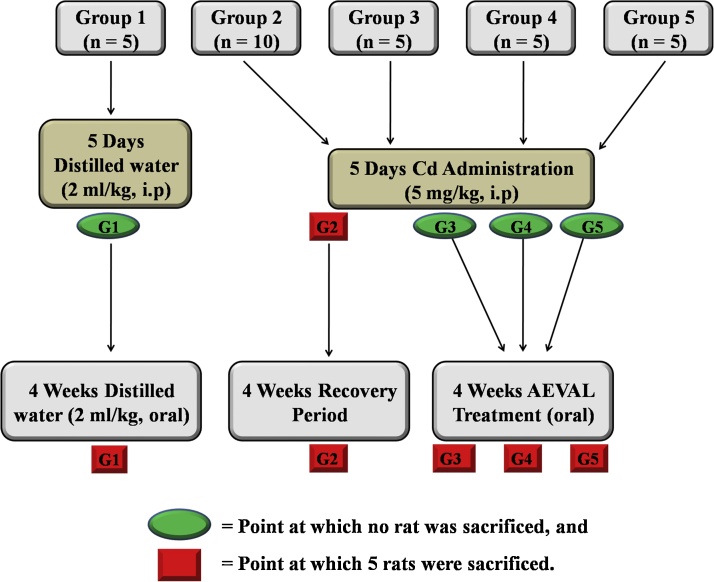
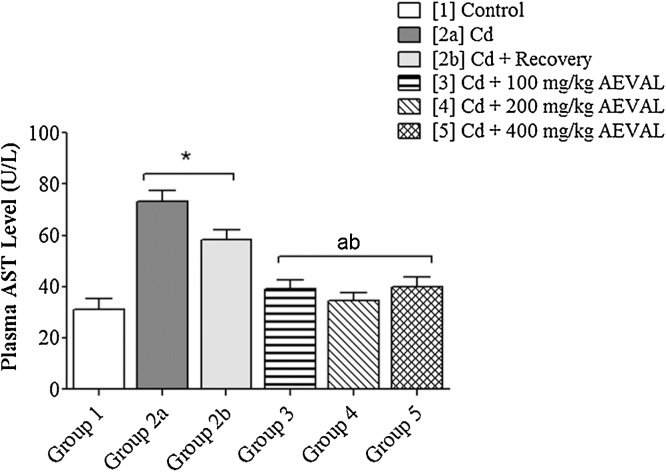
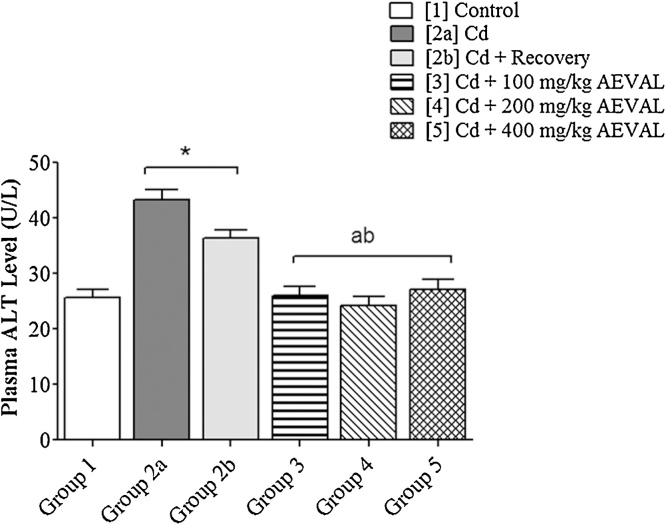
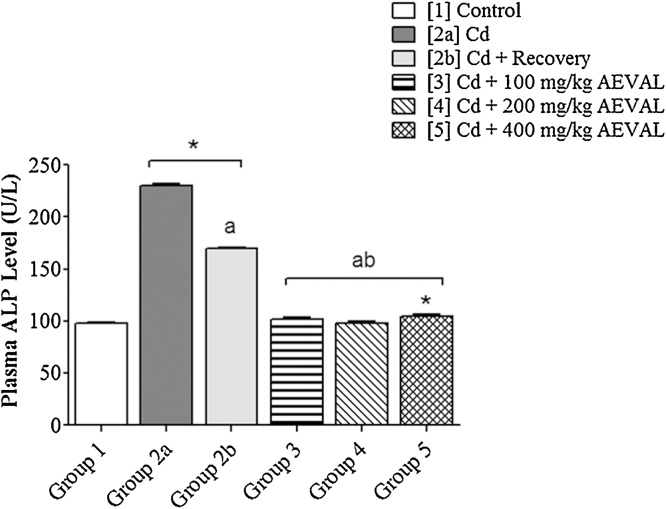
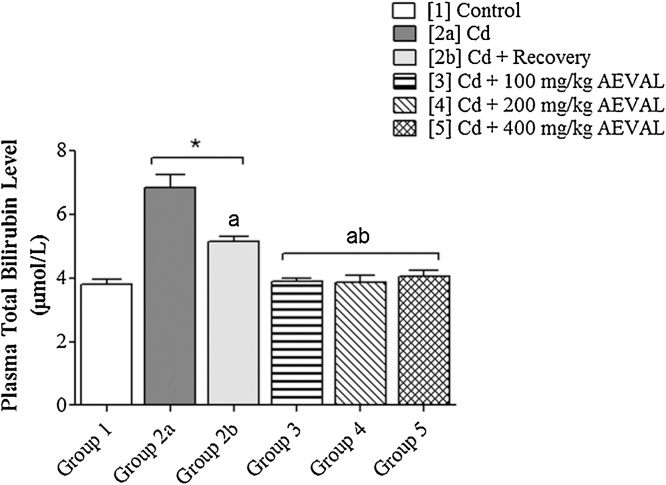
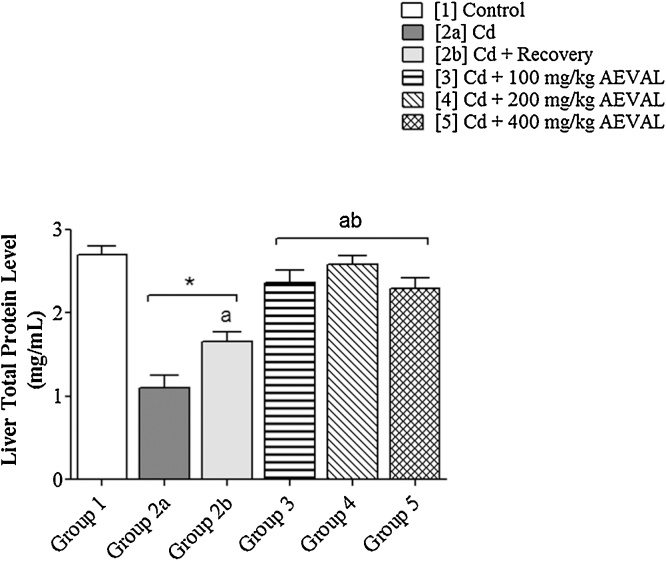
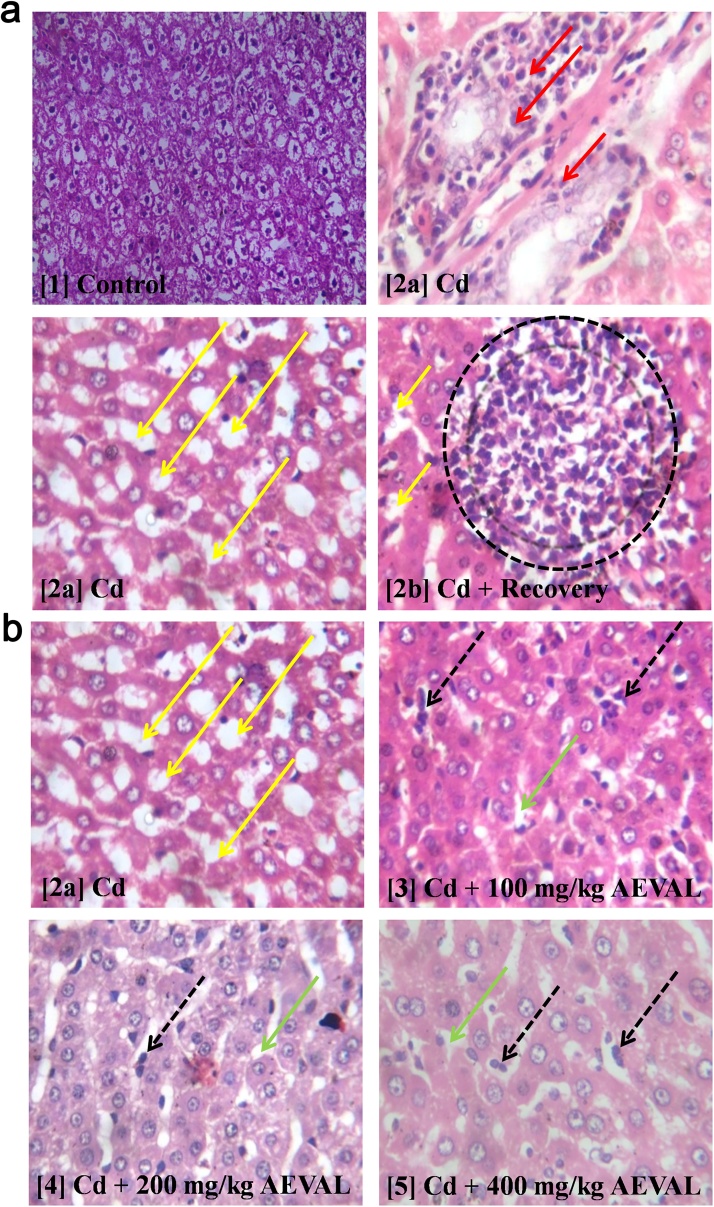
Exposure to cadmium (Cd), even at low doses, is of serious health concern because it does not undergo metabolic degradation to less toxic metabolite. Liver injury/disease, with a world-wide increasing incidence, is one of the consequences of exposure to Cd toxicity. This study aimed at determining the effects of acetonic extract of Vernonia amygdalina leaf (AEVAL) in a Wistar rat model of Cd-induced liver injury. Phytochemical screening of the extract was carried out and its oral LD50 was determined to guide the choice of therapeutic doses. Thereafter, thirty male Wistar rats were recruited for this study. The experimental groups received 4 weeks oral graded doses of the extract (100, 200 and 400 mg/kg) following Cd-induced liver injury. Cd-induced liver injury (5 mg/kg i.p for 5 consecutive days) was characterized by deleterious alterations in the levels of AST, ALT, ALP, total bilirubin and hepatic total protein (p ˂ 0.05). Also, deleterious alteration of oxidative stress indicators (GSH, SOD and CAT) and lipid peroxidation index (TBARS) was observed in the liver homogenates. Histopathological examination showed evidence of degenerated hepatocytes as well as inflammation with disseminated steatosis. These conditions were significantly attenuated (p ˂ 0.05) following treatment with graded doses of the extract, with the highest dose expressing least therapeutic effects. This study concluded that AEVAL attenuated Cd-induced liver injury and is, potentially, a suitable option in adjuvant therapy for heavy metal toxicity.
Keywords: Cadmium; Liver function biomarkers; Liver injury; Oral LD50; Oxidative stress indicators; Vernonia amygdalina leaf; Wistar rats.
Figures
References
-
- Palanive M.G., Rajkapoor B., Kumar R.S. Hepatoprotective and antioxidant effect of Pisonia aculeate L. Against CCl4-induced hepatic damage in rats. Sci. Pharm. 2008;76:203–215.
-
- Buraimoh A.A., Bako I.G., Ibrahim F.B. Hepatoprotective effect of ethanolic leaves extract of Moringa Oleifera on the histology of paracetamol induced liver damage in wistar rats. Int. J. Anim. Vet. Adv. 2011;3:10–13.
-
- Subramoniam A., Pushpangadan P. Development of phytomedicine for liver diseases. Indian J. Pharmacol. 1999;31:166–175.
-
- Olukiran S.O., Akomolafe R.O., Bamitale K.D., Ajayi A.O., Okonji R.E., Bejide R.A. Protective and curative effects of Livolin forte® on carbon tetrachloride-induced liver damage in Wistar rats. J. Exp. Integr. Med. 2013;4:57–65.
-
- WHO (World Health organization) 2nd edition. WHO, Regional Office for Europe; Copenhagen, Denmark: 2000. Cadmium Air Quality Quide Lines.
LinkOut - more resources
Full Text Sources
Other Literature Sources
Research Materials
Miscellaneous
