


Assessment of fipronil toxicity on wistar rats: A hepatotoxic perspective
- PMID: 29854616
- PMCID: PMC5978010
- DOI: 10.1016/j.toxrep.2018.02.019
Assessment of fipronil toxicity on wistar rats: A hepatotoxic perspective
Erratum in
-
Erratum regarding missing Declaration of Competing Interest statements in previously published articles.Toxicol Rep. 2020 Dec 25;8:62-63. doi: 10.1016/j.toxrep.2020.12.008. eCollection 2021. Toxicol Rep. 2020. PMID: 33391998 Free PMC article.
Abstract
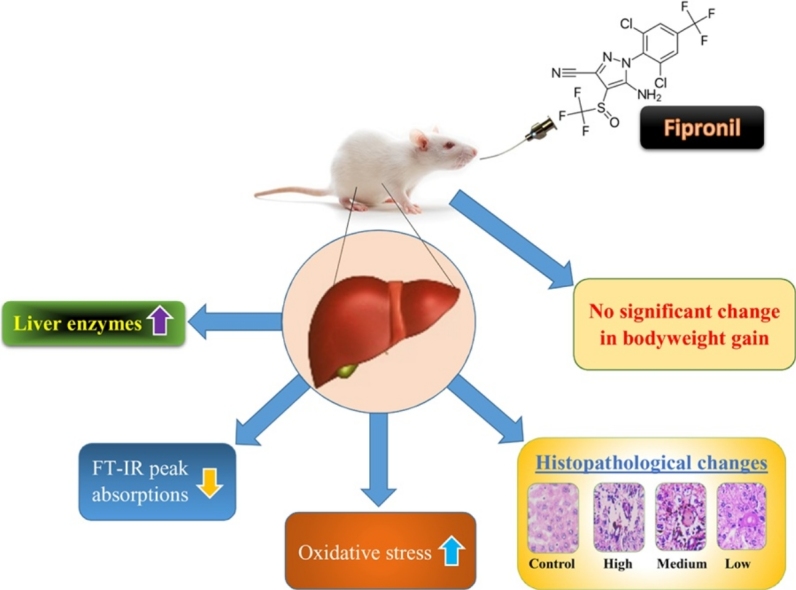
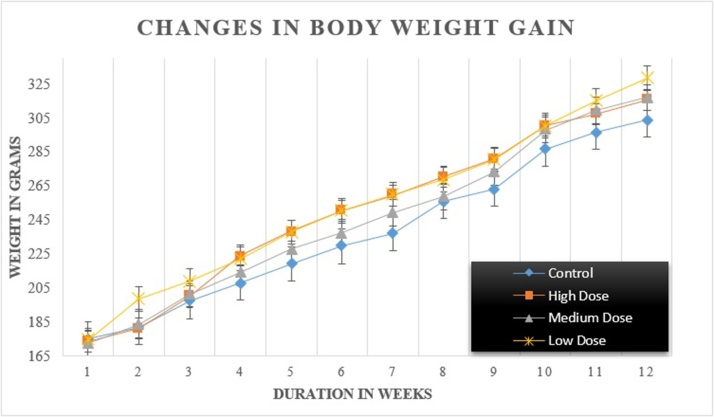
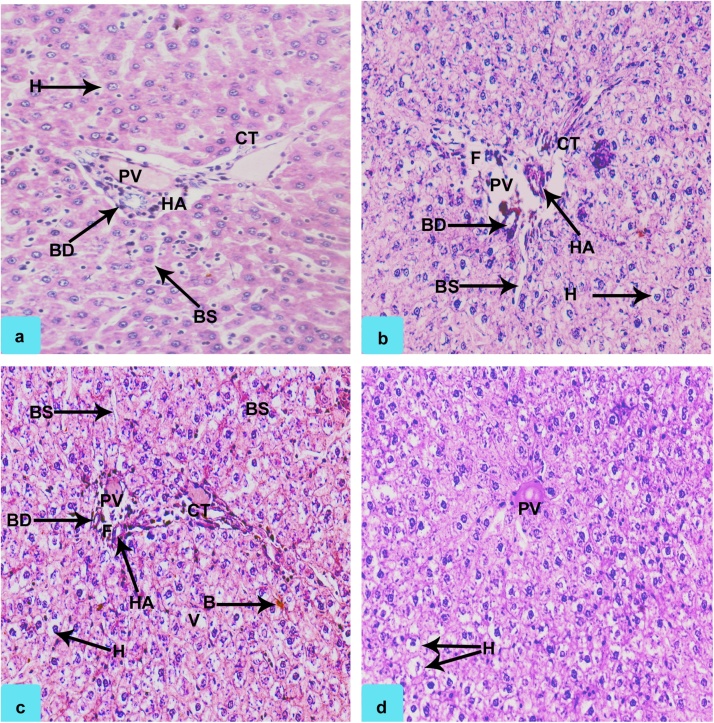
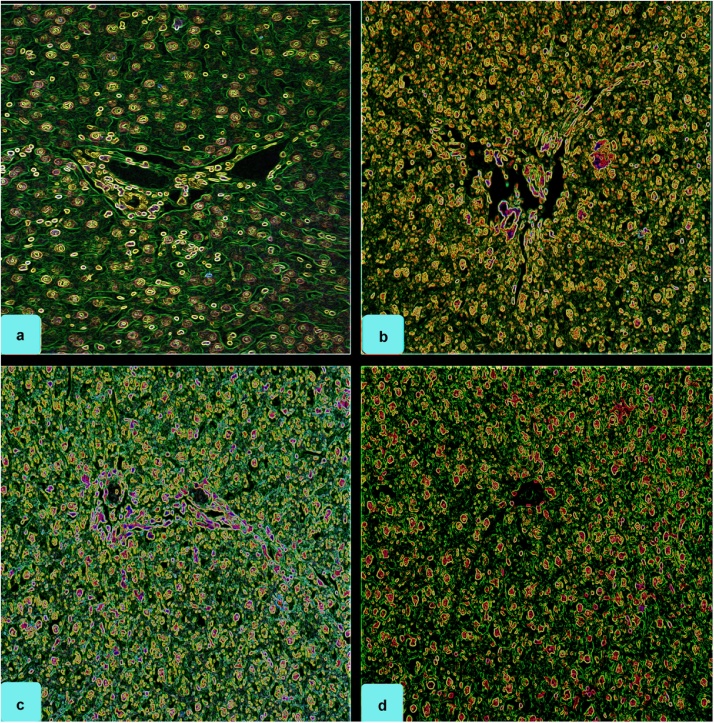
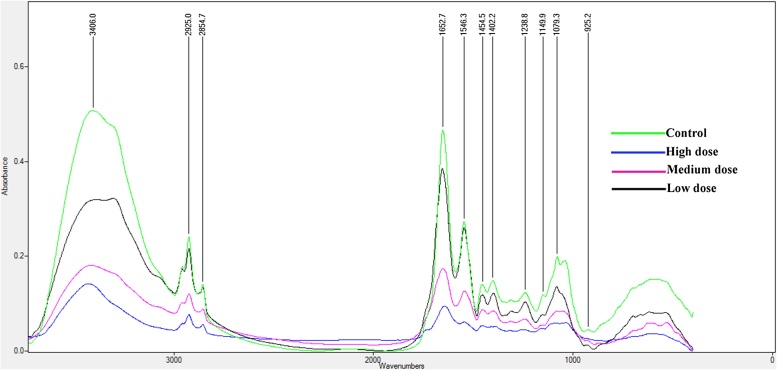
Extensive pesticide application has contributed to environmental contamination globally, imposing adverse health effects on non-target organisms. Need for an understanding of cellular response following pesticide exposure is, therefore, paradigmatic for elucidating perturbations occurring within biological systems. The present investigation was aimed to examine safe and toxic dose level of a persistent, synthetic, phenylpyrazole based insecticide, Fipronil (FPN) on rat liver. Experimental animals were divided into four groups and gavaged with 0.0 (control), 32.33 (high), 12.12 (medium) and 6.46 mg/kg body weight/day (low dose) of FPN for 90 days. While results for liver catalase and glutathione S-transferase indicated significant changes in high and medium dose groups, the superoxide dismutase and glutathione peroxidase activity suggested significant changes in all exposed groups as compared to control. Elevated levels of liver malondialdehyde reflected oxidative damage potential under the exposed groups but remained insignificant for low dose. Histologically, structural irregularities with findings like impaired portal vein and hypertrophy of hepatocytes were prominent under all the exposed groups. The FT-IR based spectral investigation further revealed changes in absorption patterns and peak intensities in rats exposed to FPN. Significant elevation was also noticed in liver enzymes; alanine aminotransferase, aspartate aminotransferase and alkaline phosphatase in rat serum suggesting the toxicity in dose -dependent pattern. Based on the outcome, it could be ascertained that the toxicity of FPN is certain at high and medium dose levels but remains ambiguous at a low dose of 6.46 mg/kg body weight/day. The current upshots serve as a preliminary report thereby advising the farming community against the usage of FPN insecticide.
Keywords: Antioxidants; Fipronil; Hepatotoxicity; Necrosis; Pesticide.
Figures
References
-
- Rhind S.M., Evans N.P., Bellingham M., Sharpe R.M., Cotinot C., Mandon-Pepin B., Loup B., Sinclair K.D., Lea R.G., Pocar P., Fischer B., van der Zalm E., Hart K., Schmidt J.S., Amezaga M.R., Fowle P.A. Effects of environmental pollutants on the reproduction and welfare of ruminants. Animal. 2010;4:1227–1239. - PMC - PubMed
-
- Vasconcelos A.M., Daam M.A., dos Santos L.R., Sanches A.L., Araújo C.V., Espíndola E.L. Acute and chronic sensitivity, avoidance behavior and sensitive life stages of bullfrog tadpoles exposed to the biopesticide abamectin. Ecotoxicology. 2016;25:500–509. - PubMed
-
- Kartheek R.M., David M. Assessment of renal toxicity in rats exposed to commercial formulations of fipronil. Int. J. Pharm. Chem. Biol. Sci. 2017;7:296–303.
-
- Kuter K., Nowak P., Gołembiowska K., Ossowska K. Increased reactive oxygen species production in the brain after repeated low-dose pesticide paraquat exposure in rats. A comparison with peripheral tissues. Neurochem. Res. 2010;35:1121–1130. - PubMed
LinkOut - more resources
Full Text Sources
Other Literature Sources
