


Gene therapy and genome surgery in the retina
- PMID: 29856367
- PMCID: PMC5983345
- DOI: 10.1172/JCI120429
Gene therapy and genome surgery in the retina
Abstract
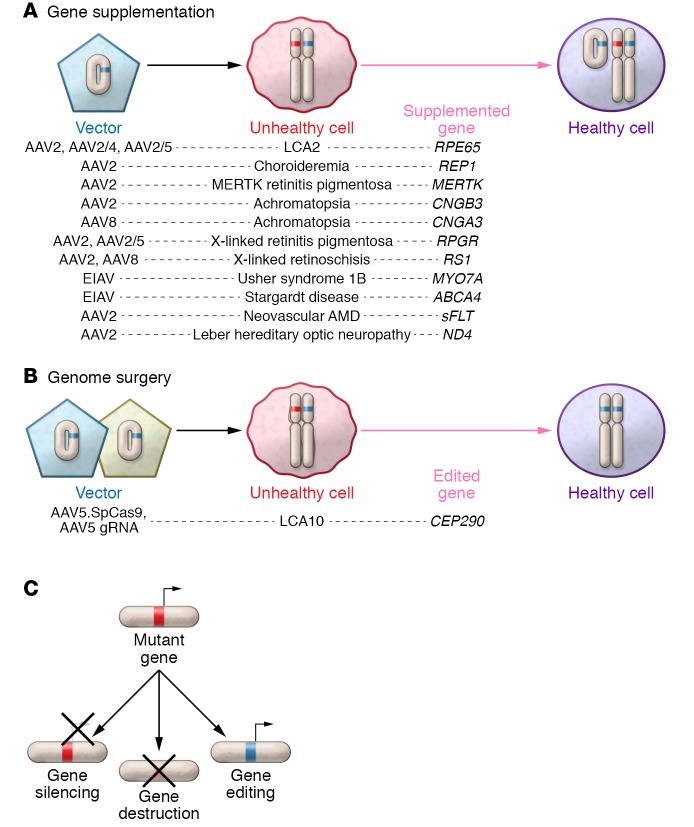
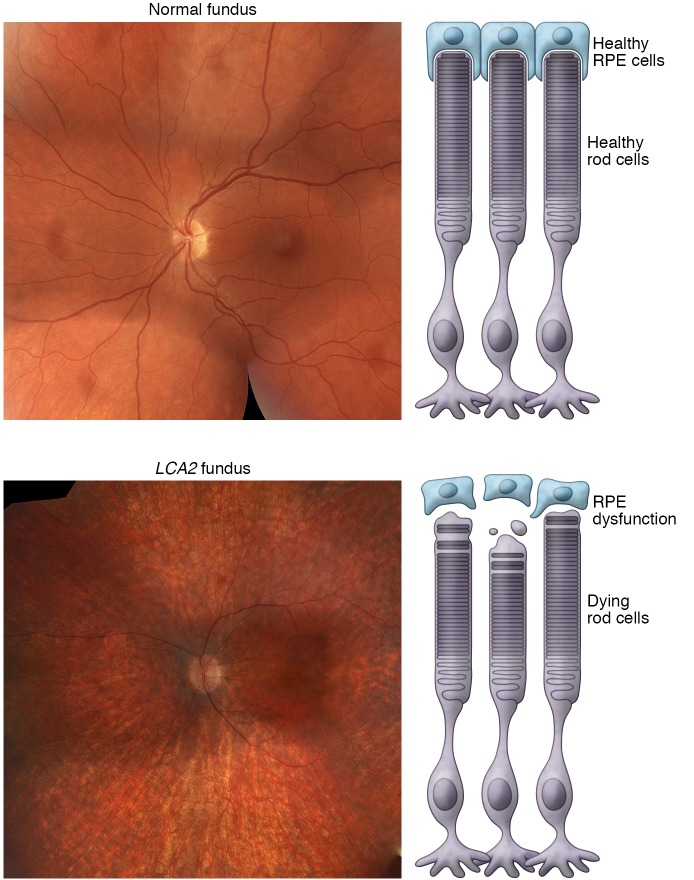
Precision medicine seeks to treat disease with molecular specificity. Advances in genome sequence analysis, gene delivery, and genome surgery have allowed clinician-scientists to treat genetic conditions at the level of their pathology. As a result, progress in treating retinal disease using genetic tools has advanced tremendously over the past several decades. Breakthroughs in gene delivery vectors, both viral and nonviral, have allowed the delivery of genetic payloads in preclinical models of retinal disorders and have paved the way for numerous successful clinical trials. Moreover, the adaptation of CRISPR-Cas systems for genome engineering have enabled the correction of both recessive and dominant pathogenic alleles, expanding the disease-modifying power of gene therapies. Here, we highlight the translational progress of gene therapy and genome editing of several retinal disorders, including RPE65-, CEP290-, and GUY2D-associated Leber congenital amaurosis, as well as choroideremia, achromatopsia, Mer tyrosine kinase- (MERTK-) and RPGR X-linked retinitis pigmentosa, Usher syndrome, neovascular age-related macular degeneration, X-linked retinoschisis, Stargardt disease, and Leber hereditary optic neuropathy.
Keywords: Genetics; Ophthalmology; Retinopathy.
Conflict of interest statement
Figures
References
Publication types
MeSH terms
Grants and funding
LinkOut - more resources
Full Text Sources
Other Literature Sources
Medical
Research Materials
Miscellaneous
