Dental Caries Status and Caries Risk Factors in Students Ages 12-14 Years in Zhejiang, China
- PMID: 29856733
- PMCID: PMC6007515
- DOI: 10.12659/MSM.907325
Dental Caries Status and Caries Risk Factors in Students Ages 12-14 Years in Zhejiang, China
Abstract
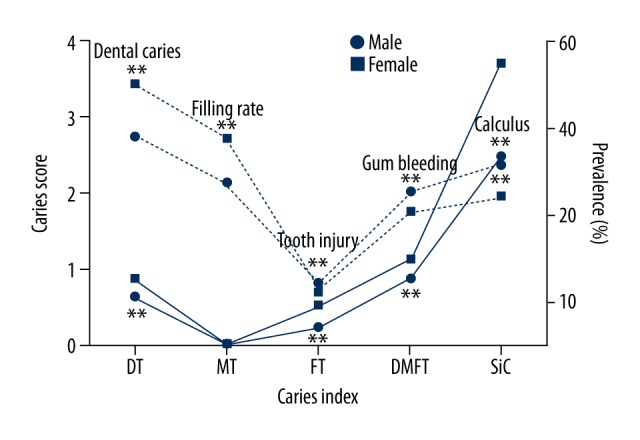
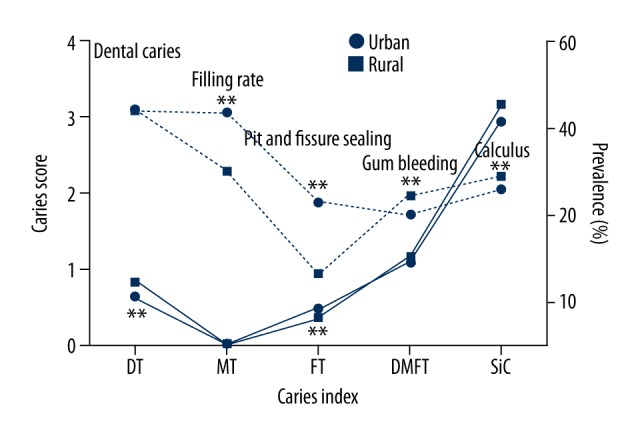
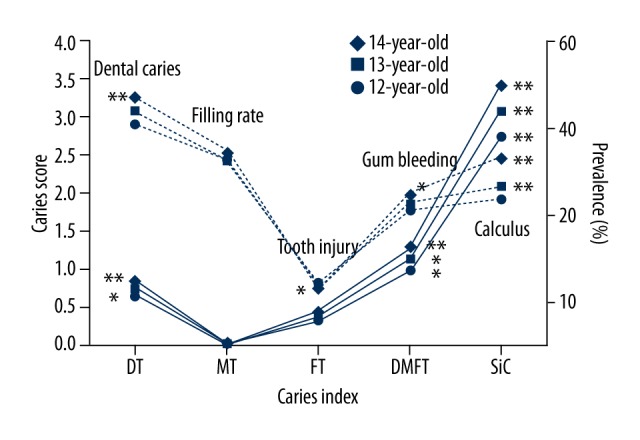
BACKGROUND An accurate and valid caries prevention policy is absent in Zhejiang because of insufficient data. Therefore, the aim of this study was to investigate oral health status and related risk factors in 12- to 14-year-old students in Zhejiang, China. MATERIAL AND METHODS Using multi-stage, stratified, random sampling, we recruited a total of 4860 students aged 12 to 14 years old from 6 regions in Zhejiang in this cross-sectional study. Dental caries was measured using the Decayed, Missing and Filled Teeth (DMFT) index and the Significant Caries Index (SiC). Information concerning family background and relevant behaviors was collected in a structured questionnaire. Logistic regression analysis was used to study risk factors related to dental caries. RESULTS The overall prevalence of dental caries was 44% and the mean DMFT and SiC scores were 1.14 and 3.11, respectively. Female students had a higher level of dental caries than male students (P<0.01). The annual increase in caries prevalence was 3% with increasing age, and the DMFT score was 0.15. The results of logistic regression analysis showed that female sex, older age, snacks consumption once or more per day, fair or poor self-assessment of dental health, toothache experience, and dental visits were the most significant risk factors for dental caries, with odds ratios ranging from 1.24 to 2.25 (P<0.01). CONCLUSIONS The prevalence of dental caries in 12- to 14-year-old students in Zhejiang was low, with a tendency to increase compared with previous oral surveys. Female sex, older age, increased sugar intake, poor oral health self-assessment, and bad dental experience were the most important factors increasing dental caries risks.
Conflict of interest statement
None.
Figures
References
-
- Selwitz RH, Ismail AI, Pitts NB. Dental caries. Lancet. 2007;369(9555):51–59. - PubMed
-
- Krisdapong S, Prasertsom P, Rattanarangsima K, Sheiham A. Relationships between oral diseases and impacts on Thai schoolchildren’s quality of life: Evidence from a Thai national oral health survey of 12- and 15-year-olds. Community Dent Oral Epidemiol. 2012;40(6):550–59. - PubMed
-
- Montero J, Rosel E, Barrios R, et al. Oral health-related quality of life in 6- to 12-year-old schoolchildren in Spain. Int J Paediatr Dent. 2016;26(3):220–30. - PubMed
MeSH terms
LinkOut - more resources
Full Text Sources
Other Literature Sources
Medical
Research Materials