


A receptor tyrosine kinase ROR1 inhibitor (KAN0439834) induced significant apoptosis of pancreatic cells which was enhanced by erlotinib and ibrutinib
- PMID: 29856777
- PMCID: PMC5983484
- DOI: 10.1371/journal.pone.0198038
A receptor tyrosine kinase ROR1 inhibitor (KAN0439834) induced significant apoptosis of pancreatic cells which was enhanced by erlotinib and ibrutinib
Abstract
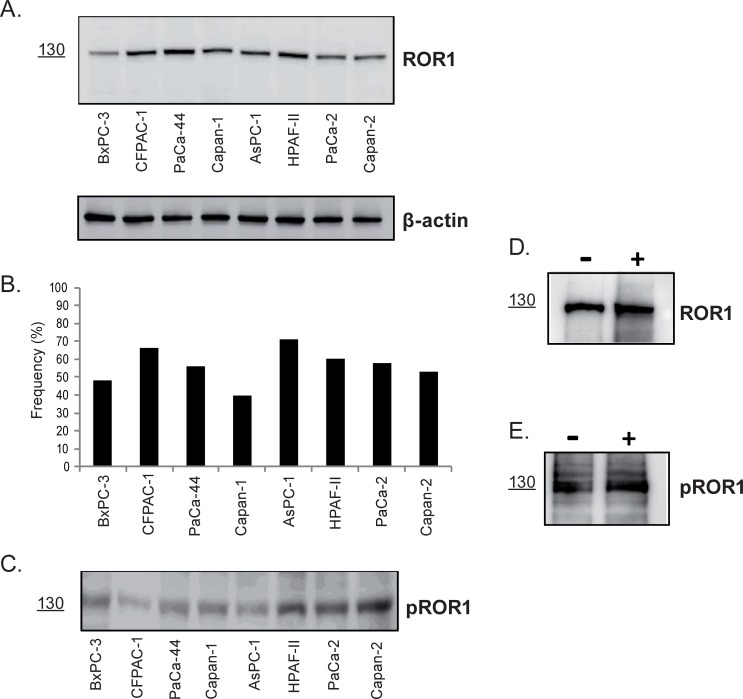
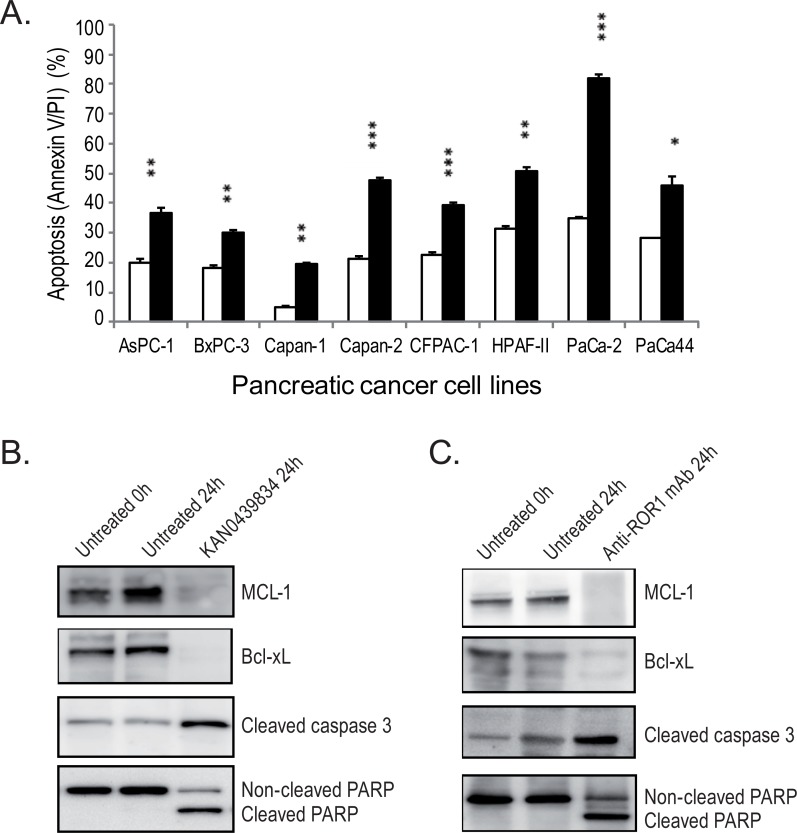
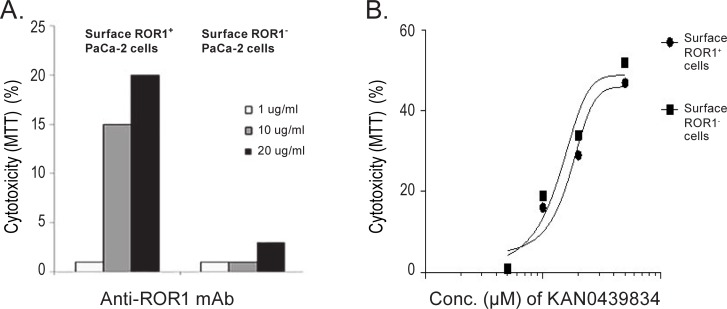
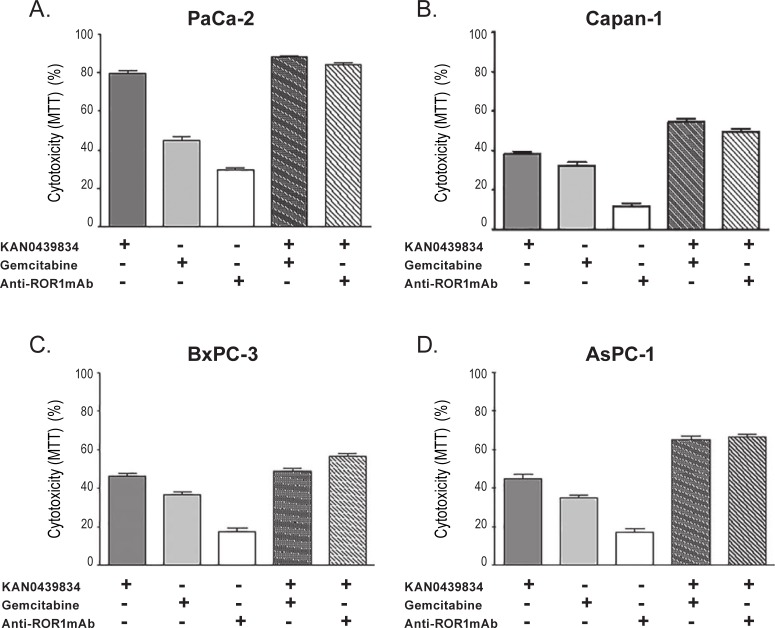
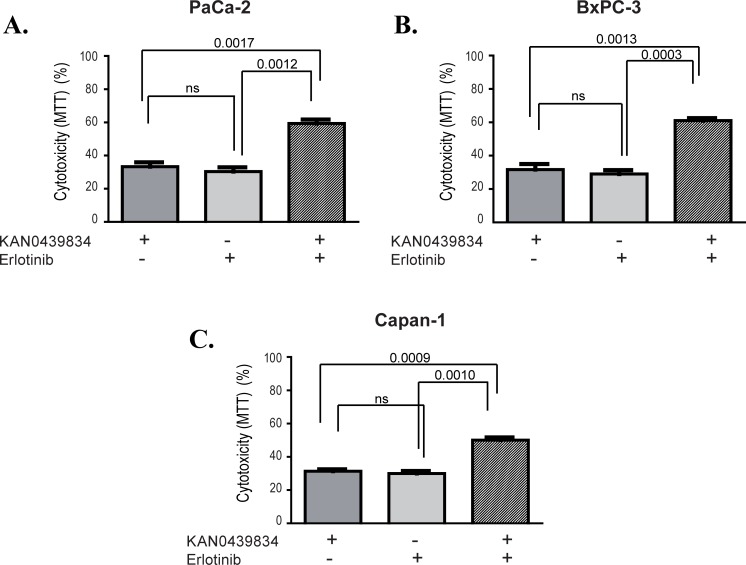
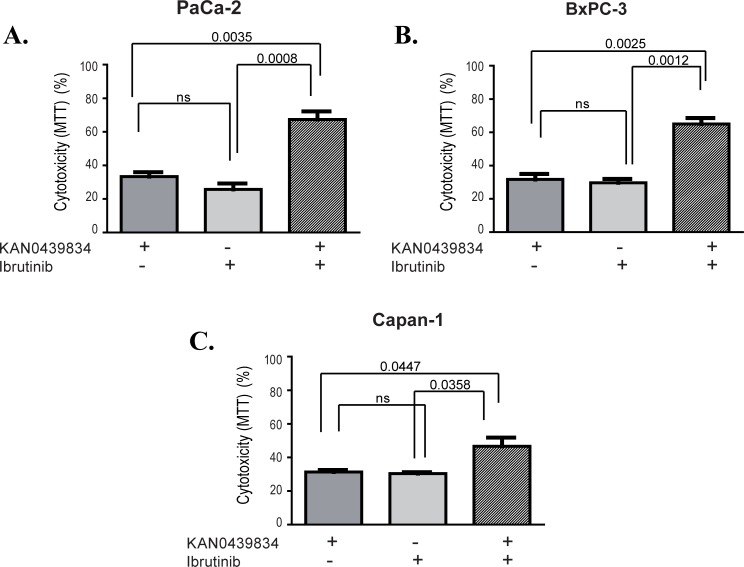
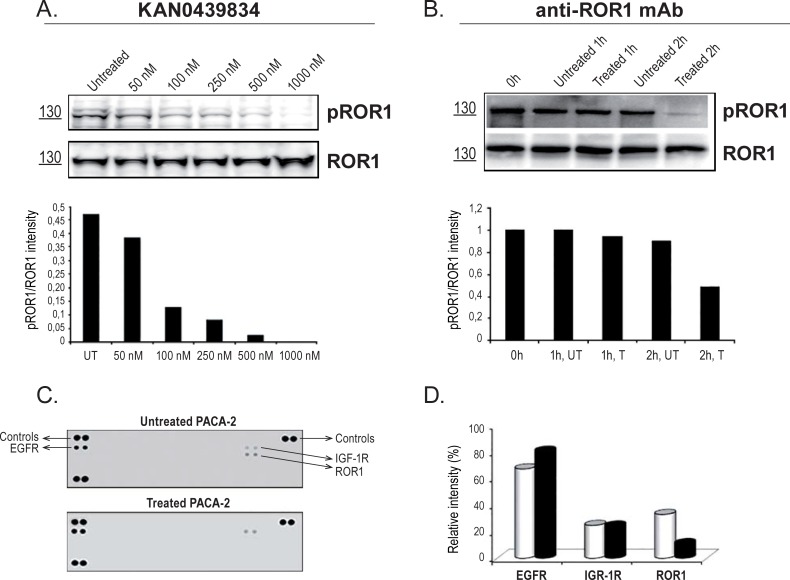
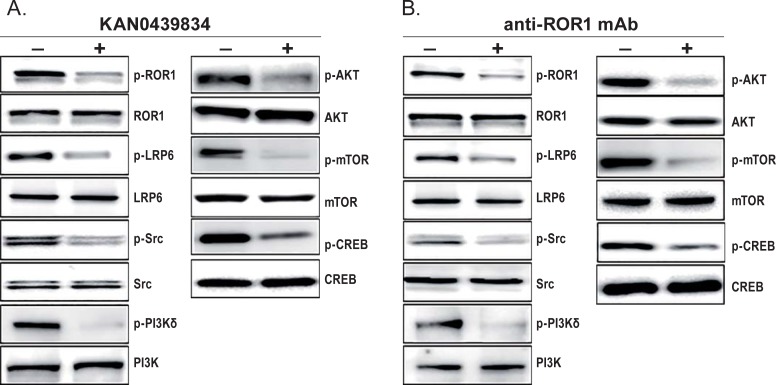
There is a great unmet medical need in pancreatic carcinoma (PC) for novel drugs with other mechanisms of action than existing. PC cells express the onco-fetal RTK ROR1, absent on most normal post-partem cells. ROR1 is involved in proliferation, survival, EMT and metastasis of tumor cells in various malignancies. A small molecule inhibitor (KAN0439834) (530 Da) targeting the TK domain of ROR1 was developed and the activity in ROR1 expressing human PC cell lines (n = 8) evaluated. The effects were compared to a murine mAb against the external part of ROR1, gemcitabine, erlotinib and ibrutinib. KAN0439834 induced significant apoptosis of the tumor cells. EC50 values for KAN0439834 varied between 250-650 nM depending on the cell line. The corresponding values for erlotinib and ibrutinib were 10-40 folds higher. KAN0439834 was much more effective in inducing tumor cell death than the ROR1 mAb although both inhibited ROR1 phosphorylation and downstream non-canonical Wnt pathway molecules. Combination of KAN0439834 with erlotinib or ibrutinib had significant additive effects on tumor cell death. A first-in-class small molecule ROR1 inhibitor (KAN0439834) showed promising in vitro activity against a number of human PC cell lines. Interesting is the additive effects of erlotinib and ibrutinib which warrants further studies as both these agents are in clinical trials for pancreatic carcinoma.
Conflict of interest statement
AHD, MHF, AM, JS, JV, SB, EO, TO, AÖ and HM are shareholders of Kancera AB. AM, JS, JV, SB, EO, and TO are employees of Kancera AB. HM has received research grants from Kancera. Kancera AB did not have any role in the study design, data collection, analyses, decision to publish. The specific roles of the authors are articulated in the Author Contributions section. There are no patents, products in development or marketed products to declare. This does not alter our adherence to PLOS ONE policies on sharing data and materials.
Figures
References
-
- Malvezzi M, Bertuccio P, Levi F, La Vecchia C, Negri E. European cancer mortality predictions for the year 2013. Ann Oncol. 2013;24(3):792–800. doi: 10.1093/annonc/mdt010 . - DOI - PubMed
-
- Siegel RL, Miller KD, Jemal A. Cancer statistics, 2015. CA Cancer J Clin. 2015;65(1):5–29. doi: 10.3322/caac.21254 . - DOI - PubMed
-
- Spadi R, Brusa F, Ponzetti A, Chiappino I, Birocco N, Ciuffreda L, et al. Current therapeutic strategies for advanced pancreatic cancer: A review for clinicians. World J Clin Oncol. 2016;7(1):27–43. doi: 10.5306/wjco.v7.i1.27 ; PubMed Central PMCID: PMCPMC4734936. - DOI - PMC - PubMed
-
- Taieb J, Pointet AL, Van Laethem JL, Laquente B, Pernot S, Lordick F, et al. What treatment in 2017 for inoperable pancreatic cancers? Ann Oncol. 2017;28(7):1473–83. doi: 10.1093/annonc/mdx174 . - DOI - PubMed
-
- Hanahan D, Weinberg RA. Hallmarks of cancer: the next generation. Cell. 2011;144(5):646–74. doi: 10.1016/j.cell.2011.02.013 . - DOI - PubMed
Publication types
MeSH terms
Substances
LinkOut - more resources
Full Text Sources
Other Literature Sources
