


Long-term dietary (n-3) polyunsaturated fatty acids show benefits to the lungs of Cftr F508del mice
- PMID: 29856782
- PMCID: PMC5983462
- DOI: 10.1371/journal.pone.0197808
Long-term dietary (n-3) polyunsaturated fatty acids show benefits to the lungs of Cftr F508del mice
Abstract
Introduction: The pro-inflammatory status of cystic fibrosis (CF) patients promotes pulmonary colonization with opportunist and pathogenic bacteria, which is favored by a sticky mucus. Oral supplementation with (n-3) long chain polyunsaturated fatty acids (LC-PUFA) has shown anti-inflammatory effects. The aim of this study was to demonstrate the positive effects of a long-term diet enriched in (n-3) LC-PUFA on the lungs of Cftr F508del mice.
Materials and methods: Breeding CftrΔF508del/+ mice received a control diet or a diet enriched in (n-3) LC-PUFA for 5 weeks before mating, gestation and lactation. After weaning, the offspring were given the same diet as their mother until post-natal day 60. The effects of (n-3) LC-PUFA supplementation on the lungs were evaluated in homozygous Cftr F508del mice and their wild-type littermates after acute lung inflammation induced by Pseudomonas aeruginosa lipopolysaccharide (LPS) inhalation.
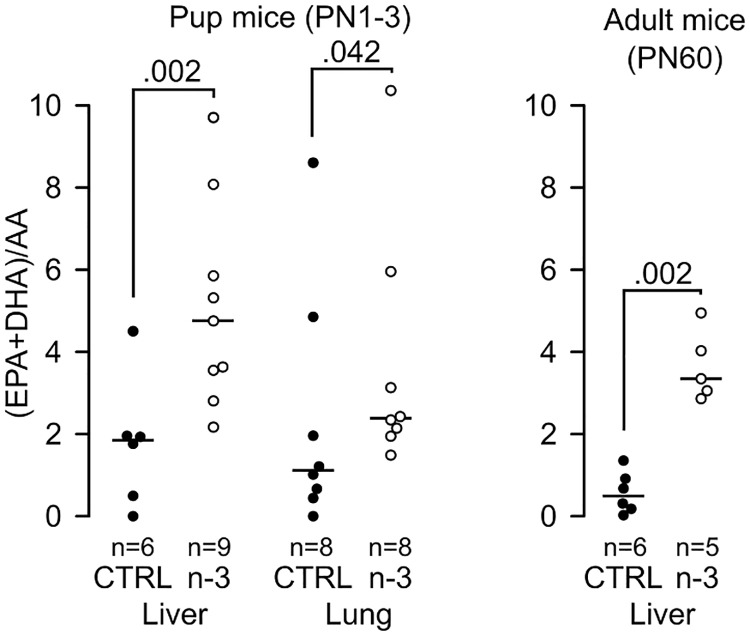
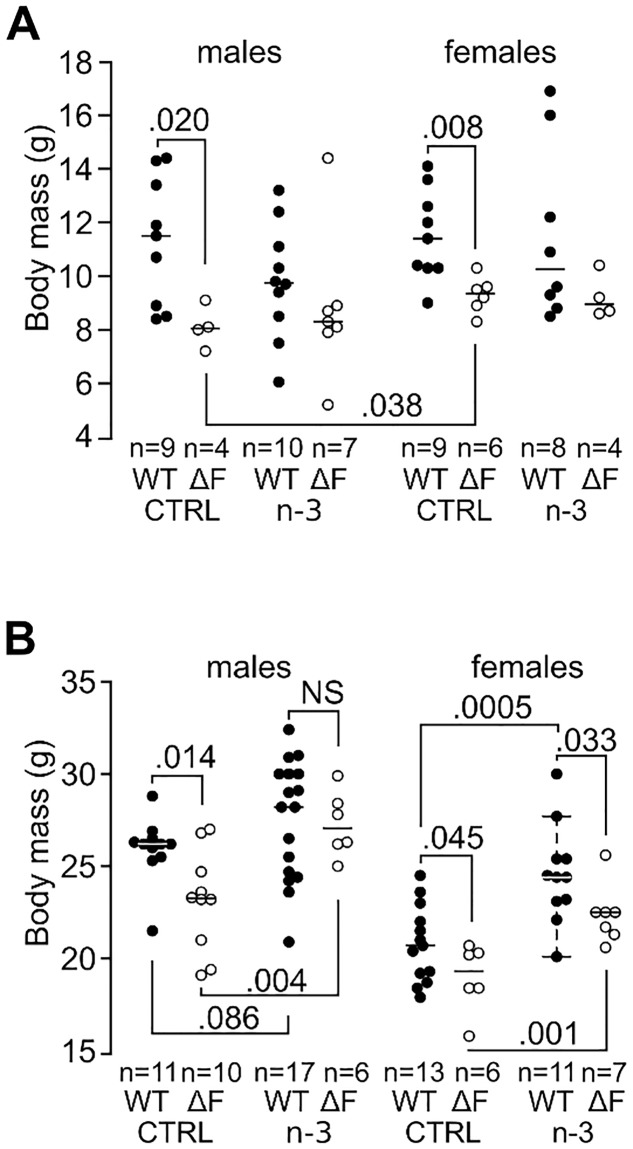
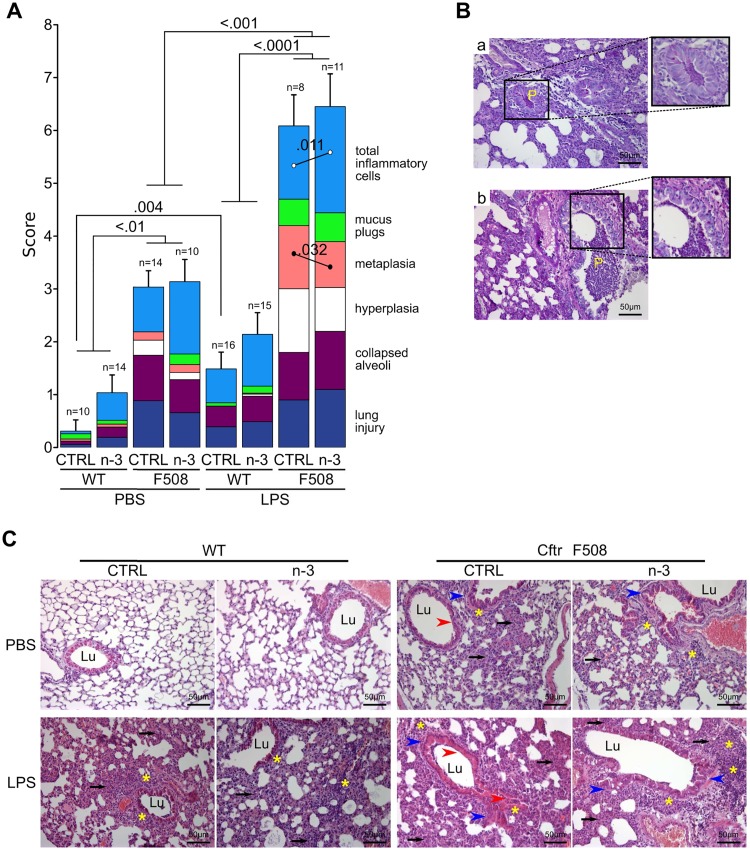
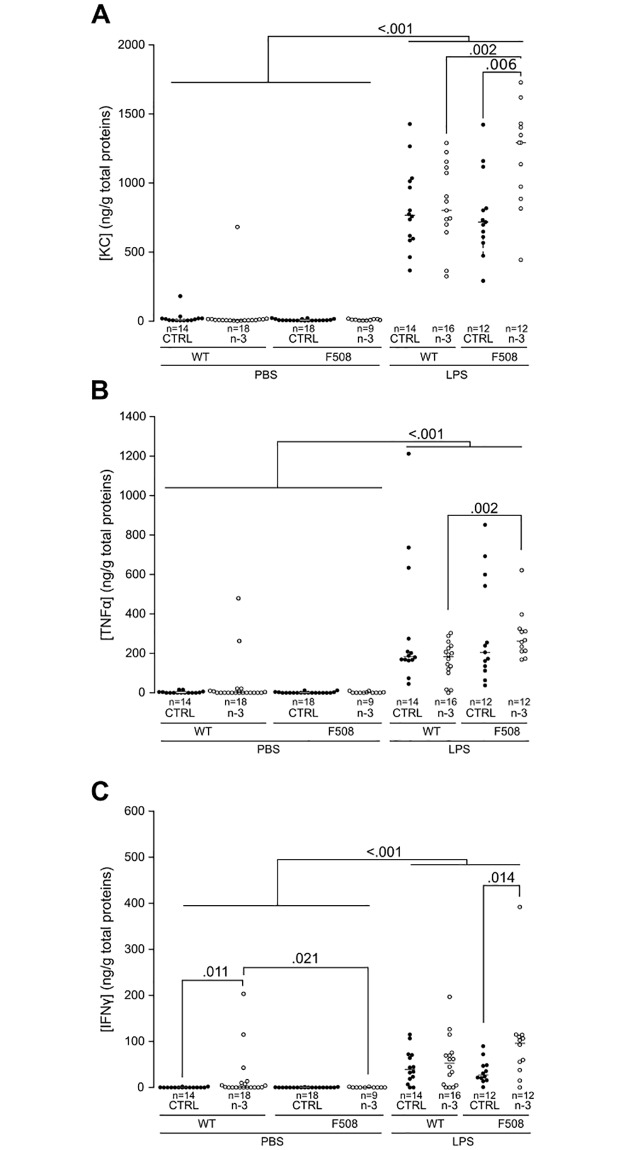
Results: (n-3) LC-PUFA enrichment of mothers contributes to enrichment of mammary milk and cell membrane of suckling pups. Cftr F508del mice exhibited growth retardation and lung damage with collapsed alveoli, hyperplasia of bronchial epithelial cells and inflammatory cell infiltration. The (n-3) LC-PUFA diet corrected the growth delay of Cftr F508del mice and decreased hyperplasia of bronchial epithelial cells. Besides decreasing metaplasia of Club cells after LPS inhalation, (n-3) LC-PUFA modulated lung inflammation and restricted lung damage.
Conclusion: Long-term (n-3) LC-PUFA supplementation shows moderate benefits to the lungs of Cftr F508del mice.
Conflict of interest statement
The authors have declared that no competing interests exist.
Figures
References
-
- Khan TZ, Wagener JS, Bost T, Martinez J, Accurso FJ, Riches DW. Early pulmonary inflammation in infants with cystic fibrosis. Am J Respir Crit Care Med. 1995;151: 1075–82. doi: 10.1164/ajrccm.151.4.7697234 - DOI - PubMed
-
- Muhlebach MS, Stewart PW, Leigh MW, Noah TL. Quantitation of inflammatory responses to bacteria in young cystic fibrosis and control patients. Am J Respir Crit Care Med. 1999;160: 186–91. doi: 10.1164/ajrccm.160.1.9808096 - DOI - PubMed
-
- Verhaeghe C, Delbecque K, de Leval L, Oury C, Bours V. Early inflammation in the airways of a cystic fibrosis foetus. J Cyst Fibros. 2007;6: 304–8. doi: 10.1016/j.jcf.2006.12.001 - DOI - PubMed
-
- Roulet M, Frascarolo P, Rappaz I, Pilet M. Essential fatty acid deficiency in well nourished young cystic fibrosis patients. Eur J Pediatr. 1997;156: 952–6. - PubMed
-
- Aldámiz-Echevarría L, Prieto JA, Andrade F, Elorz J, Sojo A, Lage S, et al. Persistence of essential fatty acid deficiency in cystic fibrosis despite nutritional therapy. Pediatr Res. 2009;66: 585–9. doi: 10.1203/PDR.0b013e3181b4e8d3 - DOI - PubMed
Publication types
MeSH terms
Substances
LinkOut - more resources
Full Text Sources
Other Literature Sources
Molecular Biology Databases
