


The proteome of perilymph in patients with vestibular schwannoma. A possibility to identify biomarkers for tumor associated hearing loss?
- PMID: 29856847
- PMCID: PMC5983529
- DOI: 10.1371/journal.pone.0198442
The proteome of perilymph in patients with vestibular schwannoma. A possibility to identify biomarkers for tumor associated hearing loss?
Abstract
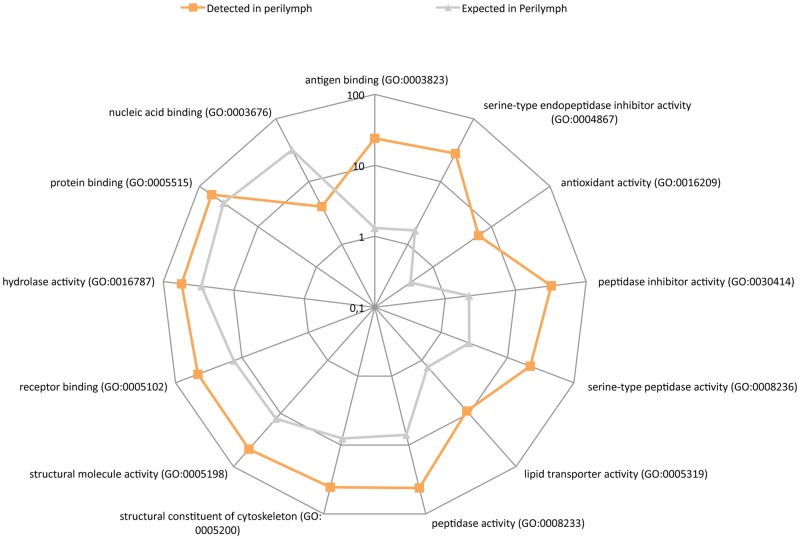
Background: Due to the surrounding bone, the human inner ear is relatively inaccessible and difficult to reach for cellular and molecular analyses. However, these types of investigations are needed to better understand the etiology, pathophysiology and progression of several inner ear disorders. Moreover, the fluid from the inner ear cannot be sampled for micro-chemical analyses from healthy individuals in vivo. Therefore, in the present paper, we studied patients with vestibular schwannoma (VS) undergoing trans-labyrinthine surgery (TLS). Our primary aim was to identify perilymph proteins in patients with VS on an individual level. Our second aim was to investigate the proteins identified at a functional level and our final aim was to search for biological markers for tumor-associated hearing loss and tumor diameter.
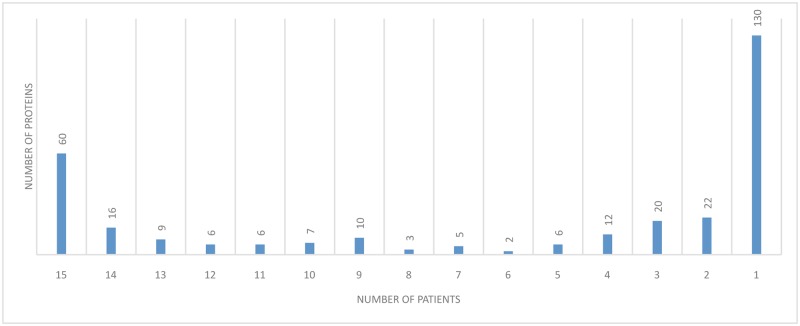
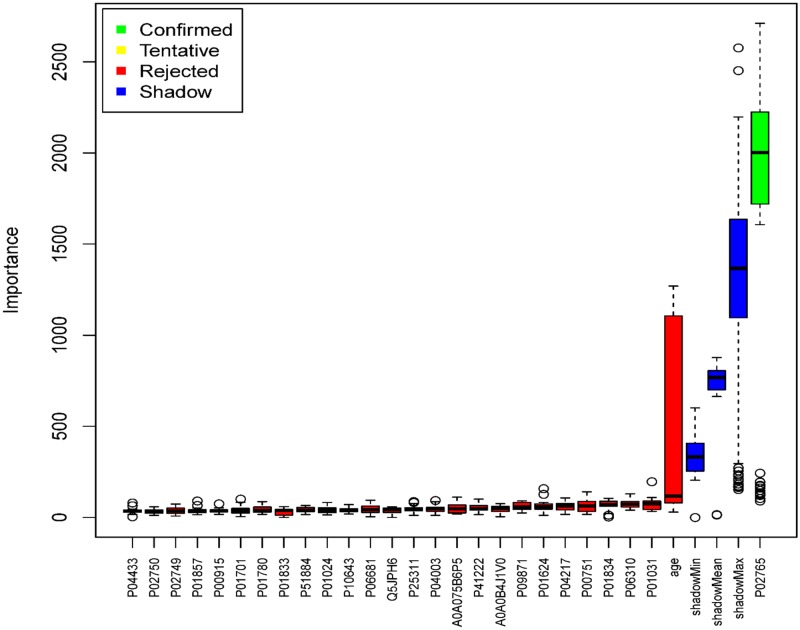
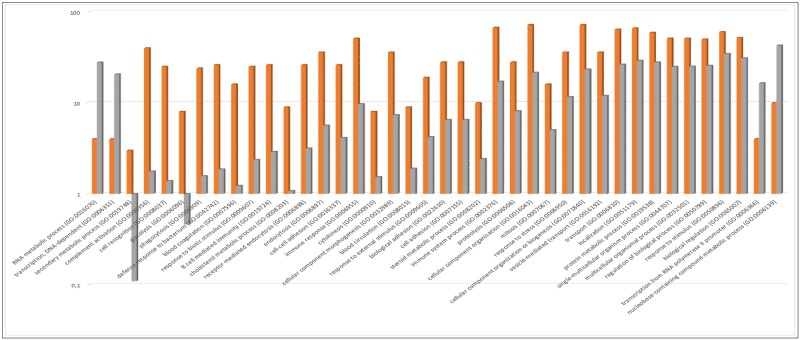
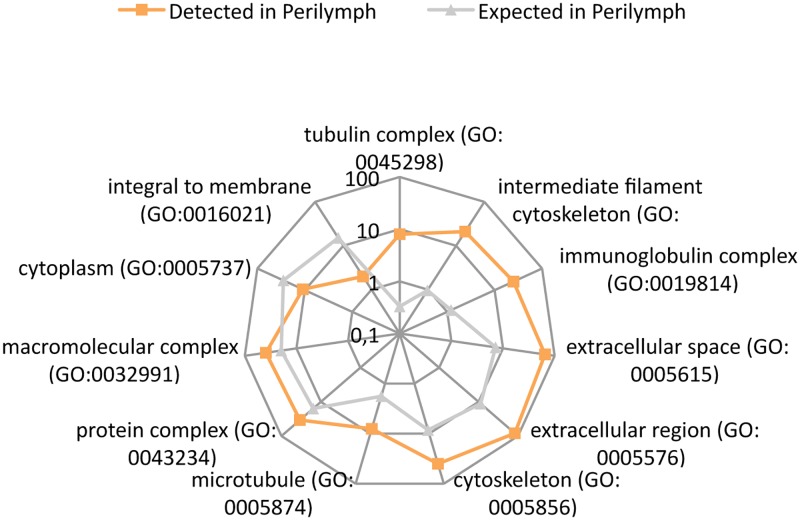
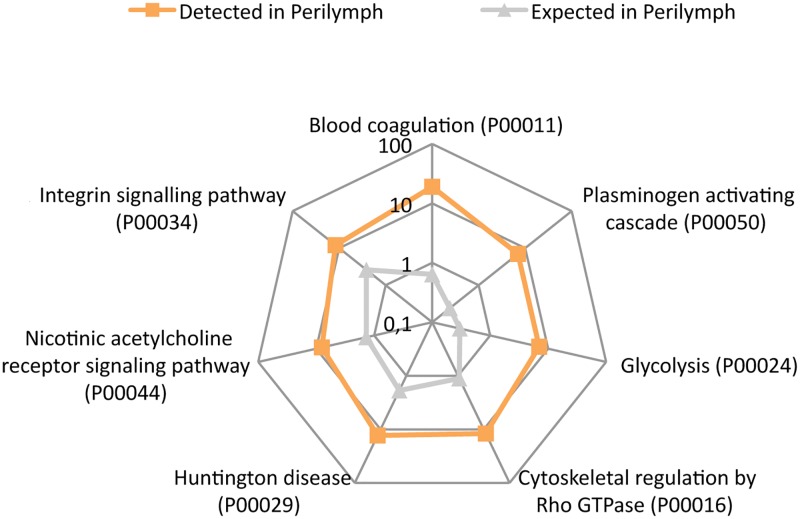
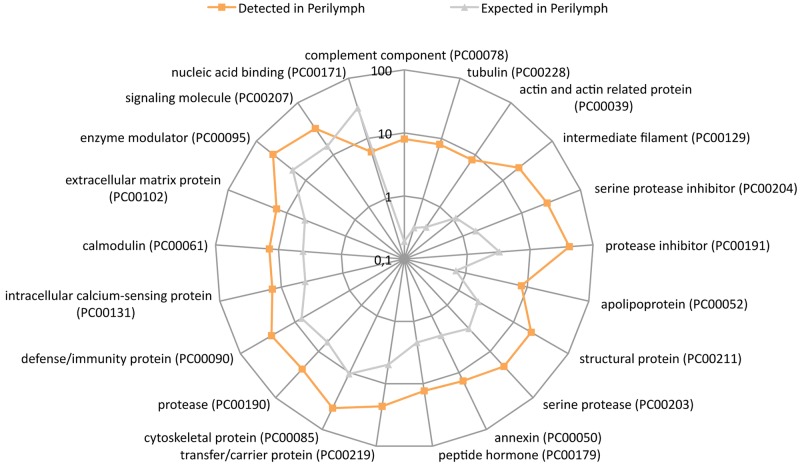
Methods and findings: Sixteen patients underwent TLS for sporadic VS. Perilymph was aspirated through the round window before opening the labyrinth. One sample was contaminated and excluded resulting in 15 usable samples. Perilymph samples were analyzed with an online tandem LTQ-Orbitrap mass spectrometer. Data were analyzed with MaxQuant software to identify the total number of proteins and to quantify proteins in individual samples. Protein function was analyzed using the PANTHER Overrepresentation tool. Associations between perilymph protein content, clinical parameters, tumor-associated hearing loss and tumor diameter were assessed using Random Forest and Boruta. In total, 314 proteins were identified; 60 in all 15 patients and 130 proteins only once in 15 patients. Ninety-one proteins were detected in at least 12 out of 15 patients. Random Forest followed by Boruta analysis confirmed that alpha-2-HS-glycoprotein (P02765) was an independent variable for tumor-associated hearing loss. In addition, functional analysis showed that numerous processes were significantly increased in the perilymph. The top three enriched biological processes were: 1) secondary metabolic processes; 2) complement activation and 3) cell recognition.
Conclusions: The proteome of perilymph in patients with vestibular schwannoma has an inter-individual stable section. However, even in a cohort with homogenous disease, the variation between individuals represented the majority of the detected proteins. Alpha-2-HS-glycoprotein, P02765, was shown to be an independent variable for tumor-associated hearing loss, a finding that needs to be verified in other studies. In pathway analysis perilymph had highly enriched functions, particularly in terms of increased immune and metabolic processes.
Conflict of interest statement
The authors have declared that no competing interests exist.
Figures
References
-
- Békésy Gv. DC Resting Potentials Inside the Cochlear Partition. J Acoust Soc Am. 1952;24: 72–76. doi: 10.1121/1.1906851 - DOI
-
- Tasaki I, Spyropoulos CS. Stria Vascularis as Source of Endocochlear Potential. J Neurophysiol. 1959;22: 149–155. doi: 10.1152/jn.1959.22.2.149 - DOI - PubMed
-
- Arrer E, Oberascher G, Gibitz H-J. Protein distribution in the human perilymph: A Comparative Study between Perilymph (Post Mortem), CSF and Blood Serum. Acta Otolaryngol (Stockh). 1988;106: 117–123. doi: 10.3109/00016488809107378 - DOI - PubMed
-
- Thalmann I, Kohut RI, Ryu J, Comegys TH, Senarita M, Thalmann R. Protein profile of human perilymph: in search of markers for the diagnosis of perilymph fistula and other inner ear disease. Otolaryngol—Head Neck Surg Off J Am Acad Otolaryngol-Head Neck Surg. 1994;111: 273–280. - PubMed
-
- Lysaght AC, Kao S-Y, Paulo JA, Merchant SN, Steen H, Stankovic KM. Proteome of Human Perilymph. J Proteome Res. 2011;10: 3845–3851. doi: 10.1021/pr200346q - DOI - PMC - PubMed
Publication types
MeSH terms
Substances
LinkOut - more resources
Full Text Sources
Other Literature Sources
Miscellaneous
