


Rift Valley fever in animals and humans: Current perspectives
- PMID: 29857007
- PMCID: PMC10316118
- DOI: 10.1016/j.antiviral.2018.05.009
Rift Valley fever in animals and humans: Current perspectives
Abstract
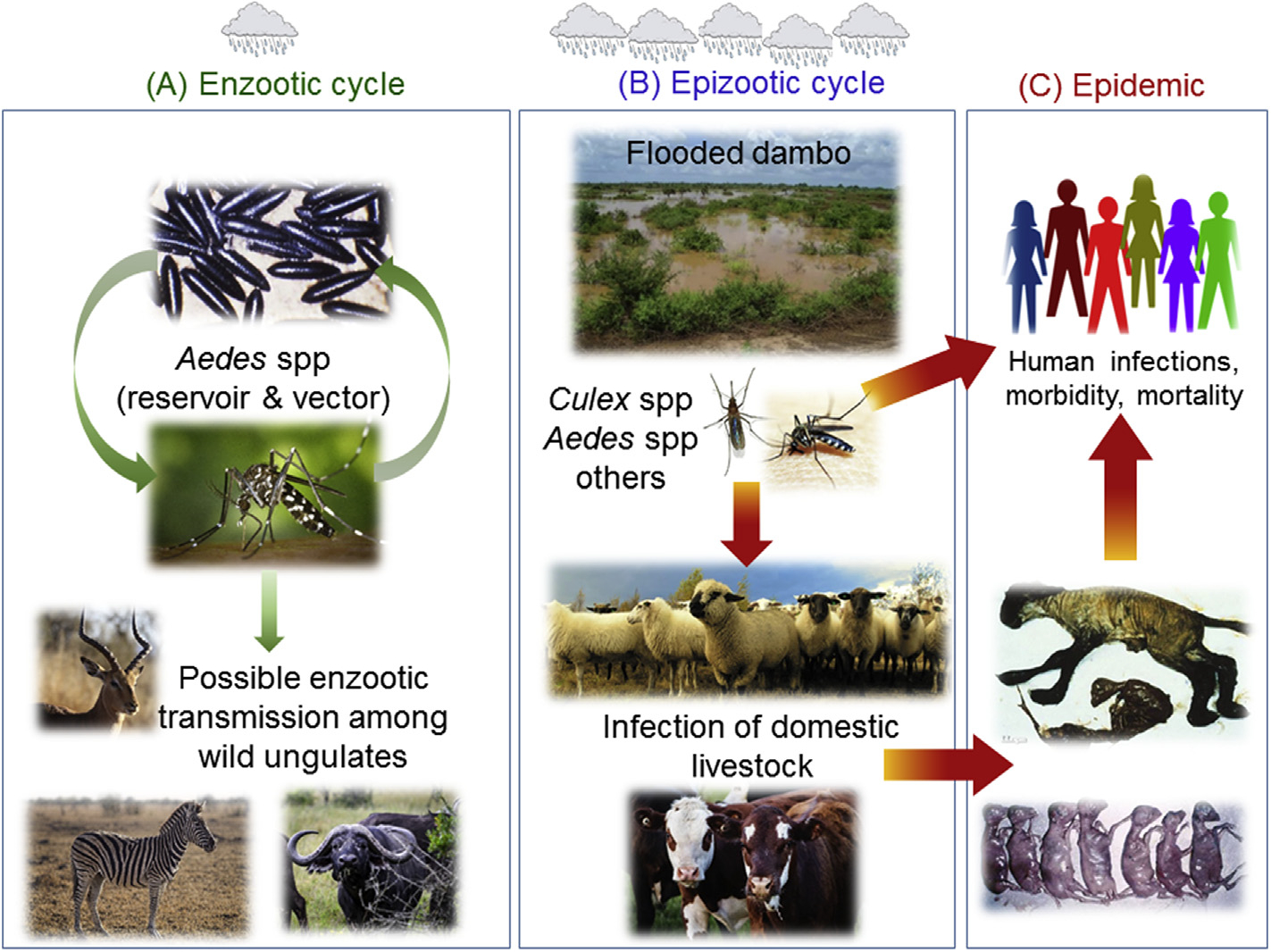
Rift Valley fever (RVF) is an ecologically complex emerging arboviral disease that causes significant illness in both livestock and people. This review article is designed to assist the reader in understanding the varied aspects of RVF disease in animals and humans. The historical facets of RVF disease, including the evolution of human outbreaks, are presented and discussed. The different clinical presentations of human RVF disease and the underlying causes are then addressed. We explore the exposure and transmission potential of RVF in animals and people. In the concluding section, we discuss the historical role of RVF as a biological weapon. We conclude with an outline of the important unanswered questions for ongoing research into this important zoonotic disease.
Copyright © 2018 Elsevier B.V. All rights reserved.
Figures
References
-
- Abdel-Aziz AA, Meegan JM, Laughlin LW, 1980. Rift Valley fever as a possible cause of human abortions. Trans. R. Soc. Trop. Med. Hyg. 74 (5), 685–686. - PubMed
-
- Abdel-Wahab KS, El Baz LM, El-Tayeb EM, Omar H, Ossman MA, Yasin W, 1978. Rift Valley Fever virus infections in Egypt: pathological and virological findings in man. Trans. R. Soc. Trop. Med. Hyg. 72 (4), 392–396. - PubMed
-
- Adam I, Karsany MS, 2008. Case report: rift Valley Fever with vertical transmission in a pregnant Sudanese woman. J. Med. Virol. 80 (5), 929. - PubMed
Publication types
MeSH terms
Substances
Grants and funding
LinkOut - more resources
Full Text Sources
Other Literature Sources
