Review
. 2018 May 31;19(6):1637.
doi: 10.3390/ijms19061637.

Use of Curcumin, a Natural Polyphenol for Targeting Molecular Pathways in Treating Age-Related Neurodegenerative Diseases

Affiliations
Review

Use of Curcumin, a Natural Polyphenol for Targeting Molecular Pathways in Treating Age-Related Neurodegenerative Diseases

Panchanan Maiti et al. Int J Mol Sci. .

Abstract

Progressive accumulation of misfolded amyloid proteins in intracellular and extracellular spaces is one of the principal reasons for synaptic damage and impairment of neuronal communication in several neurodegenerative diseases. Effective treatments for these diseases are still lacking but remain the focus of much active investigation. Despite testing several synthesized compounds, small molecules, and drugs over the past few decades, very few of them can inhibit aggregation of amyloid proteins and lessen their neurotoxic effects. Recently, the natural polyphenol curcumin (Cur) has been shown to be a promising anti-amyloid, anti-inflammatory and neuroprotective agent for several neurodegenerative diseases. Because of its pleotropic actions on the central nervous system, including preferential binding to amyloid proteins, Cur is being touted as a promising treatment for age-related brain diseases. Here, we focus on molecular targeting of Cur to reduce amyloid burden, rescue neuronal damage, and restore normal cognitive and sensory motor functions in different animal models of neurodegenerative diseases. We specifically highlight Cur as a potential treatment for Alzheimer's, Parkinson's, Huntington's, and prion diseases. In addition, we discuss the major issues and limitations of using Cur for treating these diseases, along with ways of circumventing those shortcomings. Finally, we provide specific recommendations for optimal dosing with Cur for treating neurological diseases.

Keywords: amyloidosis; anti-amyloid; curcumin; molecular chaperones; natural polyphenol; neurodegenerative diseases; neuroinflammation.


Conflict of interest statement

The authors declare no conflict of interest.

Figures
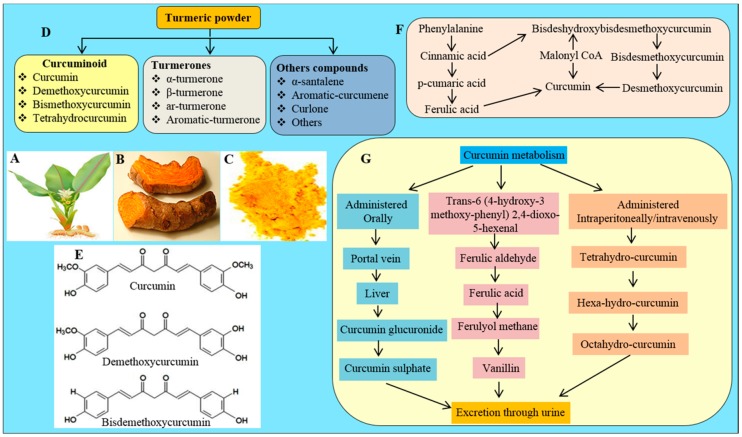
Figure 1
Figure 1
Chemical structure of Cur and its derivatives. (AC) Curcuma longa, its rhizomes and turmeric extract; (D) Different chemical components of turmeric extract; (E) Chemical structure of principal ingredients of curcuminoid; (F) pathway of Cur-biosynthesis; and (G) Cur metabolism in our body.
Figure 2
Figure 2
Curcumin solubility in different solvents. Please note that Cur is more soluble in methanol than in phosphate buffer saline (PBS), NaOH or dimethyl-sulfoxide (DMSO).
Figure 3
Figure 3
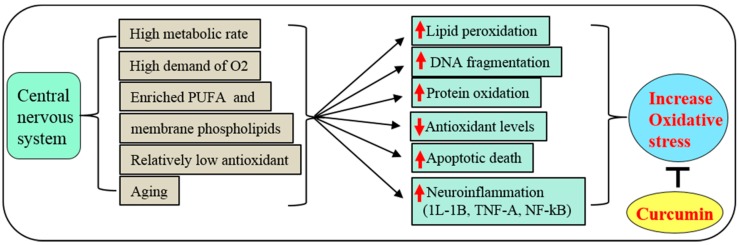
Amelioration of oxidative stress by Cur in brain. The CNS is vulnerable to oxidative stress due to high metabolic rate, which causes higher O2 demand. This leads to an increase in oxidative stress in the brain tissue. Whereas Cur, as a potent free radical scavenger, can ameliorate these effects.
Figure 4
Figure 4
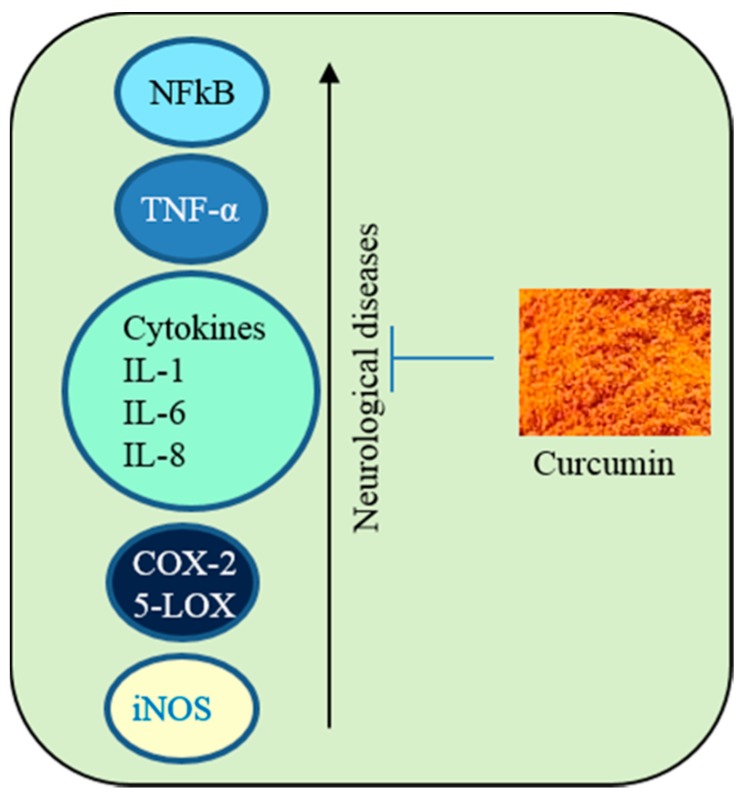
Anti-inflammatory properties of Cur. Curcumin increase levels of anti-inflammatory cytokines, inhibits inflammatory chemokines, iNOS levels and inhibits transcription factors, such as NF-κB.
Figure 5
Figure 5
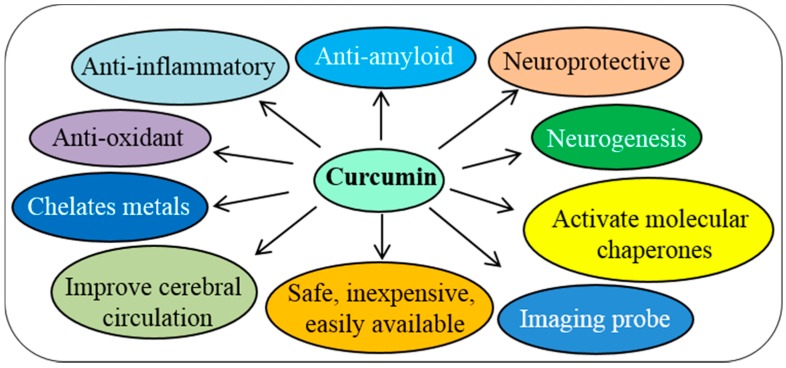
Uses and advantages of Cur for diagnosing and treating neurological diseases. In addition to its pleotropic therapeutic effects Cur is safe, inexpensive, and readily available and can be used to label Aβ deposits in the brain.
Figure 6
Figure 6
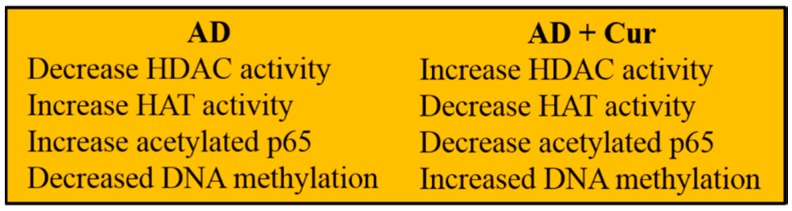
Effects of Cur on epigenetics in AD. Cur restores the activity of HDAC and inhibits HAT activity, along with increase DNA methylation in animal models of AD.
Figure 7
Figure 7
Use of adjuvant piperine to increase bioavailability of free Cur levels. Rapid glucuronidation process reduces bioavailability of Cur, whereas piperine present in black pepper can inhibit this glucuronidation process, thus increasing the amount of free Cur in different tissues.
Figure 8
Figure 8
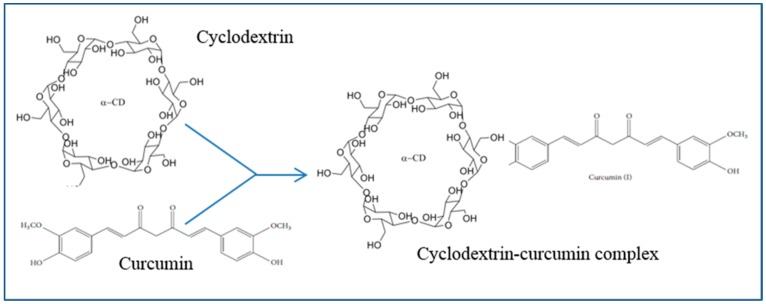
Cyclodextrin-Cur complex. Cyclodextrin is a water-soluble pseudo-amphiphilic starch molecule, which is a potent carrier for Cur and can increase its solubility and bioavailability.
Figure 9
Figure 9
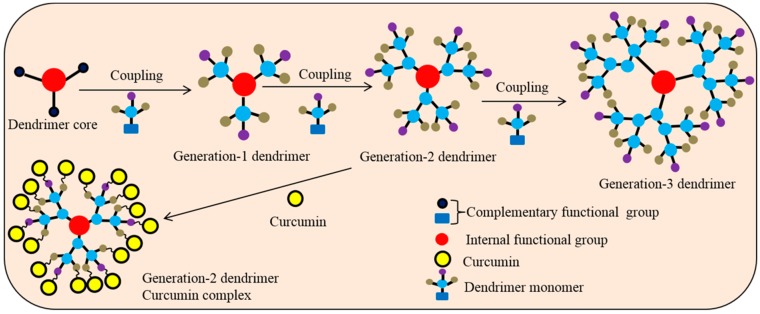
Schematic diagram showing dendrimer structure and construction of dendrimer-curcumin complexes. The Cur can be coated with the outer surface of the branched dendrimer, thus it can carry numerous Cur molecules, depending on the surface groups and charge.
Figure 10
Figure 10
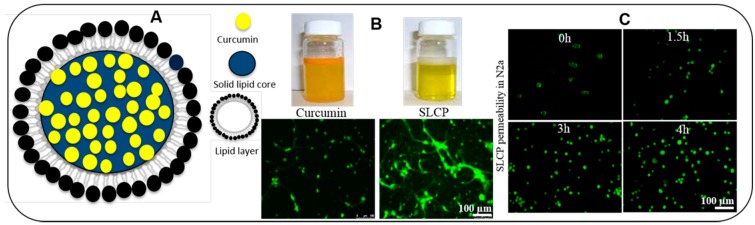
Schematic diagram showing formulation of solid lipid Cur particle (SLCP). (A) In this formula, outer layer is composed of long chain fatty acid bilayers, with the inner layer being composed of a solid fatty acid core and on that core that is coated with Cur molecules. (B) Comparative solubility (upper) and cellular permeability in primary hippocampal neurons (lower) and (C) permeability of Cur and SLCP in N2a cells. Scale bar = 100 µm
Figure 11
Figure 11
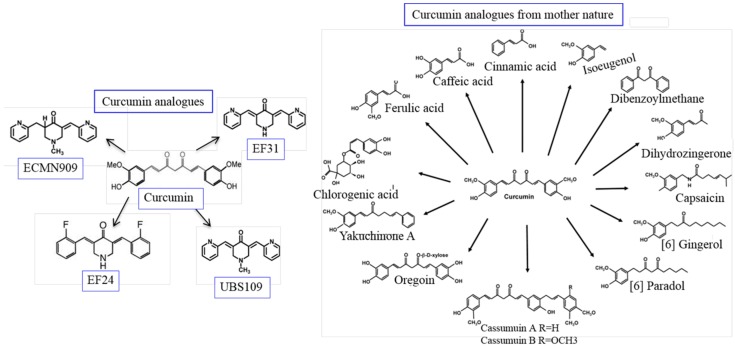
Different Cur analogues and derivatives. By modifying the structure, several analogues and derivative of Cur have been developed by many researchers, which improved its solubility, stability, bio-availability, and biological activities.
Figure 12
Figure 12
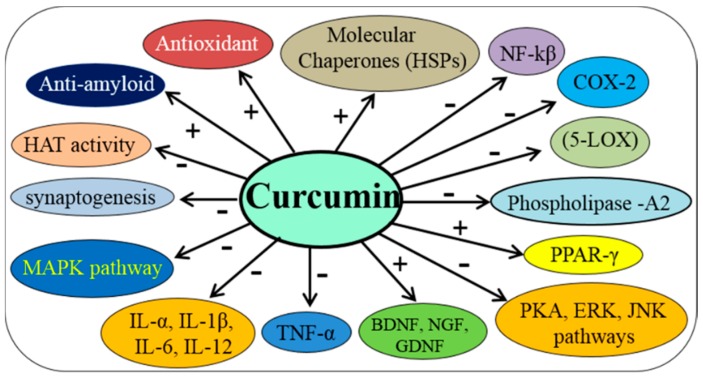
Multiple-reasons for use Cur for treating neurodegenerative diseases. Among these, its anti-amyloid property is particularly attractive as a therapeutic tool.
Figure 13
Figure 13
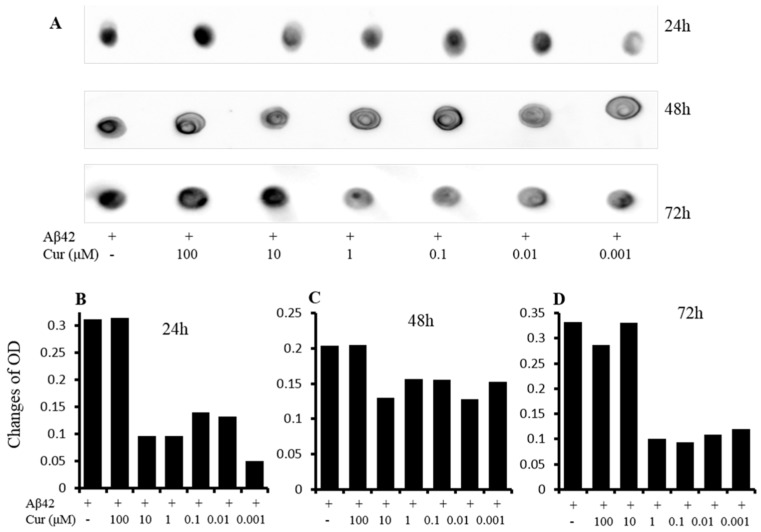
Nanomolar (nM) concentrations of Cur inhibit Aβ42 aggregation in vitro. HFIP-treated Aβ42 was incubated with and without different concentrations of Cur for 24–72 h and a dot blot was performed by probing with Aβ42-fibril specific antibody (OC) and the color was developed with chemiluminescent reagents and the optical density of each dot was measured using Image-J software. Lower concentrations (1–0.001 µM) of Cur inhibited Aβ42 aggregation, whereas higher concentrations had no effect on aggregation.
Figure 14
Figure 14
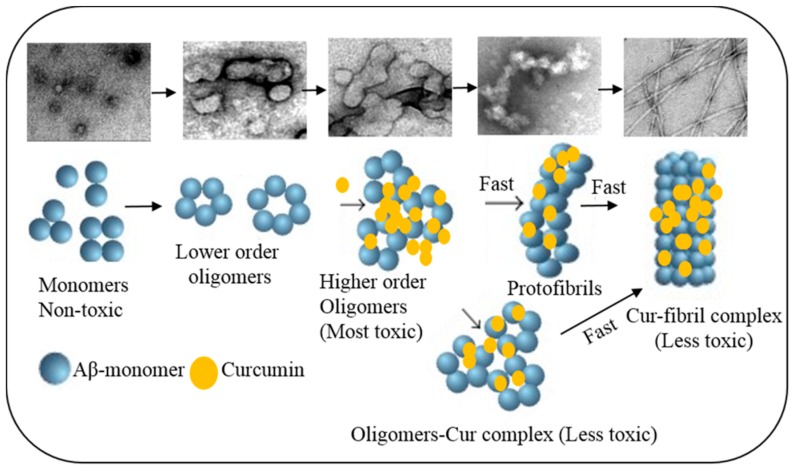
Schematic diagram showing the formation of different Aβ-species during its aggregation process and the inhibitory role of Cur in its assembly process. Cur has been shown to bind with Aβ and attenuate the oligomer formation or slowdown the process. Additionally, it can fasten the transformation of more toxic oligomers into less fibril forms.
Figure 15
Figure 15
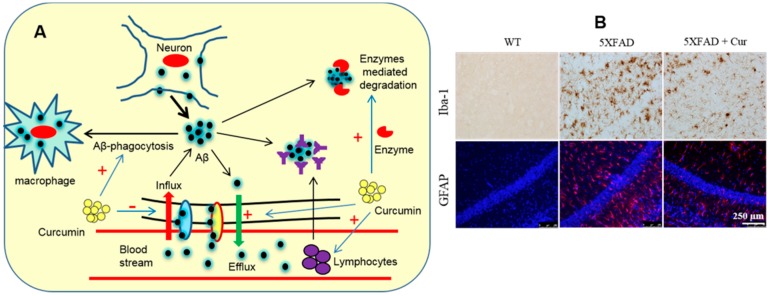
Schematic diagram showing the role of Cur in Aβ clearance. Cur stimulates phagocytosis of Aβ by activating microglia and enzyme-mediated degradation of Aβ. Cur also stimulates B-lymphocytes to activate Aβ-specific antibody, which neutralizes Aβ. In addition, it also inhibits Aβ-influx from the blood stream to the brain and increase Aβ-efflux from brain to the general circulation. “↔ “bidirectional; “→ “ increased; and “┬” inhibition/decrease.
Figure 16
Figure 16
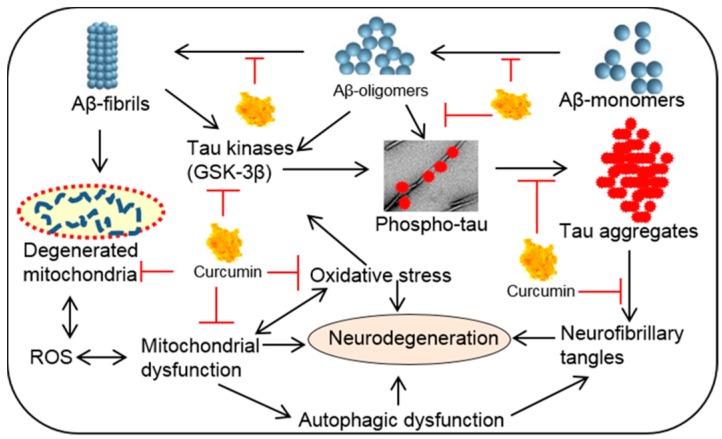
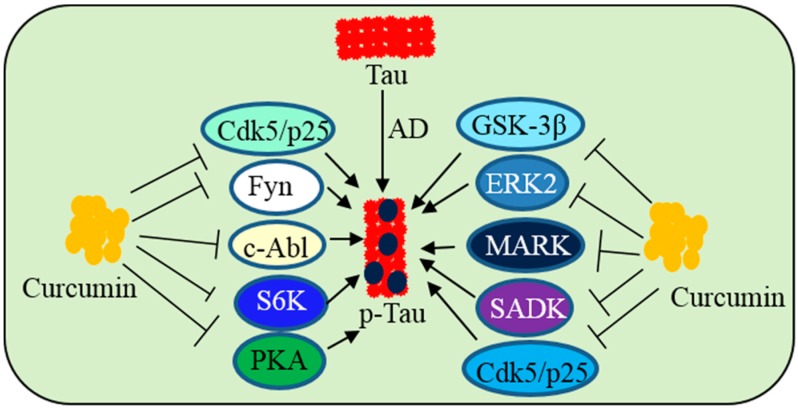
Schematic diagram showing the role of Cur in inhibition of tau phosphorylation in AD. Cur has been shown to inhibit tau-kinases, thus inhibiting phospho-tau formation. It also binds with tau directly to inhibit their aggregation.
Figure 17
Figure 17
Schematic diagram showing the anti-inflammatory properties of Cur in Alzheimer’s disease. (A) Cur stimulates B-lymphocytes to produce antibodies, increase anti-inflammatory cytokines and decrease proinflammatory chemokines, increase phagocytosis of Aβ, and increase proteolytic enzymes to degrade Aβ. (B) Cur inhibits microglia (Iba-1; upper) and astrocyte (GFAP; lower) activation in 5xFAD mice brain tissue.
Figure 18
Figure 18
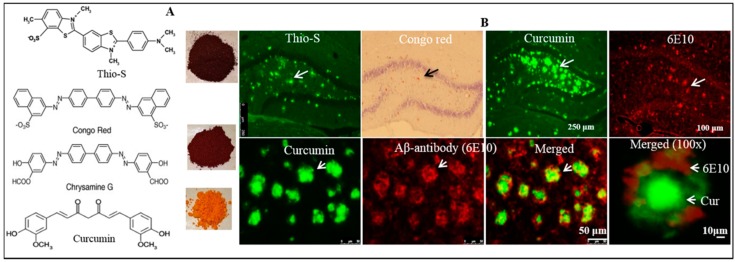
Cur binds to Aβ-plaques greater than classical amyloid binding dyes. (A) Curcumin has structural similarities with classical amyloid binding dyes. (B) Upper panel: Cryostat sections from 5XFAD mouse hippocampus were stained with Thio-S, Congo-red, Cur and Aβ-specific antibody (6E10). Please note that Cur stained Aβ plaques are more visible than other dyes. Lower panel: Cur is co-localized with Aβ-specific antibody (6E10) in Aβ-plaques in mouse cortical tissue from 5xFAD.
Figure 19
Figure 19
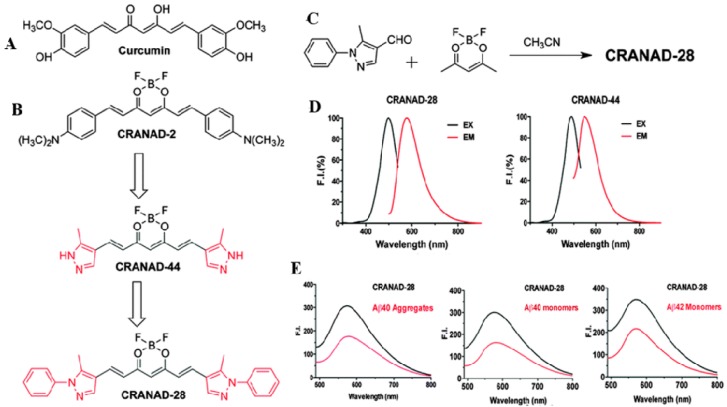
Structural modifications of Cur. (A) Structure of natural Cur; (B) Design of CRANAD-28 through pyrazole replacement; (C) The synthetic route for CRANAD-28 synthesis; (D) The excitation/emission spectra of CRANAD-28 and -44; (E) fluorescence responses of CRANAD-28 with Aβ40 aggregates, Aβ40 monomers and Aβ42 monomers.
Figure 20
Figure 20
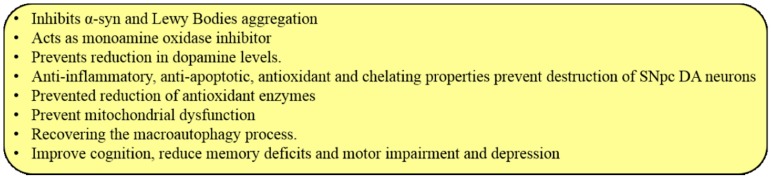
Pleotropic actions of Cur on Parkinson’s disease.
Figure 21
Figure 21
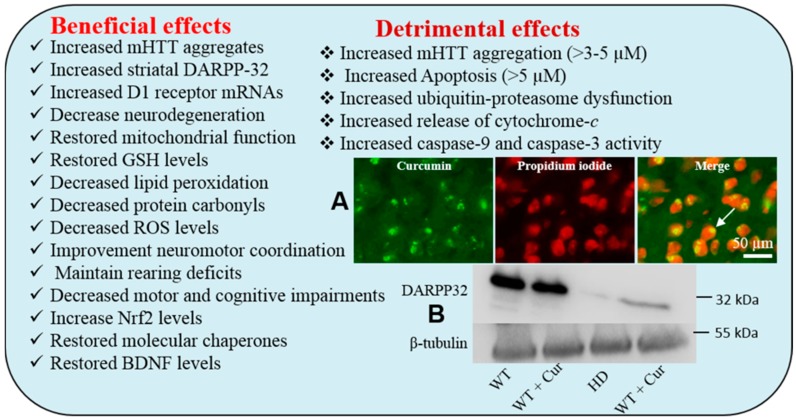
Effects of Cur on in vitro and in vivo models of HD. Several experiments have shown beneficial effects of Cur, but higher concentrations (>3–5 µM) of Cur may exacerbate HD symptoms. (A) The cortex of YAC128 mice was stained with Cur and images showed that Cur binds with HTT. (B) Western blot of DARP32, the marker for medium spiny neuron were partially restored by Cur treatment. Scale bar indicates 50 µm and is applicable to other images.
Figure 22
Figure 22
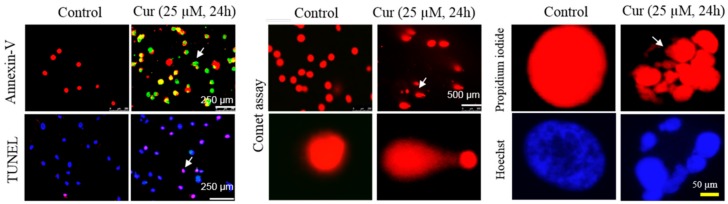
High concentrations of Cur can be used to kill glioblastoma cells. Cur treatment (25 µM) induces apoptosis and DNA fragmentation in human derived glioblastoma cell line (U-87Mg).

References

    1. Kaytor M.D., Warren S.T. Aberrant protein deposition and neurological disease. J. Biol. Chem. 1999;274:37507–37510. doi: 10.1074/jbc.274.53.37507. - DOI - PubMed
    1. Selkoe D.J. Cell biology of protein misfolding: The examples of Alzheimer’s and Parkinson’s diseases. Nat. Cell Biol. 2004;6:1054–1061. doi: 10.1038/ncb1104-1054. - DOI - PubMed
    1. Amor S., Puentes F., Baker D., van der Valk P. Inflammation in neurodegenerative diseases. Immunology. 2010;129:154–169. doi: 10.1111/j.1365-2567.2009.03225.x. - DOI - PMC - PubMed
    1. Chen X., Guo C., Kong J. Oxidative stress in neurodegenerative diseases. Neural Regen. Res. 2012;7:376–385. - PMC - PubMed
    1. Cummings J., Lee G., Mortsdorf T., Ritter A., Zhong K. Alzheimer’s disease drug development pipeline: 2017. Alzheimer’s Dement. 2017;3:367–384. doi: 10.1016/j.trci.2017.05.002. - DOI - PMC - PubMed

MeSH terms