


Factors Influencing Children's Eating Behaviours
- PMID: 29857549
- PMCID: PMC6024598
- DOI: 10.3390/nu10060706
Factors Influencing Children's Eating Behaviours
Abstract
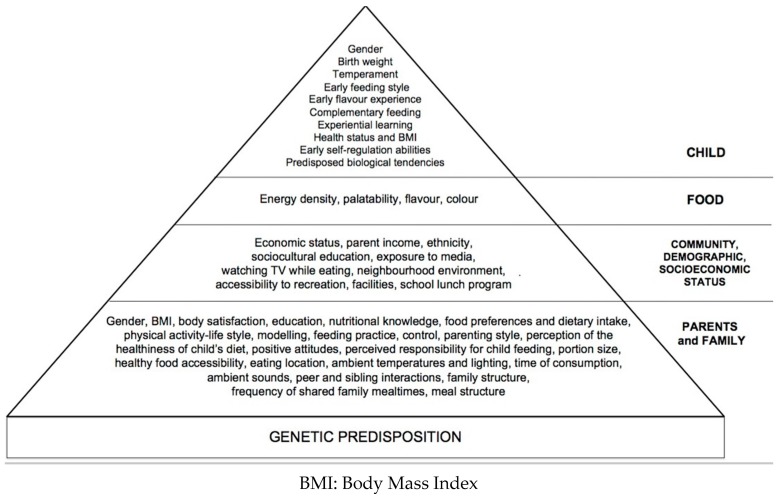
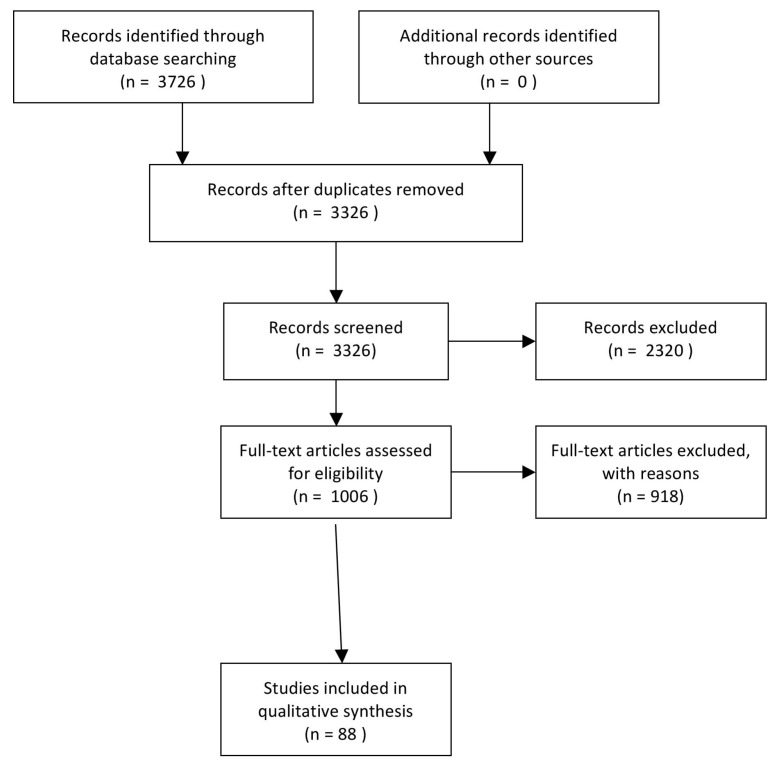
Relevant factors involved in the creation of some children's food preferences and eating behaviours have been examined in order to highlight the topic and give paediatricians practical instruments to understand the background behind eating behaviour and to manage children's nutrition for preventive purposes. Electronic databases were searched to locate and appraise relevant studies. We carried out a search to identify papers published in English on factors that influence children's feeding behaviours. The family system that surrounds a child's domestic life will have an active role in establishing and promoting behaviours that will persist throughout his or her life. Early-life experiences with various tastes and flavours have a role in promoting healthy eating in future life. The nature of a narrative review makes it difficult to integrate complex interactions when large sets of studies are involved. In the current analysis, parental food habits and feeding strategies are the most dominant determinants of a child's eating behaviour and food choices. Parents should expose their offspring to a range of good food choices while acting as positive role models. Prevention programmes should be addressed to them, taking into account socioeconomic aspects and education.
Keywords: child food preferences; family meal; obesogenic environment; parental influences; taste.
Conflict of interest statement
There are no conflicts of interest related to the content of this paper.
Figures
References
-
- Jew S., Antoine J.M., Bourlioux P., Milner J., Tapsell L.C., Yang Y., Jones P.J. Nutrient essentiality revisited. J. Funct. Foods. 2015;14:203–209. doi: 10.1016/j.jff.2015.01.024. - DOI
Publication types
MeSH terms
LinkOut - more resources
Full Text Sources
Other Literature Sources
Medical
