


CRISPR/Cas9 Mediated Disruption of the Swedish APP Allele as a Therapeutic Approach for Early-Onset Alzheimer's Disease
- PMID: 29858078
- PMCID: PMC5992788
- DOI: 10.1016/j.omtn.2018.03.007
CRISPR/Cas9 Mediated Disruption of the Swedish APP Allele as a Therapeutic Approach for Early-Onset Alzheimer's Disease
Abstract
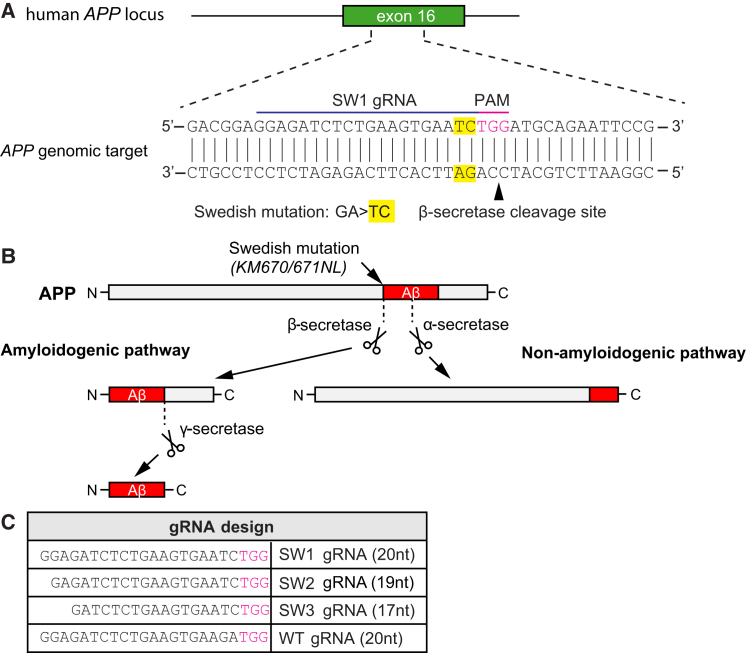
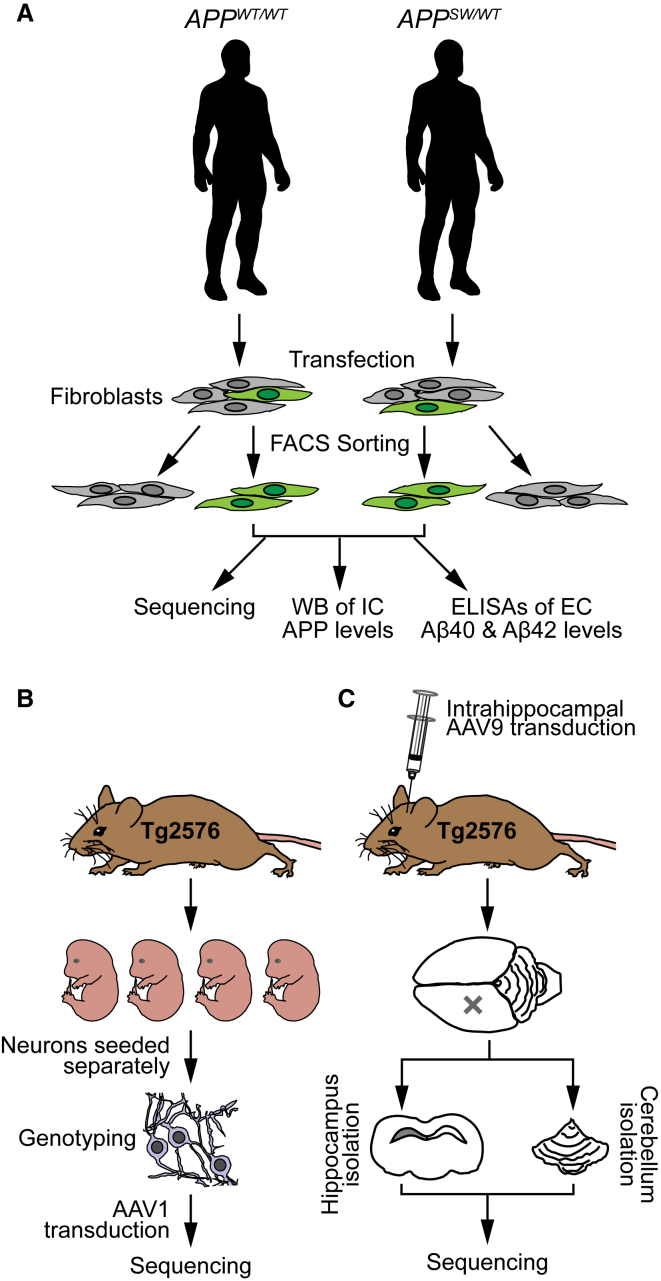
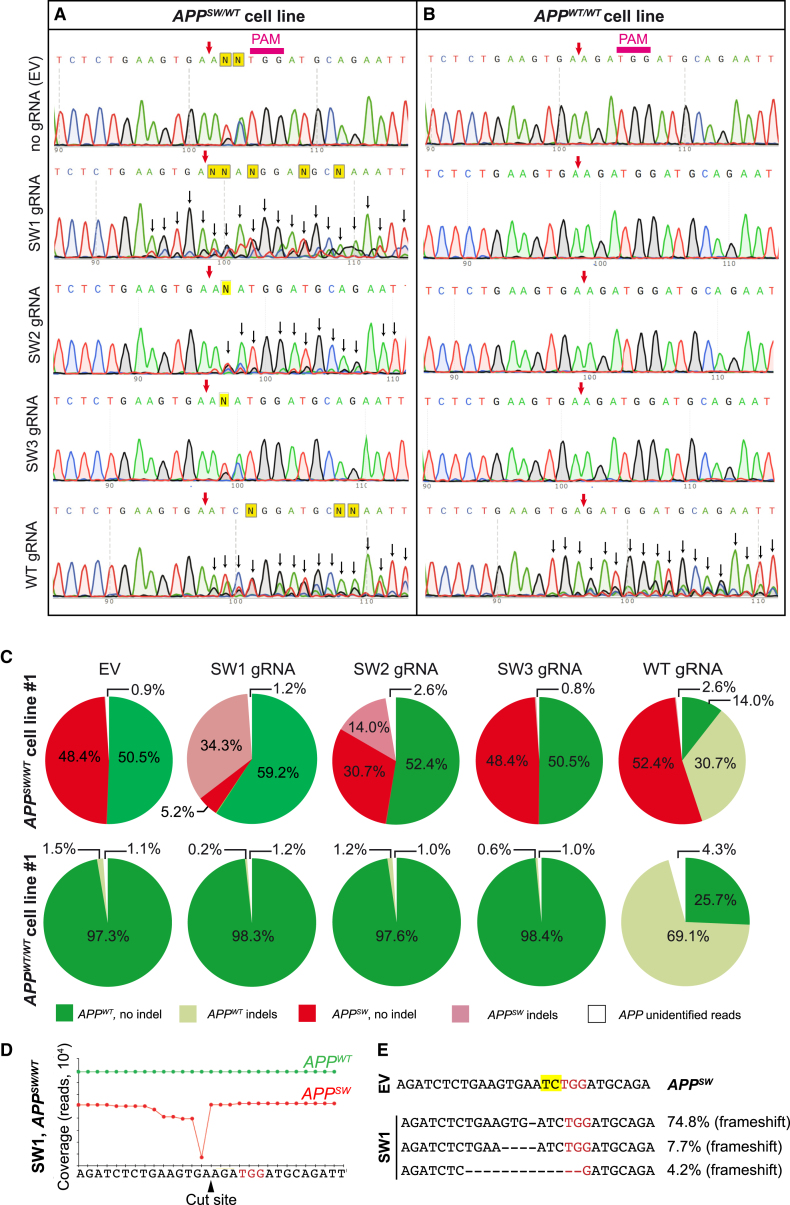
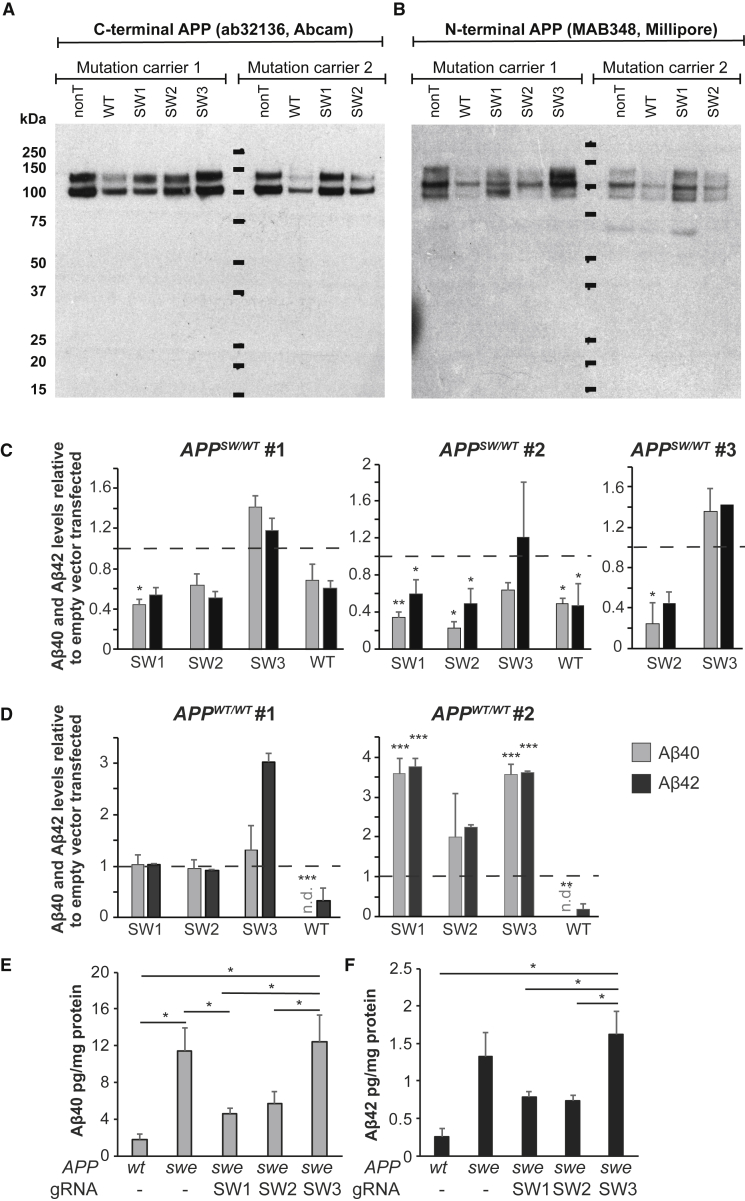
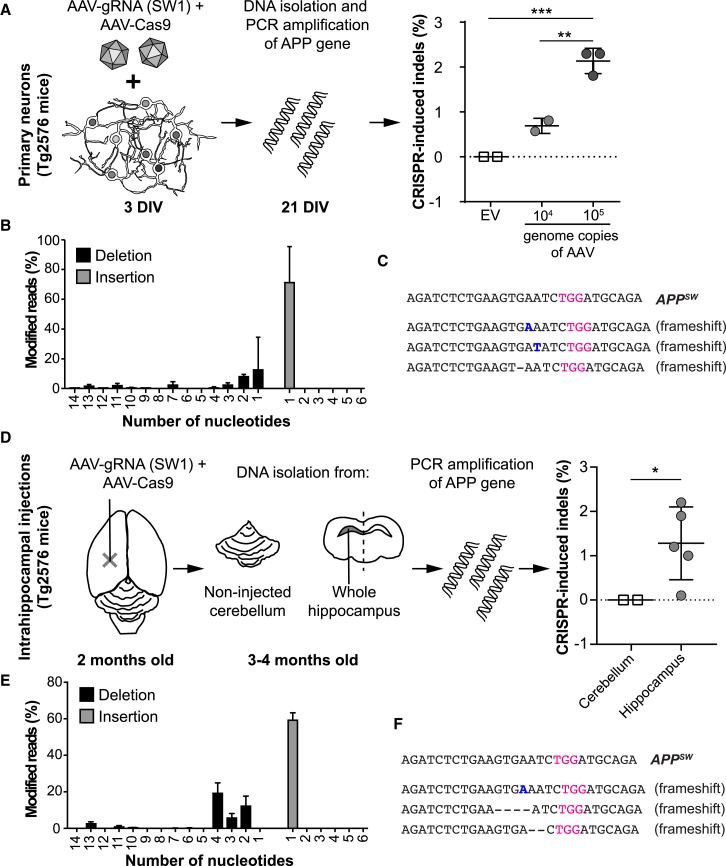
The APPswe (Swedish) mutation in the amyloid precursor protein (APP) gene causes dominantly inherited Alzheimer's disease (AD) as a result of increased β-secretase cleavage of the amyloid-β (Aβ) precursor protein. This leads to abnormally high Aβ levels, not only in brain but also in peripheral tissues of mutation carriers. Here, we selectively disrupted the human mutant APPSW allele using CRISPR. By applying CRISPR/Cas9 from Streptococcus pyogenes, we generated allele-specific deletions of either APPSW or APPWT. As measured by ELISA, conditioned media of targeted patient-derived fibroblasts displayed an approximate 60% reduction in secreted Aβ. Next, coding sequences for the APPSW-specific guide RNA (gRNA) and Cas9 were packaged into separate adeno-associated viral (AAV) vectors. Site-specific indel formation was achieved both in primary neurons isolated from APPSW transgenic mouse embryos (Tg2576) and after co-injection of these vectors into hippocampus of adult mice. Taken together, we here present proof-of-concept data that CRISPR/Cas9 can selectively disrupt the APPSW allele both ex vivo and in vivo-and thereby decrease pathogenic Aβ. Hence, this system may have the potential to be developed as a tool for gene therapy against AD caused by APPswe and other point mutations associated with increased Aβ.
Keywords: Alzheimer's disease; CRISPR; Swedish mutation; adeno-associated virus; amyloid precursor protein; amyloid-β; genome editing.
Copyright © 2018 The Author(s). Published by Elsevier Inc. All rights reserved.
Figures
References
-
- Bertram L., McQueen M.B., Mullin K., Blacker D., Tanzi R.E. Systematic meta-analyses of Alzheimer disease genetic association studies: the AlzGene database. Nat. Genet. 2007;39:17–23. - PubMed
-
- Bertram L., Tanzi R.E. The genetics of Alzheimer’s disease. Prog. Mol. Biol. Transl. Sci. 2012;107:79–100. - PubMed
-
- Mullan M., Crawford F., Axelman K., Houlden H., Lilius L., Winblad B., Lannfelt L. A pathogenic mutation for probable Alzheimer’s disease in the APP gene at the N-terminus of beta-amyloid. Nat. Genet. 1992;1:345–347. - PubMed
-
- Citron M., Vigo-Pelfrey C., Teplow D.B., Miller C., Schenk D., Johnston J., Winblad B., Venizelos N., Lannfelt L., Selkoe D.J. Excessive production of amyloid beta-protein by peripheral cells of symptomatic and presymptomatic patients carrying the Swedish familial Alzheimer disease mutation. Proc. Natl. Acad. Sci. USA. 1994;91:11993–11997. - PMC - PubMed
-
- Johnston J.A., Cowburn R.F., Norgren S., Wiehager B., Venizelos N., Winblad B., Vigo-Pelfrey C., Schenk D., Lannfelt L., O’Neill C. Increased beta-amyloid release and levels of amyloid precursor protein (APP) in fibroblast cell lines from family members with the Swedish Alzheimer’s disease APP670/671 mutation. FEBS Lett. 1994;354:274–278. - PubMed
Grants and funding
LinkOut - more resources
Full Text Sources
Other Literature Sources
Molecular Biology Databases
Research Materials
