Patient-reported outcomes and health status associated with chronic graft- versus-host disease
- PMID: 29858386
- PMCID: PMC6119141
- DOI: 10.3324/haematol.2018.192930
Patient-reported outcomes and health status associated with chronic graft- versus-host disease
Abstract
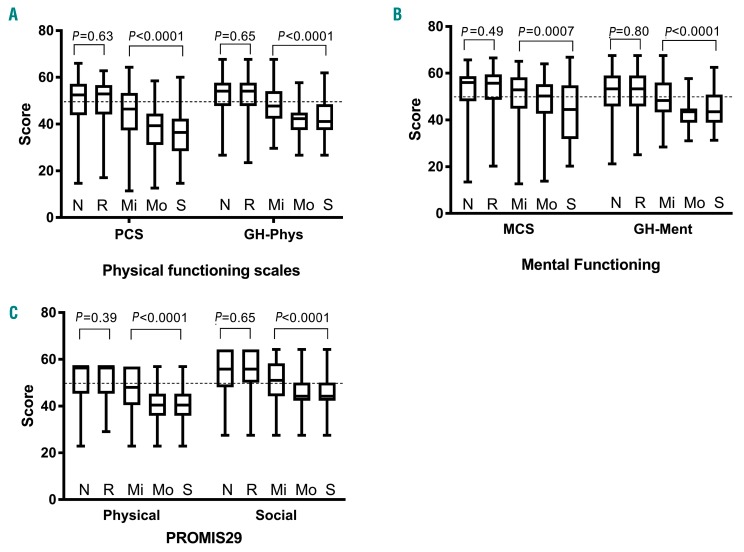
Chronic graft-versus-host disease occurs in 20-50% of allogeneic hematopoietic cell transplant survivors. We surveyed patients about their quality of life, symptoms, health status, comorbid conditions and medications. Instruments included the Short-Form-36 (SF-36), the Patient-Reported Outcomes Measurement Information System (PROMIS) Global and PROMIS-29 scales and the Lee Chronic Graft-versus-Host Disease Symptom Scale. Functional status was measured by self-reported Karnofsky performance status and work status. Of 3027 surveys sent to recipients surviving one or more years after transplantation, 1377 (45%) were returned. Among these, patients reported that their chronic graft-versus-host disease was mild (n=257, 18.7%), moderate (n=110, 8.0%) or severe (n=25, 1.8%). Another 377 (27.4%) had never had chronic graft-versus-host disease and 280 (20.3%) had had chronic graft-versus-host disease but it had resolved. We excluded 328 (23.8%) patients who did not answer the questions about chronic graft-versus-host disease. Patients who reported moderate or severe chronic graft-versus-host disease reported worse quality of life, lower performance status, a higher symptom burden and were more likely to be taking prescription medications for pain, anxiety and depression compared to those with resolved chronic graft-versus-host disease. Self-reported measures were similar between patients with resolved chronic graft-versus-host disease and those who had never had it. Our data suggest that the PROMIS measures may be able to replace the SF-36 in the assessment of chronic graft-versus-host disease. Between 26.7-39.4% of people with active chronic graft-versus-host disease were unable to work due to health reasons, compared with 12.1% whose chronic graft-versus-host disease had resolved and 15.4% who had never had chronic graft-versus-host disease. Mouth, eye and nutritional symptoms persisted after resolution of chronic graft-versus-host disease. These results show that better prevention of and treatment for chronic graft-versus-host disease are needed to improve survivorship after allogeneic transplantation.
Copyright© 2018 Ferrata Storti Foundation.
Figures
References
-
- Lee SJ, Flowers ME. Recognizing and managing chronic graft-versus-host disease. Hematology Am Soc Hematol Educ Program. 2008:134–141. - PubMed
Publication types
MeSH terms
Grants and funding
LinkOut - more resources
Full Text Sources
Other Literature Sources