. 2018 Jun;43(2):174-183.
doi: 10.1111/nbu.12323. Epub 2018 May 8.

The Big Breakfast Study: Chrono-nutrition influence on energy expenditure and bodyweight

Affiliations

The Big Breakfast Study: Chrono-nutrition influence on energy expenditure and bodyweight

L C Ruddick-Collins et al. Nutr Bull. 2018 Jun.

Abstract

A growing body of evidence highlights the importance of the biological clock as a modulator of energy balance and metabolism. Recent studies in humans have shown that ingested calories are apparently utilised more efficiently in the morning than in the evening and this is manifest through improved weight loss, even under iso-energetic calorie intake. The mechanisms behind this enhanced morning energy metabolism are not yet clear, although it may result from behavioural adaptations or circadian driven variations in physiology and energy metabolism. A major objective of the newly funded Big Breakfast Study therefore is to investigate the mechanistic basis of this amplified morning thermogenesis leading to enhanced weight loss, by exploring behavioural and physiological adaptations in energy expenditure alongside the underlying circadian biology. This report briefly discusses the current research linking meal timing, circadian rhythms and metabolism; highlights the research gaps; and provides an overview of the studies being undertaken as part of the Medical Research Council-funded Big Breakfast Study.

Keywords: breakfast; chrono‐nutrition; circadian rhythms; energy balance; meal timing; weight loss.


Figures
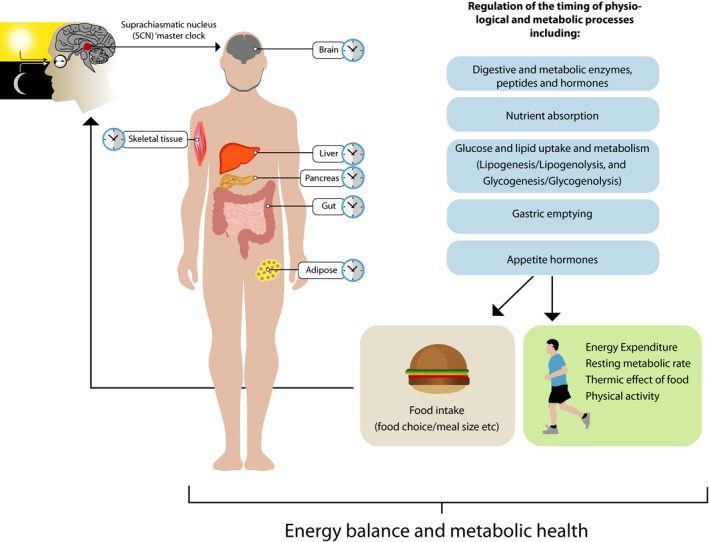
Figure 1
Figure 1
The role of circadian rhythms in regulating metabolic processes and energy balance. Clock genes in peripheral tissues are primarily regulated by the central ‘master clock’ in the hypothalamus (the suprachiasmatic nucleus; SCN), which is predominantly under control by the light/dark cycle. Clock genes are also entrainable by other external factors including food intake and exercise. Clock genes have been established in the brain, liver, gastrointestinal tract, endocrine system adipose tissue and skeletal muscle. They regulate the timing of physiological processes, specifically those involved in the digestion of food, nutrient uptake and nutrient metabolism. These in turn are likely to affect energy expenditure through regulating resting energy expenditure, thermic effect of food and physical activity. Behavioural implications include an influence on food intake and food choice as well as exercise. [Colour figure can be viewed at http://wileyonlinelibrary.com]
Figure 2
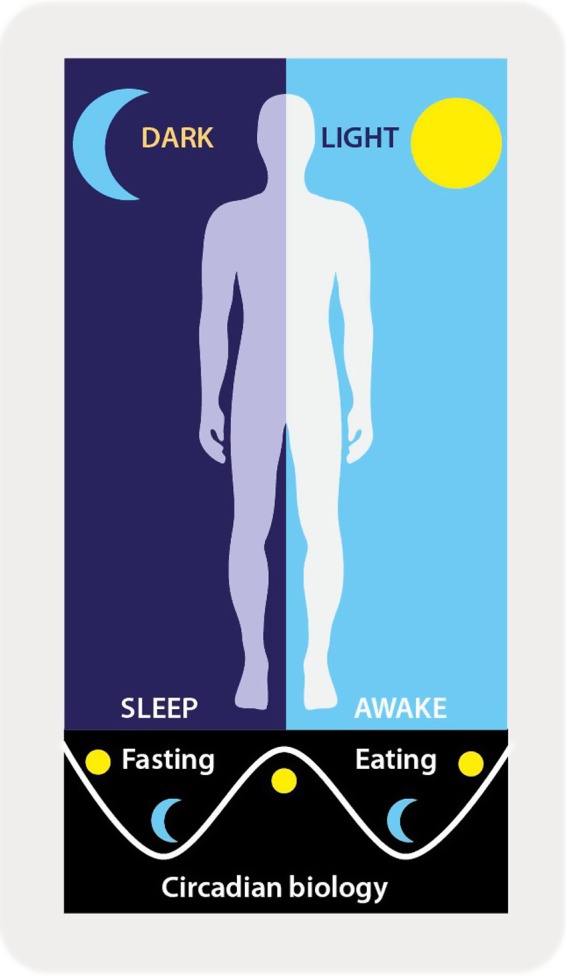
Figure 2
Representation of synchrony between the light/dark, wake/sleep and feed/fast cycles in humans as a diurnal species. [Colour figure can be viewed at http://wileyonlinelibrary.com]
Figure 3
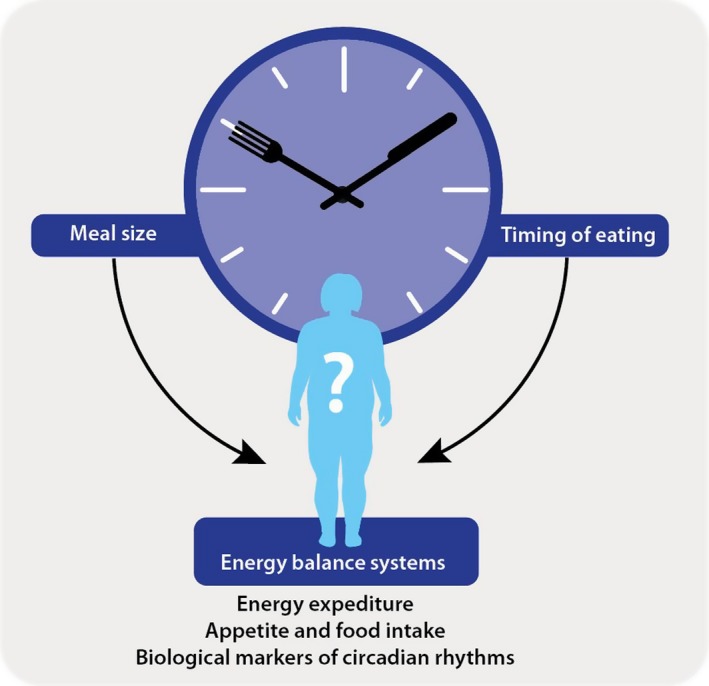
Figure 3
Key objectives of the Big Breakfast Study are to understand how altering meal size (calorie intake), specifically morning vs. evening distribution of energy intake, affects energy balance. We will determine the underlying mechanisms of energy balance (through assessing energy expenditure and appetite) and the influence of circadian biology. [Colour figure can be viewed at http://wileyonlinelibrary.com]
Figure 4
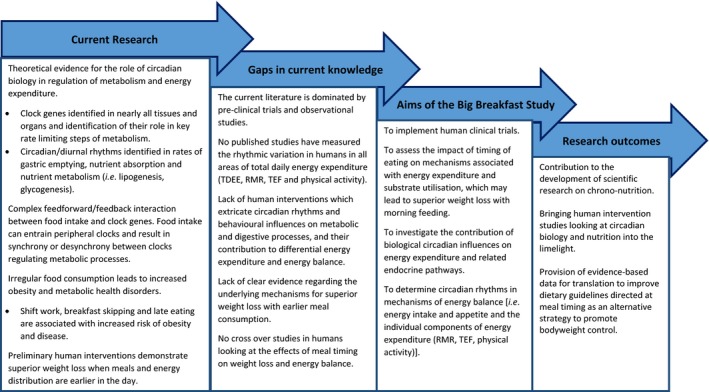
Figure 4
Summary of current research, current gaps in the literature and the aims of the Big Breakfast Study. TDEE, total daily energy expenditure; RMR, resting metabolic rate; TEF, thermic effect of food. [Colour figure can be viewed at http://wileyonlinelibrary.com]

References

    1. Aarnio M, Winter T, Kujala U et al (2002) Associations of health related behaviour, social relationships, and health status with persistent physical activity and inactivity: a study of Finnish adolescent twins. British Journal of Sports Medicine 36: 360–4. - PMC - PubMed
    1. Almoosawi S, Vingeliene S, Karagounis LG et al (2016) Chrono‐nutrition: a review of current evidence from observational studies on global trends in time‐of‐day of energy intake and its association with obesity. Proceedings of the Nutrition Society 75: 487–500. - PubMed
    1. Amigo‐Vázquez I, Busto‐Zapico R, Errasti‐Pérez JM et al (2016) Skipping breakfast, sedentarism and overweight in children. Psychology, Health & Medicine 21: 819–26. - PubMed
    1. Antunes L, Levandovski R, Dantas G et al (2010) Obesity and shift work: chronobiological aspects. Nutrition Research Reviews 23: 155–68. - PubMed
    1. Arble DM, Bass J, Laposky AD et al (2009) Circadian timing of food intake contributes to weight gain. Obesity 17: 2100–2. - PMC - PubMed

LinkOut - more resources