. 2018 May 7:2018:2516953.
doi: 10.1155/2018/2516953. eCollection 2018.

Sphenopalatine Ganglion Block for the Treatment of Acute Migraine Headache

Affiliations

Sphenopalatine Ganglion Block for the Treatment of Acute Migraine Headache

Mohamed Binfalah et al. Pain Res Treat. .

Abstract

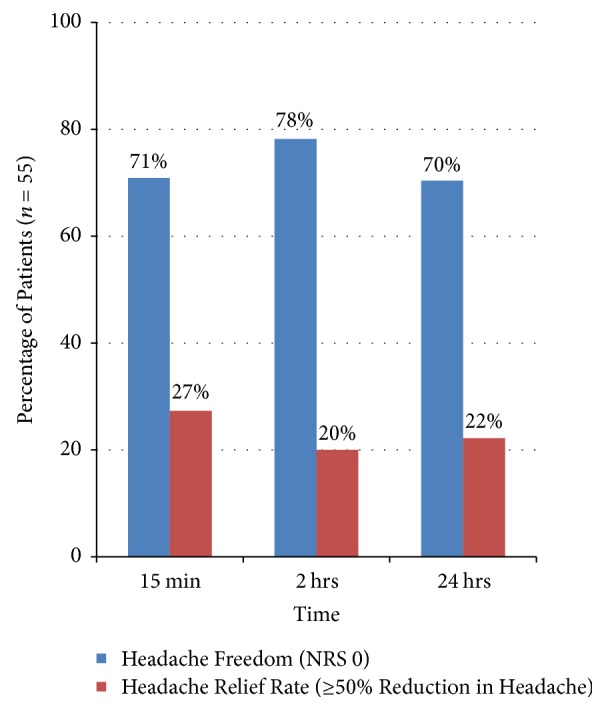
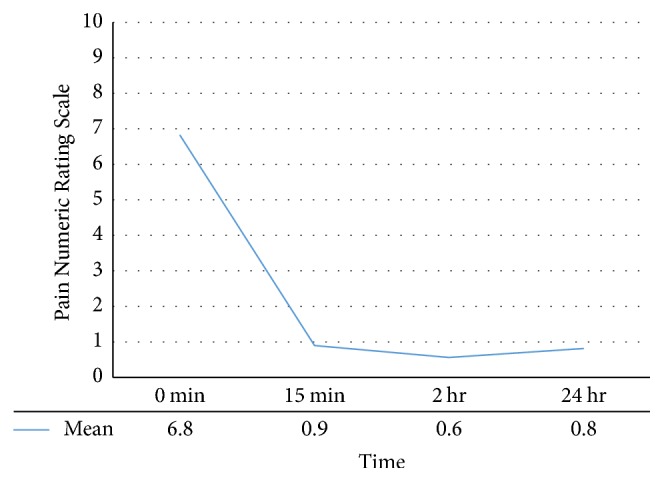
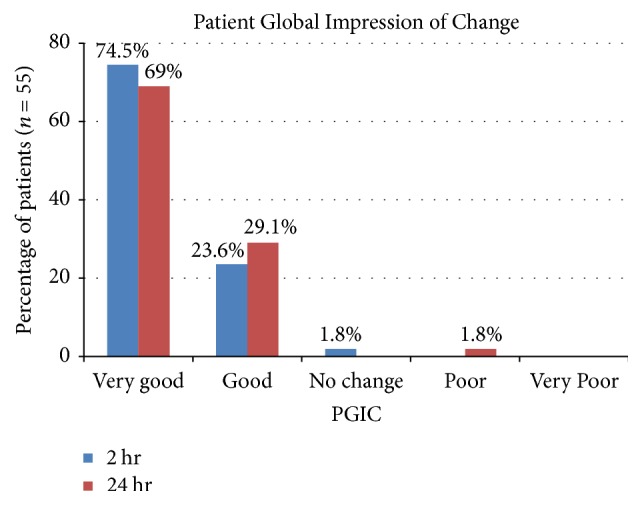
Transnasal sphenopalatine ganglion block is emerging as is an attractive and effective treatment modality for acute migraine headaches, cluster headache, trigeminal neuralgia, and several other conditions. We assessed the efficacy and safety of this treatment using the Sphenocath® device. 55 patients with acute migraine headaches underwent this procedure, receiving 2 ml of 2% lidocaine in each nostril. Pain numeric rating scale (baseline, 15 minutes, 2 hours, and 24 hours) and patient global impression of change (2 hours and 24 hours after treatment) were recorded. The majority of patients became headache-free at 15 minutes, 2 hours, and 24 hours after procedure (70.9%, 78.2%, and 70.4%, resp.). The rate of headache relief (50% or more reduction in headache intensity) was 27.3% at 15 minutes, 20% at 2 hours, and 22.2% at 24 hours. The mean pain numeric rating scale decreased significantly at 15 minutes, 2 hours, and 24 hours, respectively. Most patients rated the results as very good or good. The procedure was well-tolerated with few adverse events. This treatment is emerging as an effective and safe option for management of acute migraine attacks.


Figures
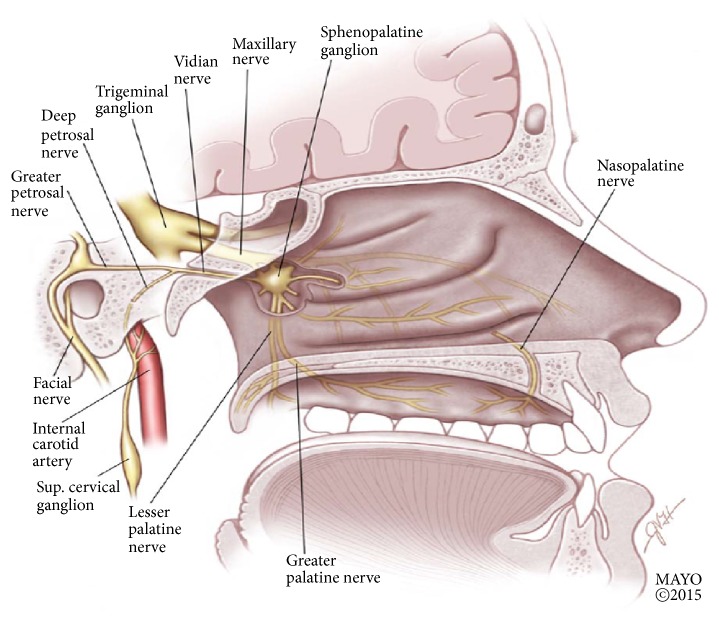
Figure 1
Figure 1
Saggital view of the nasopharynx, showing the sphenopalatine ganglion and its neural connections. Reproduced with permission from Robbins et al. (2016) [under the Creative Commons Attribution License number 4318850197898 (Wiley).
Figure 2
Figure 2
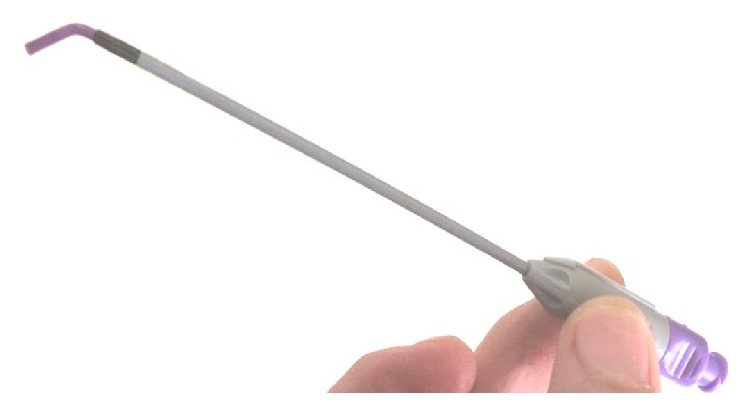
The Sphenocath device. Image provided courtesy of Dolor Technologies.
Figure 3
Figure 3
The percentage of patients reaching headache freedom (pain numeric rating scale 0) and patients with headache relief (50% or more reduction in headache intensity), at 15 minutes, 2 hours, and 24 hours.
Figure 4
Figure 4
The mean pain numeric rating scale at baseline and 15 minutes, 2 hours, and 24 hours after treatment, showing significant and sustained reduction in pain intensity.
Figure 5
Figure 5
Patient global impression of change after the procedure at 2 hours and 24 hours. The majority of patients rated the treatment result as very good or good.
Figure 6
Figure 6
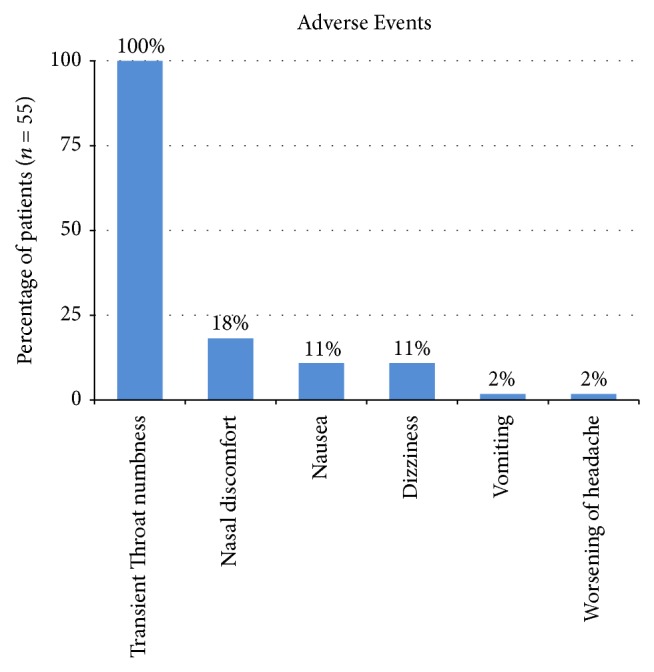
Adverse events recorded in the first 24 hours after the procedure.

References

    1. Marmura M. J., Silberstein S. D., Schwedt T. J. The Acute Treatment of Migraine in Adults: The American Headache Society Evidence Assessment of Migraine Pharmacotherapies. 2015;55(1):3–20. doi: 10.1111/head.12499. - DOI - PubMed
    1. World Health Organization. 2011. http://www.who.int/mental_health/management/atlas_headache_disorders/en/
    1. Becker W. J. Acute migraine treatment in adults. 2015;55(6):778–793. - PubMed
    1. Magis D., Jensen R., Schoenen J. Neurostimulation therapies for primary headache disorders. 2012;25(3):269–276. doi: 10.1097/WCO.0b013e3283532023. - DOI - PubMed
    1. Lipton R. B., Munjal S., Buse D. C., Fanning K. M., Bennett A., Reed M. L. Predicting Inadequate Response to Acute Migraine Medication: Results From the American Migraine Prevalence and Prevention (AMPP) Study. 2016;56(10):1635–1648. doi: 10.1111/head.12941. - DOI - PubMed

LinkOut - more resources