Greater Colo-Rectal Activation Phenotype in Exercised mdx Mice
- PMID: 29862132
- PMCID: PMC5959732
- DOI: 10.1371/currents.md.230ed3d6559b171e10279fc16e9ebef3
Greater Colo-Rectal Activation Phenotype in Exercised mdx Mice
Abstract
Introduction: Duchenne Muscular Dystrophy is a genetic disease that is caused by a deficiency of dystrophin protein. Both Duchenne Muscular Dystrophy patients and dystrophic mice suffer from intestinal dysfunction.
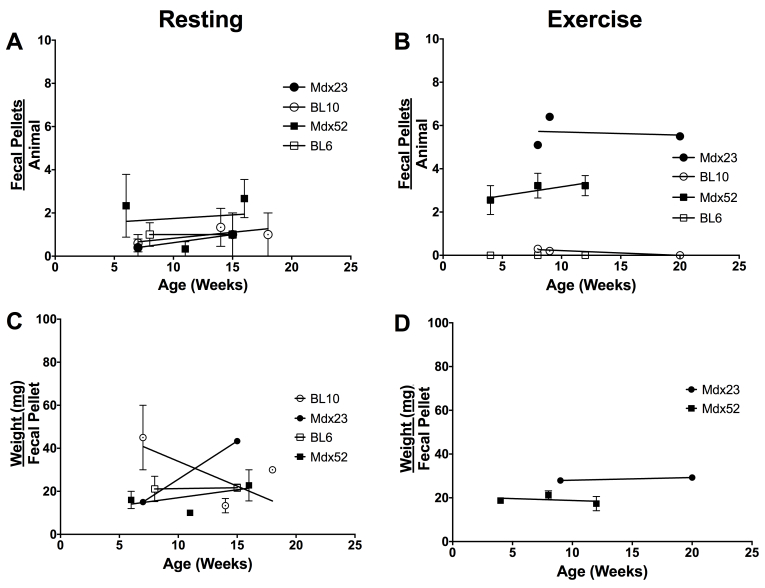
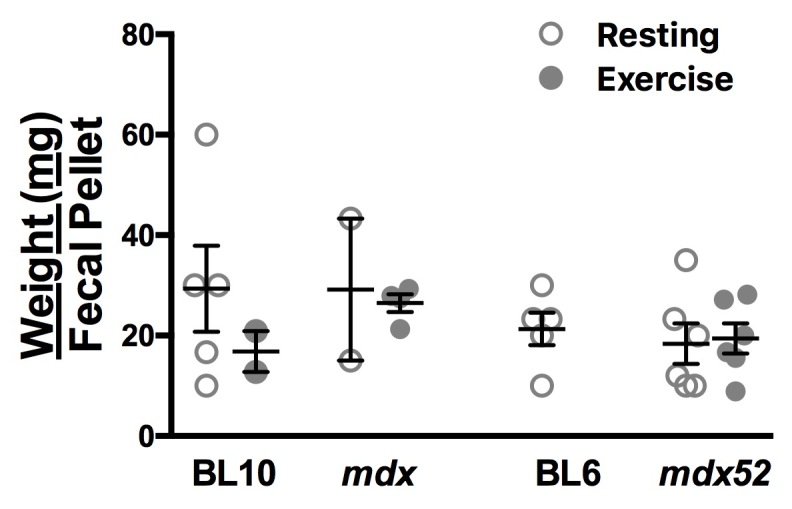
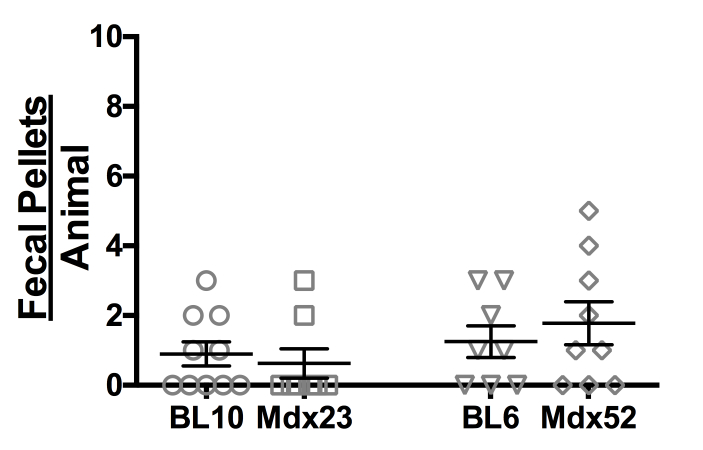
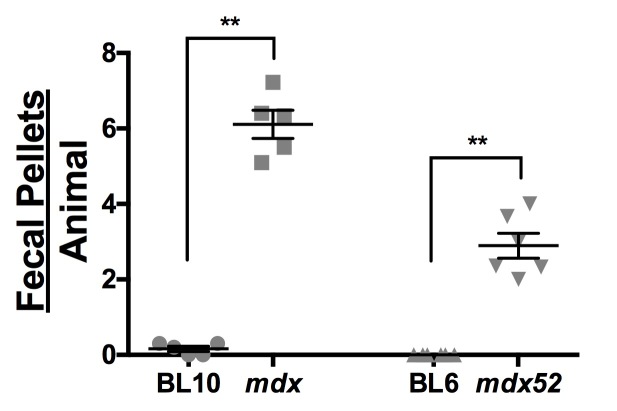
Methods: The present study arose from a chance observation of differences in fecal output of dystrophic vs. normal mice during 20-minutes of forced continuous treadmill exercise. Here, we report on the effects of exercise on fecal output in two different dystrophic mutants and their normal background control strains. All fecal materials evacuated during exercise were counted, dried and weighed.
Results: Mice of both mutant dystrophic strains produced significantly more fecal material during the exercise bout than the relevant control strains.
Iscussion: We propose that exercise--induced Colo--Rectal Activation Phenotype test could be used as a simple, highly sensitive, non-invasive biomarker to determine efficacy of dystrophin replacement therapies.
Figures
References
-
- Kraus D, Wong BL, Horn PS, Kaul A. Constipation in Duchenne Muscular Dystrophy: Prevalence, Diagnosis, and Treatment. J Pediatr. 2016 Apr;171:183-8. PubMed PMID:26831528. - PubMed
-
- Borrelli O, Salvia G, Mancini V, Santoro L, Tagliente F, Romeo EF, Cucchiara S. Evolution of gastric electrical features and gastric emptying in children with Duchenne and Becker muscular dystrophy. Am J Gastroenterol. 2005 Mar;100(3):695-702. PubMed PMID:15743370. - PubMed
-
- Barohn RJ, Levine EJ, Olson JO, Mendell JR. Gastric hypomotility in Duchenne's muscular dystrophy. N Engl J Med. 1988 Jul 7;319(1):15-8. PubMed PMID:3380114. - PubMed
LinkOut - more resources
Full Text Sources
Other Literature Sources