


Effective thresholds for reporting suspicions and improve early detection of avian influenza outbreaks in layer chickens
- PMID: 29867092
- PMCID: PMC5986775
- DOI: 10.1038/s41598-018-26954-9
Effective thresholds for reporting suspicions and improve early detection of avian influenza outbreaks in layer chickens
Abstract
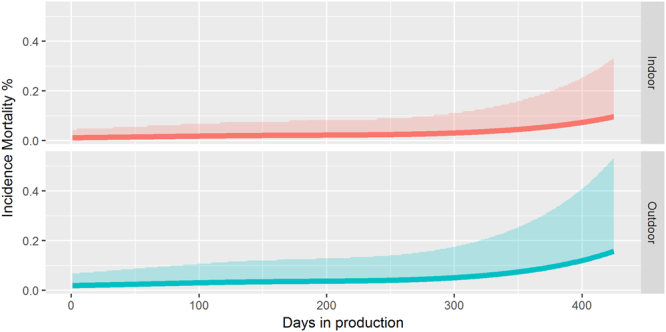
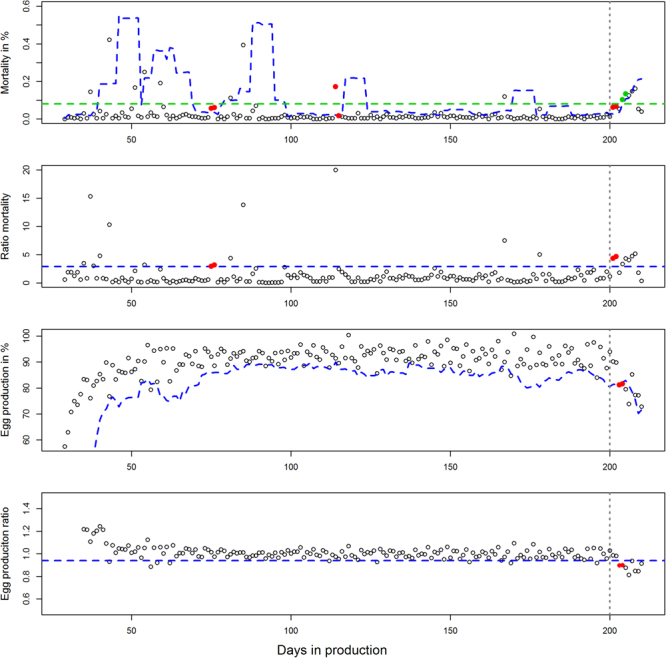
The objective of this study was to identify effective reporting thresholds for suspicions of both highly pathogenic (HPAI) and low pathogenic avian influenza (LPAI) outbreaks in layer farms. Daily mortality and egg-production data from 30 Dutch farms with no record of AI infection were analysed and thresholds set. Mortality rates above or egg-production below these thresholds for two consecutive days would trigger an alarm sign. The following thresholds were identified for mortality: (i) A mortality threshold of 0.08% or 0.13% for layers kept indoors or with free-range access respectively, (ii) a 2.9 times higher mortality than the average weekly mortality of the previous week, and iii) a moving-average threshold that could be implemented for each specific farm. For egg-production: (i) a weekly ratio lower than 0.94 in egg-production drop, and (ii) a moving-average threshold. The accuracy of these thresholds was assessed by quantifying their sensitivity, specificity and time to trigger disease detection using data from 15 infected and 31 non-infected farms. New thresholds were more sensitive and signalled infection two to six days earlier than the presently used thresholds. A high Specificity (97-100%) was obtained by combining mortality and egg production thresholds in a serial approach to trigger an alarm.
Conflict of interest statement
The authors declare no competing interests.
Figures
References
-
- Council of the European Union. Council Directive 2005/94/EC of 20 December 2005 on Community measures for the control of avian influenza and repealing Directive 92/40/EEC. Official Journal of the European UnionL10, 16–65 (2006).
-
- Heijmans JF, Komijn RE. Future of avian influenza. State of business and measures. Tijdschrift voor diergeneeskunde. 2000;125:254–256. - PubMed
-
- Dutch Animal Health and Welfare Law. in Legal Provision TRCJZ/2005/1411 of 7 June 2005. (2005).
Publication types
MeSH terms
LinkOut - more resources
Full Text Sources
Other Literature Sources
Medical
