Observational Study
. 2018 May 8:9:891.
doi: 10.3389/fimmu.2018.00891. eCollection 2018.

Scavenging Circulating Mitochondrial DNA as a Potential Therapeutic Option for Multiple Organ Dysfunction in Trauma Hemorrhage

Affiliations
Observational Study

Scavenging Circulating Mitochondrial DNA as a Potential Therapeutic Option for Multiple Organ Dysfunction in Trauma Hemorrhage

Andrew Aswani et al. Front Immunol. .

Abstract

Trauma is a leading cause of death worldwide with 5.8 million deaths occurring yearly. Almost 40% of trauma deaths are due to bleeding and occur in the first few hours after injury. Of the remaining severely injured patients up to 25% develop a dysregulated immune response leading to multiple organ dysfunction syndrome (MODS). Despite improvements in trauma care, the morbidity and mortality of this condition remains very high. Massive traumatic injury can overwhelm endogenous homeostatic mechanisms even with prompt treatment. The underlying mechanisms driving MODS are also not fully elucidated. As a result, successful therapies for trauma-related MODS are lacking. Trauma causes tissue damage that releases a large number of endogenous damage-associated molecular patterns (DAMPs). Mitochondrial DAMPs released in trauma, such as mitochondrial DNA (mtDNA), could help to explain part of the immune response in trauma given the structural similarities between mitochondria and bacteria. MtDNA, like bacterial DNA, contains an abundance of highly stimulatory unmethylated CpG DNA motifs that signal through toll-like receptor-9 to produce inflammation. MtDNA has been shown to be highly damaging when injected into healthy animals causing acute organ injury to develop. Elevated circulating levels of mtDNA have been reported in trauma patients but an association with clinically meaningful outcomes has not been established in a large cohort. We aimed to determine whether mtDNA released after clinical trauma hemorrhage is sufficient for the development of MODS. Secondly, we aimed to determine the extent of mtDNA release with varying degrees of tissue injury and hemorrhagic shock in a clinically relevant rodent model. Our final aim was to determine whether neutralizing mtDNA with the nucleic acid scavenging polymer, hexadimethrine bromide (HDMBr), at a clinically relevant time point in vivo would reduce the severity of organ injury in this model.

Conclusions: We have shown that the release of mtDNA is sufficient for the development of multiple organ injury. MtDNA concentrations likely peak at different points in the early postinjury phase dependent on the degree of isolated trauma vs combined trauma and hemorrhagic shock. HDMBr scavenging of circulating mtDNA (and nuclear DNA, nDNA) is associated with rescue from severe multiple organ injury in the animal model. This suggests that HDMBr could have utility in rescue from human trauma-induced MODS.

Keywords: Toll-like receptor-9; damage-associated molecular patterns; mitochondrial DNA; multiple organ dysfunction syndrome; nucleic acid scavenger; sterile inflammation; trauma; trauma hemorrhage.


Figures
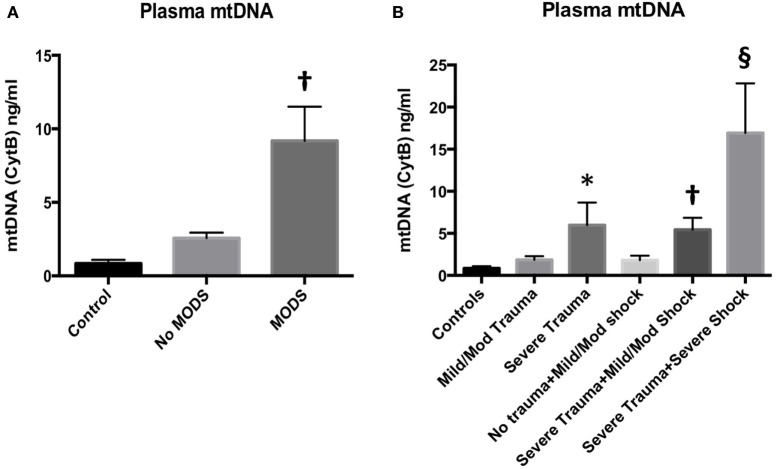
Figure 1
Figure 1
(A) (left) Plasma mitochondrial DNA (mtDNA) concentration at 2 h from injury is associated with the development of multiple organ dysfunction syndrome (MODS) in injured trauma patients. Injured patients who developed MODS (n = 27) had higher concentrations of mtDNA (as measured by cytochrome B concentration) in their peripheral blood than injured patients who did not develop MODS (n = 85). Control subjects had an Injury Severity Score (ISS) of 0–4 and normal base excess (n = 16) mean (95% CI): 0.9 (0.4–1.3) ng/ml, no MODS: 2.6 (1.8–3.3) ng/ml, MODS 9.2 (4.6–13.7) ng/ml. Bar graphs indicate mean values with SEM. † denotes p < 0.01 when no MODS and MODS groups were compared with a t-test. DNA was extracted from cell-free plasma and mtDNA was measured using real-time polymerase chain reaction with cytochrome B as the target gene. (B) (right) Plasma mtDNA concentration in patients at admission with increasing tissue injury and shock from left to right. mtDNA levels demonstrated a dose-dependent relationship with ISS. Controls (ISS 0–4 and normal base excess, n = 16) mean ± SEM mtDNA 0.8471 ± 0.2525 ng/ml, mild/moderate trauma (ISS 5–24, normal BE, n = 34), 1.850 ± 0.4266, and severe trauma (ISS ≥ 25, normal BE, n = 16) 5.960 ± 2.691. * denotes p < 0.05 vs controls, ANOVA/Dunnett’s. Isolated shock (ISS 0–4, BE −2.1 to −10, n = 11) did not significantly raise mtDNA levels (1.796 ± 0.553 ng/ml) vs controls. However, the addition of severe trauma to mild/moderate shock (ISS > 25, BE −2.1 to −10, n = 32) caused a significant rise in mtDNA compared to controls but not to isolated severe trauma: 5.425 ± 1.422 ng/ml, † denotes p < 0.01, ANOVA/Dunnett’s. The combination of severe trauma and severe shock (ISS > 25, BE <−10, n = 11) resulted in the greatest rise in plasma mtDNA levels: 16.93 ± 5.894 ng/ml, § denotes p < 0.0001 vs controls, p < 0.05 vs isolated severe trauma, and p < 0.05 vs severe trauma and mild/moderate shock, t-tests. Bar graphs indicate mean with SEM.
Figure 2
Figure 2
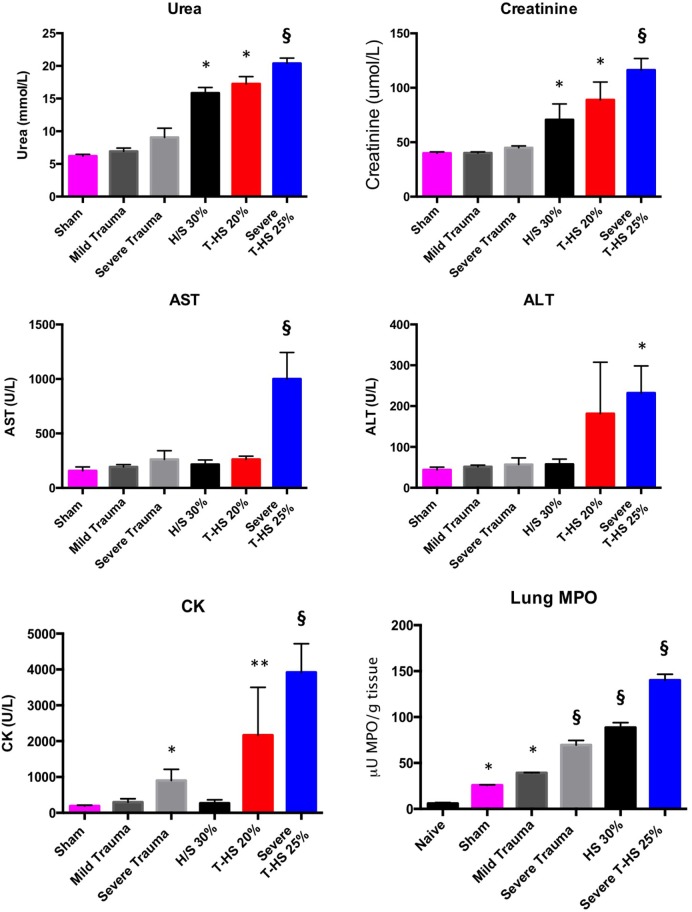
Organ injury plasma biomarkers in various models of (trauma) hemorrhage. Trauma was inflicted during −5 to 0 min. Naïve group, uninstrumented animals, n = 4. Sham group, instrumented animals, n = 8. Mild trauma group: Left leg fracture only, n = 6. Severe trauma: Bilateral leg fractures, 4-cm laparotomy, 10-s bilateral leg muscle crush injury, n = 8. HS 30% group: Bleeding of 30% circulating volume for 20 min, n = 8. T-HS 20% group: Bilateral leg fractures, 4-cm laparotomy, bleeding 20% circulating volume for 20 min, n = 8. Severe T-HS 25% group: Bilateral leg fractures, 4-cm laparotomy, 10-s bilateral leg muscle crush injury, bleeding 25% circulating volume for 35 min, n = 8. * denotes p < 0.05 vs sham; ** denotes p < 0.01 vs sham; § denotes p < 0.0001 vs sham, all t-tests. For lung Myeloperoxidase (MPO) symbols denote significance vs naïve animals, n = 4 (uninstrumented controls). For creatine kinase (CK), § also denotes p < 0.0001 for severe T-HS 25% vs severe trauma alone. Mean values ± SEM bars shown.
Figure 3
Figure 3
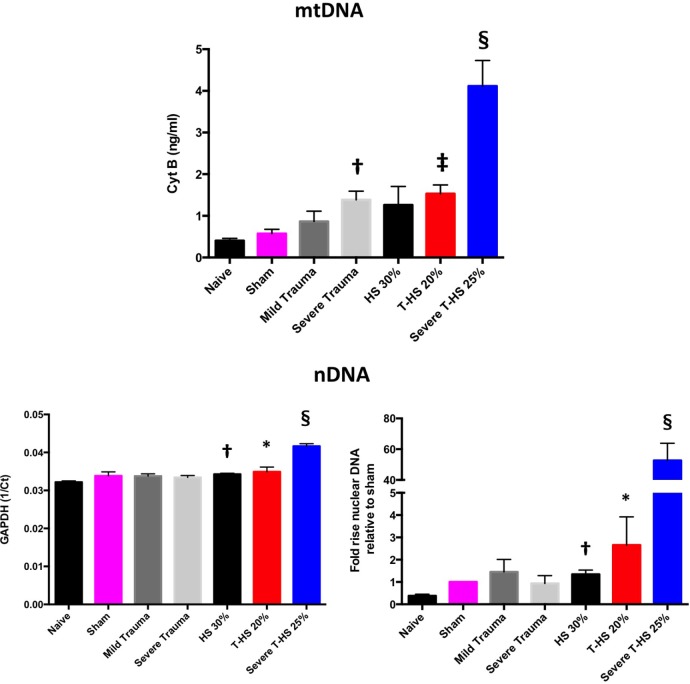
Plasma mitochondrial DNA (mtDNA) and nDNA concentrations taken at 6 h from rodents subjected to increasing degrees of traumatic injury and shock. Top panel, fully quantified mtDNA concentrations from real-time polymerase chain reaction (Cyt B). Bottom panels, nDNA, 1/Ct (GAPDH) and fold increases relative to sham concentrations displayed. There was a dose-dependent increase in mtDNA with increasing trauma severity as opposed to pure HS; † denotes p < 0.01 for severe trauma vs naïve animals. With increasing severity of concomitant shock there again was a dose-dependent increase in mtDNA, ‡ denotes p < 0.001 and § denotes p < 0.0001 for T-HS 20%, and severe T-HS 25%, respectively, vs naïve animals. There was moderate correlation between changes in mtDNA and nDNA concentration overall (p < 0.01) but important differences emerged. There was no rise in nDNA with increasing traumatic injury but pure HS 30% induced a small but significant rise in nDNA, † denotes p < 0.01 vs naive animals. Severe T-HS resulted in a large rise in nDNA, § denotes p < 0.0001 vs naïve animals. t-tests used. Mean values with SEM bars shown.
Figure 4
Figure 4
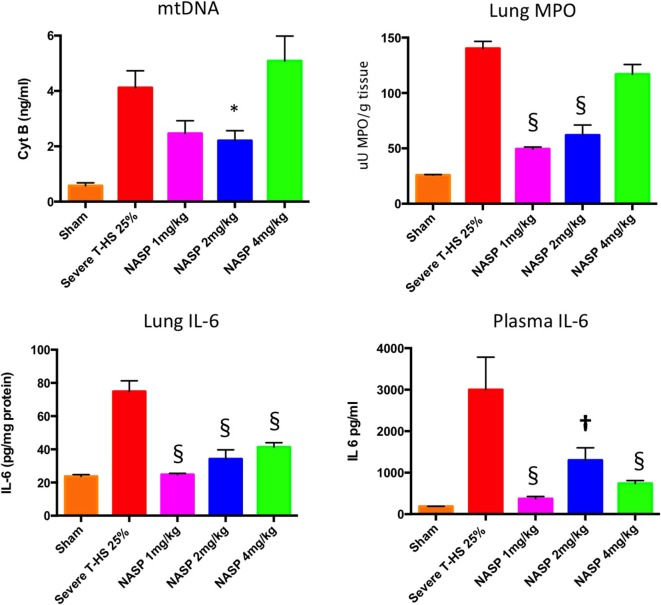
A 6-h plasma mitochondrial DNA (mtDNA), lung inflammation scores and systemic IL-6. Cell-free mtDNA was measured with real time polymerase chain reaction using cytochrome B as the target gene: Severe T-HS 25% resulted in an approximately eightfold increase in mtDNA compared to sham, 0.57 (±0.1) to 4.1 (±0.6) ng/ml, p < 0.0001, t-test. The addition of nucleic acid scavenging polymer (NASP) (hexadimethrine bromide) 1 mg/kg post injury resulted in a non-significant trend toward reduced mtDNA, mean 2.46 (±0.46) ng/ml, p = 0.06. NASP 2 mg/kg reduced circulating plasma mtDNA by half to 2.2 (±0.36) ng/ml, * denotes p < 0.05. NASP 4 mg/kg resulted in an increased mean mtDNA 5.09 (±0.9) ng/ml relative to untreated T-HS 25%, p > 0.05. Lung MPO: untreated T-HS 25% showed a marked increase in lung MPO compared to shams, 140 (±0.5) vs 25.8 (±0.8) uU MPO/g, p < 0.0001. There was significant attenuation of lung MPO in the NASP 1 and 2 mg/kg groups, 49.4 (±0.4) and 61.9 (±0.9) uU MPO/g respectively, § denotes p < 0.0001, but not in the NASP 4 mg/kg group. Lung IL-6 concentration was measured by ELISA: untreated T-HS 25% resulted in a significant increase in Lung IL-6 from sham levels, 74.9 (±6.5) vs 23.7 (±1.1) pg/mg protein, p < 0.0001. There was significant attenuation in lung IL-6 with all three doses used, 24.7 (±0.76), 34.2 (±5.5), and 41.3 (±2.3) pg/mg protein, respectively, § denotes p < 0.0001 vs untreated T-HS 25%. Systemic IL-6 concentration was measured by ELISA: There was a marked increase in plasma IL-6 in untreated T-HS compared to controls, 2,999 (±782) pg/ml vs 186 (±2) pg/ml, p < 0.0001. There was significant attenuation of IL-6 release with all three doses used: 373 (±51), 1,299 (±298), and 738 (±69) pg/ml, respectively, † denotes p < 0.01 and § denotes p < 0.0001 vs untreated T-HS 25%, t-tests throughout. Mean values with SEM bars shown.
Figure 5
Figure 5
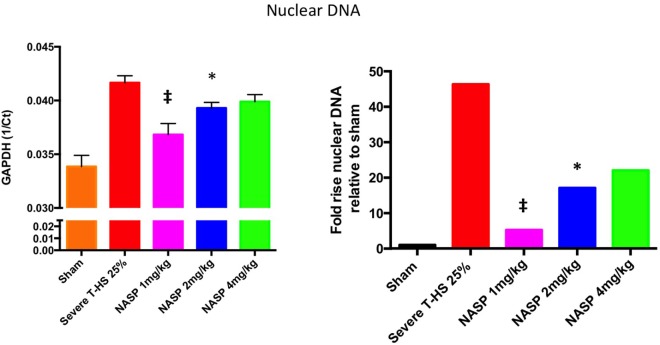
A 6-h plasma nuclear DNA concentrations. Cell-free plasma nDNA was measured by real time polymerase chain reaction using GAPDH as the target gene. Y-axis is denoted as the reciprocal of the threshold count, Ct, the PCR cycle at which the rate of PCR product starts to rise exponentially, which corresponds to the amount of starting template. The right hand graph illustrates the corresponding fold increase in nDNA relative to sham. There was a 45-fold increase in nDNA concentration relative to sham, p < 0.0001. Nucleic acid scavenging polymer (NASP) (hexadimethrine bromide) 1 mg/kg resulted in significant attenuation of this rise to fivefold sham levels; ‡ denotes p < 0.001. NASP 2 mg/kg resulted in lesser but significant attenuation to 17-fold sham levels, * denotes p < 0.05. Attenuation with NASP 4 mg/kg was not significant statistically. t-tests used. Mean values with SEM bars shown.
Figure 6
Figure 6
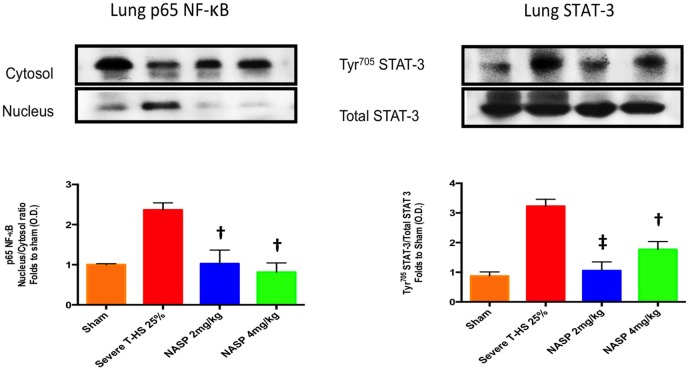
Western blot analysis of lung homogenates. Phosphorylated NF-κB levels were markedly increased at 6 h post T-HS with attenuation to sham levels with nucleic acid scavenging polymer (NASP) (hexadimethrine bromide) 2 and 4 mg/kg dosing, † denotes p < 0.01 vs untreated T-HS 25%. Phosphorylated STAT-3 levels were similarly attenuated by NASP 2 mg/kg, ‡ denotes p < 0.001 vs untreated T-HS 25%, less so with NASP 4 mg/kg, † denotes p < 0.01 vs untreated T-HS 25%. n = 3–4 animals per group. ANOVA/Tukey’s. Bar graphs indicate mean values with SEM. NASP 1 mg/kg data not available.
Figure 7
Figure 7
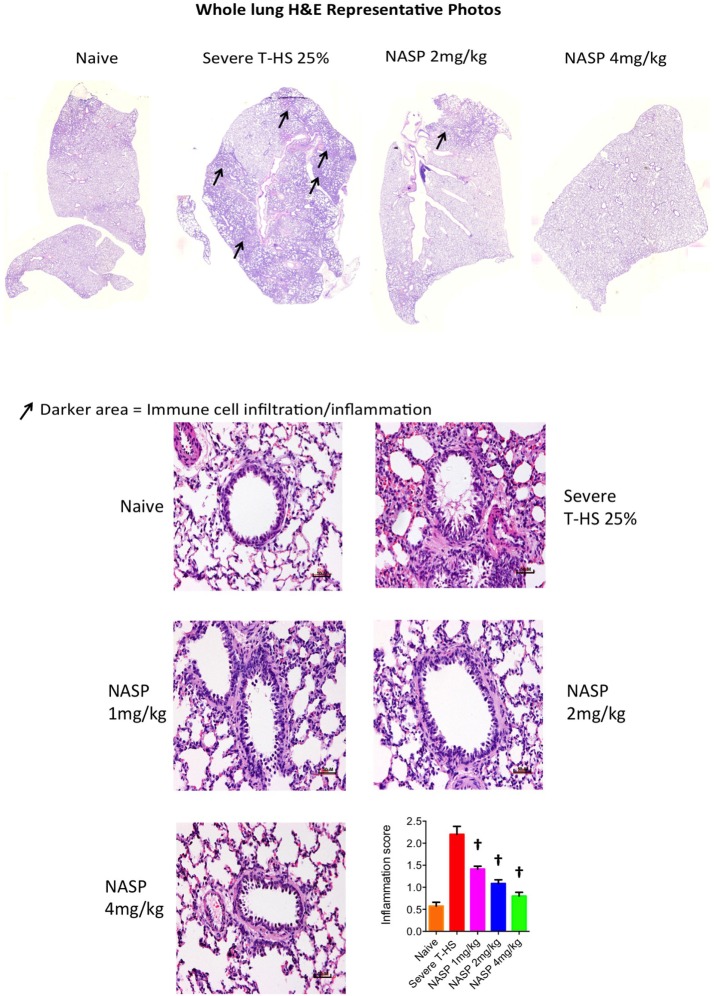
Nucleic acid scavenging polymer (NASP) (hexadimethrine bromide) treatment of rodent T-HS improved lung histological appearances. Hematoxylin & eosin (H&E) staining to measure cell infiltration into the airway, an indicator of airway inflammation. NASP treatment showed a dose-dependent attenuation of cellular infiltration. † denotes p < 0.01 vs untreated severe T-HS 25%, t-test. n = 4–7 animals per group. Mean values with SEM bars shown. Scale bars represent 50 µm.
Figure 8
Figure 8
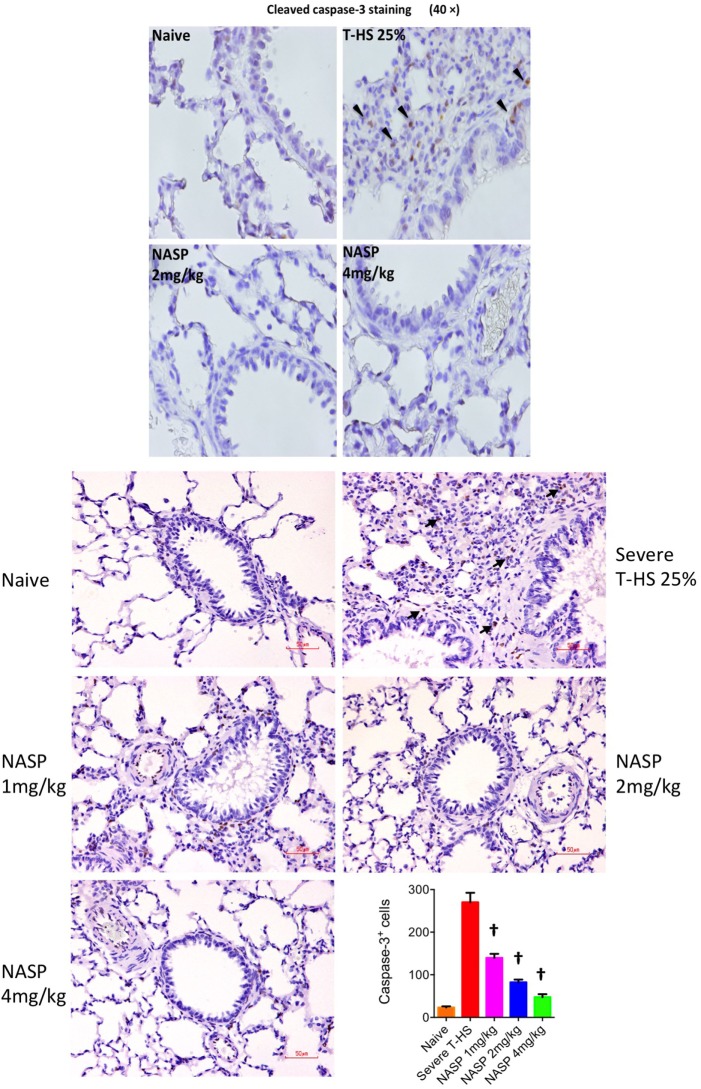
Nucleic acid scavenging polymer (NASP) (hexadimethrine bromide) treatment of rodent T-HS improved lung histological appearances. Cleaved caspase-3 staining was used to evaluate apoptotic cell death. NASP treatment showed a dose-dependent reduction of apoptotic cell death. † denotes p < 0.01 vs untreated severe T-HS 25%, t-test. n = 4–8 animals per group. Dark arrows indicate cleaved caspase-3 cells. Scale bar represents 50 µm.
Figure 9
Figure 9
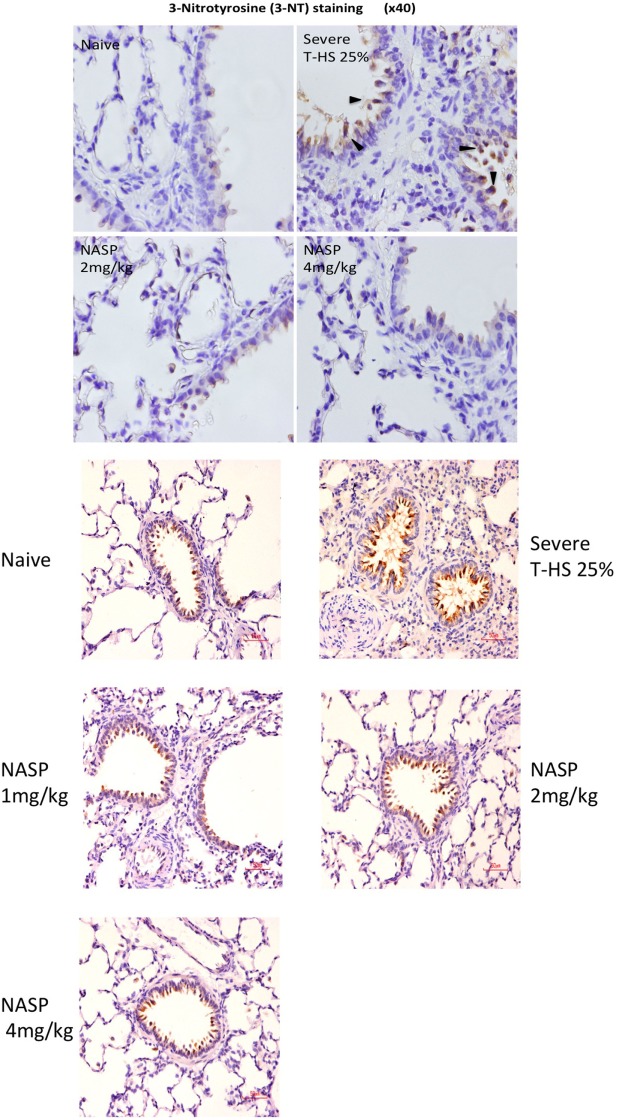
Nucleic acid scavenging polymer (NASP) (hexadimethrine bromide) treatment of rodent T-HS improved lung histological appearances. Staining for 3-nitrotyrosine (3-NT), a marker of peroxynitrite production and hence oxidative stress, was used to evaluate oxidative injury. There was a dose-dependent improvement in lung histological appearance with increasing doses of NASP (not quantified). Black arrows indicate 3-NT-positive stained cell. Red scale bar represents 50 µm.
Figure 10
Figure 10
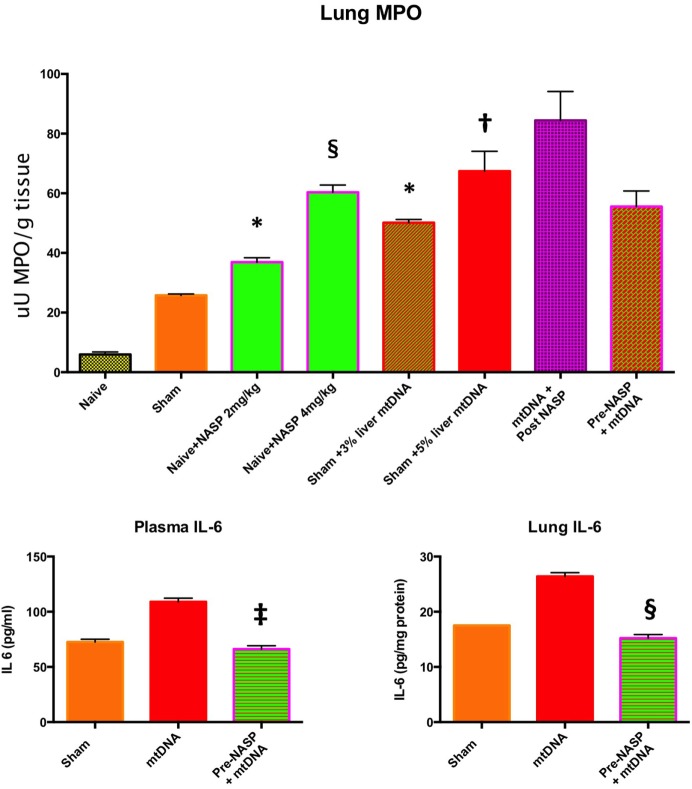
Lung myeloperoxidase (MPO), lung and plasma IL-6. Lung MPO (Top): Injection of nucleic acid scavenging polymer (NASP) (hexadimethrine bromide) 2 and 4 mg/kg into naïve rats. Lungs sampled at 6 h. There were significant increases in MPO with both doses compared to naïve animals indicating lung toxicity at the higher dose especially, * denotes p < 0.05, § denotes p < 0.0001. Pure mitochondrial DNA (mtDNA) extracted from 3 and 5% rat liver by total weight was injected into sham animals with dose-dependent increases in lung MPO compared to sham animals, * denotes p < 0.05, † denotes p < 0.01. Then, pure mtDNA extracted from 5% liver was injected into shams followed by NASP 2 mg/kg 30 min later; there was no significant change in MPO found. Finally, shams were injected with NASP 2 mg/kg followed by 5% liver pure mtDNA injection 15 min later. No significant alteration in lung MPO was found. t-tests throughout. n = 3–5 animals per group. Plasma and lung IL-6 (Bottom) were both measured by ELISA: Injection of pure mtDNA extracted from 5% liver resulted in a significant rise in both plasma and lung IL-6 concentrations, p < 0.01. Pretreatment of sham animals with NASP 2 mg/kg followed by injection of pure mtDNA extracted from 5% liver 15 min later resulted in the attenuation of both values to sham levels, ‡ denotes p < 0.001, § denotes p < 0.0001 vs pure mtDNA, t-tests. n = 3–5 animals per group. Overall, MPO appears to be a very sensitive marker of lung injury. Pretreatment with NASP attenuated other inflammatory marker increases with pure mtDNA injections. Mean values with SEM shown.
Figure 11
Figure 11
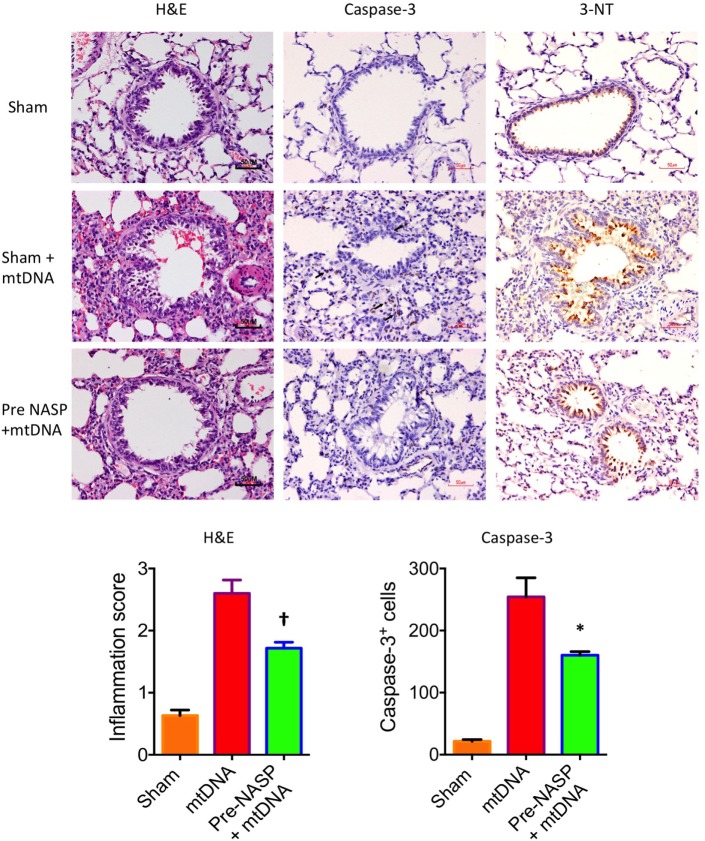
Nucleic acid scavenging polymer (NASP) (hexadimethrine bromide) 2 mg/kg pretreatment followed by 5% liver pure mitochondrial DNA (mtDNA) injections into sham animals attenuated lung injury on histological examination with hematoxylin & eosin (H&E), caspase-3M and 3-Nitrotyrosine (3-NT) staining. * denotes p < 0.05, † denotes p < 0.01, both vs pure mtDNA injection alone, t-tests. n = 3–5 animals per group. Mean values with SEM bars shown.
Figure 12
Figure 12
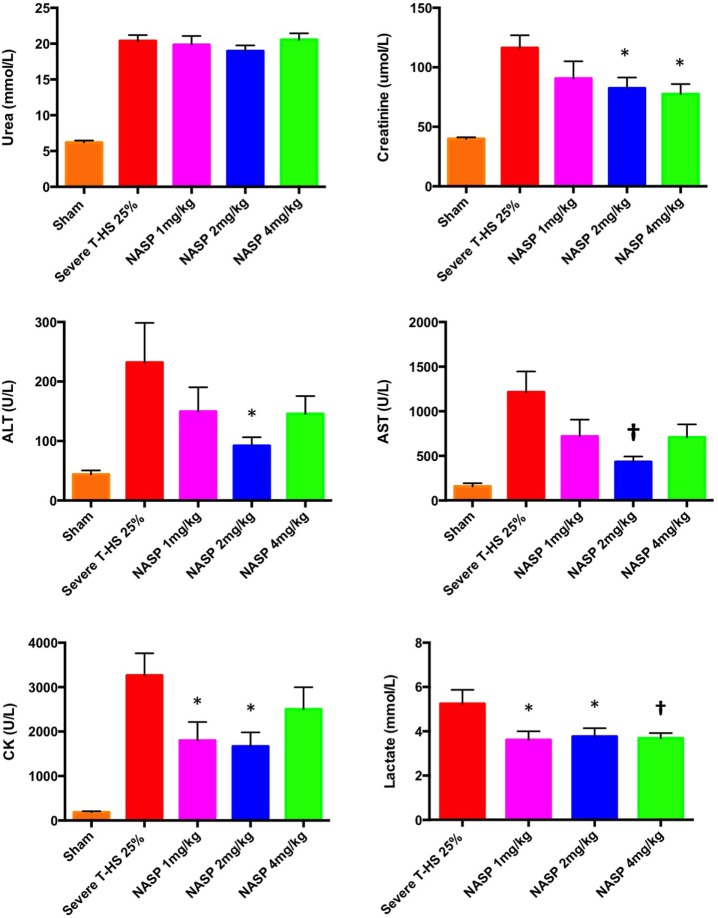
Other organ injury markers at 6 h. Urea: there was no detectable difference in urea concentration with an increasing dose of nucleic acid scavenging polymer (NASP) (hexadimethrine bromide) used in severe T-HS 25%. Creatinine: renal protection was evident with NASP 2 and 4 mg/kg doses. Alanine aminotransferase (ALT) and aspartate aminotransferase (AST): there was a significant attenuation of liver injury evident with NASP 2 mg/kg dosing. Creatine kinase (CK): there was a significant attenuation of muscle injury with both NASP 1 and 2 mg/kg doses. Lactate: there was a significant reduction in 6 h lactate with all three doses NASP used. * denotes p < 0.05, † denotes p < 0.01 was untreated severe T-HS 25%, t-tests. n = 12–18 animals per group. Mean values with SEM bars shown. Overall, the NASP 2 mg/kg group produced the most consistent multiple organ protection in severe T-HS 25%.

References

    1. WHO. Global Health Estimates 2015 Summary Tables: Deaths by Cause, Age and Sex, 2000–2015 [Online]. World Health Organization; (2016). Available from:http://www.who.int/healthinfo/global_burden_disease?GHE2015_Deaths_Globa... (Accessed: October 01, 2017).
    1. Dewar D, Moore FA, Moore EE, Balogh Z. Postinjury multiple organ failure. Injury (2009) 40:912–8.10.1016/j.injury.2009.05.024 - DOI - PubMed
    1. Sauaia A, Moore EE, Johnson JL, Chin TL, Banerjee A, Sperry JL, et al. Temporal trends of postinjury multiple-organ failure. J Trauma Acute Care Surg (2014) 76:582–93.10.1097/TA.0000000000000147 - DOI - PMC - PubMed
    1. Lord JM, Midwinter MJ, Chen Y-F, Belli A, Brohi K, Kovacs EJ, et al. The systemic immune response to trauma: an overview of pathophysiology and treatment. Lancet (2014) 384:1455–65.10.1016/S0140-6736(14)60687-5 - DOI - PMC - PubMed
    1. Medzhitov R. Origin and physiological roles of inflammation. Nature (2008) 454:428–35.10.1038/nature07201 - DOI - PubMed

Publication types

MeSH terms