


Composition and richness of the serum microbiome differ by age and link to systemic inflammation
- PMID: 29869736
- PMCID: PMC6060185
- DOI: 10.1007/s11357-018-0026-y
Composition and richness of the serum microbiome differ by age and link to systemic inflammation
Abstract
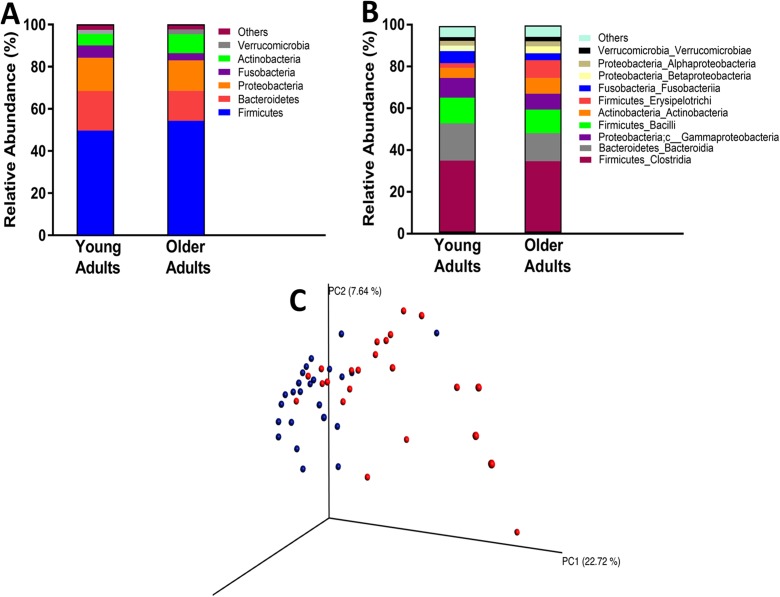
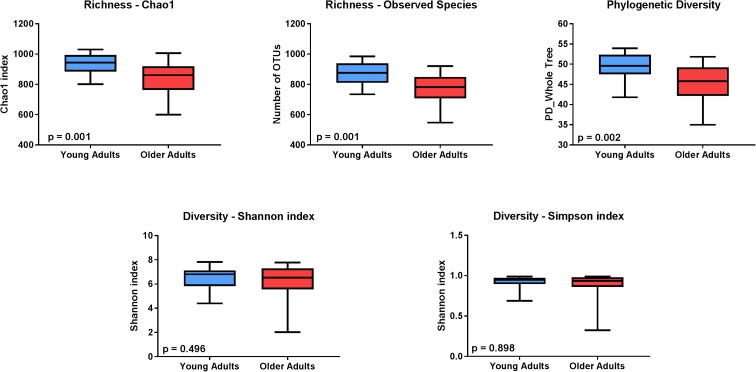
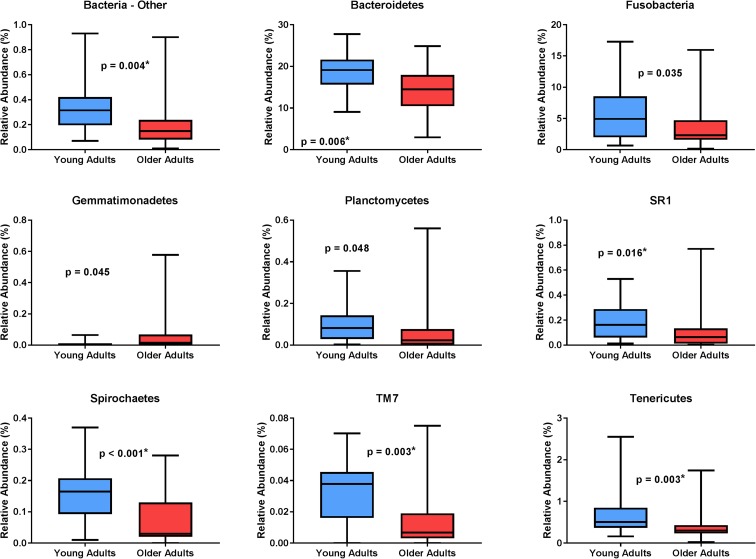
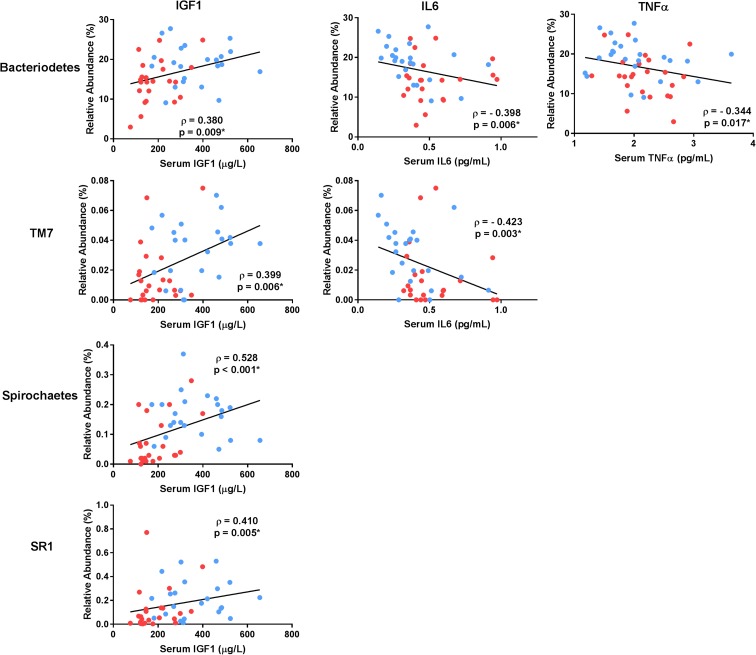
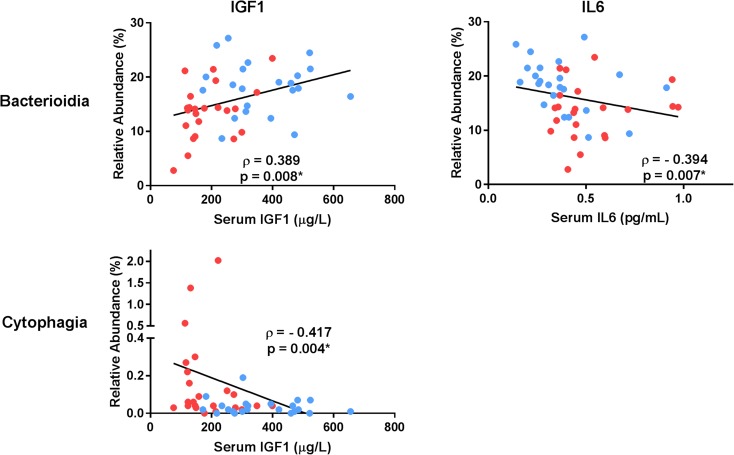
Advanced age has been associated with alterations to the microbiome within the intestinal tract as well as intestinal permeability (i.e., "leaky gut"). Prior studies suggest that intestinal permeability may contribute to increases in systemic inflammation-an aging hallmark-possibly via microorganisms entering the circulation. Yet, no studies exist describing the state of the circulating microbiome among older persons. To compare microbiota profiles in serum between healthy young (20-35 years, n = 24) and older adults (60-75 years, n = 24) as well as associations between differential microbial populations and prominent indices of age-related inflammation. Unweighted Unifrac analysis, a measure of β-diversity, revealed that microbial communities clustered differently between young and older adults. Several measures of α-diversity, including chao1 (p = 0.001), observed species (p = 0.001), and phylogenetic diversity (p = 0.002) differed between young and older adults. After correction for false discovery rate (FDR), age groups differed (all p values ≤ 0.016) in the relative abundance of the phyla Bacteroidetes, SR1, Spirochaetes, Bacteria_Other, TM7, and Tenericutes. Significant positive correlations (p values ≤ 0.017 after FDR correction) were observed between IGF1 and Bacteroidetes (ρ = 0.380), Spirochaetes (ρ = 0.528), SR1 (ρ = 0.410), and TM7 (ρ = 0.399). Significant inverse correlations were observed for IL6 with Bacteroidetes (ρ = - 0.398) and TM7 (ρ = - 0.423), as well as for TNFα with Bacteroidetes (ρ = - 0.344). Similar findings were observed at the class taxon. These data are the first to demonstrate that the richness and composition of the serum microbiome differ between young and older adults and that these factors are linked to indices of age-related inflammation.
Keywords: Aging; Inflammation; Leaky gut; Microbiome; Microbiota.
Conflict of interest statement
Prior to participation, all participants provided written informed based on documents approved by Institutional Review Boards of the University of Alabama at Birmingham (UAB) and Birmingham Veterans Affairs Medical Center.
Figures
References
-
- Benjamini, Y., & Hochberg, Y. (1995). Controlling the false discovery rate: a practical and powerful approach to multiple testing. J. Royal Stat. Soc.,, 289–290-300
Publication types
MeSH terms
Substances
Grants and funding
LinkOut - more resources
Full Text Sources
Other Literature Sources
Miscellaneous
