


Support provided by midwives to women during labour in a public hospital, Limpopo Province, South Africa: a participant observation study
- PMID: 29871607
- PMCID: PMC5989402
- DOI: 10.1186/s12884-018-1860-8
Support provided by midwives to women during labour in a public hospital, Limpopo Province, South Africa: a participant observation study
Abstract
Background: Physical presence during labour offer women opportunity of having positive childbirth experiences as well as childbirth outcomes. The study aimed to determine what support provided by midwives during intrapartum care at a public hospital in Limpopo Province. The study was conducted at a tertiary hospital in Limpopo Province.
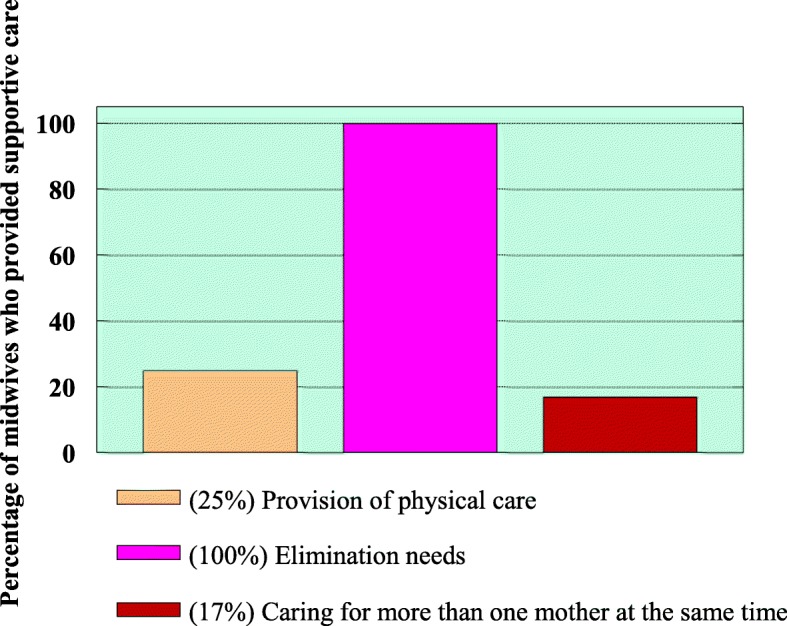
Methods: A participant observation approach was used to achieve the objectives of the study. The population comprised of all women who were admitted with labour and for delivery and midwives who were providing midwifery care in the obstetric unit of a tertiary public hospital in Limpopo Province. Non-probability, purposive and convenience sampling were used to sample 24 women and 12 midwives. Data were collected through participant observations which included unstructured conversations with the use of observational guide, field notes of all events and conversations that occurred when women interact with midwives were recorded verbatim and a Visual Analog Scale to complement the observations. Data were analysed qualitatively but were presented in the tables and bar graphs.
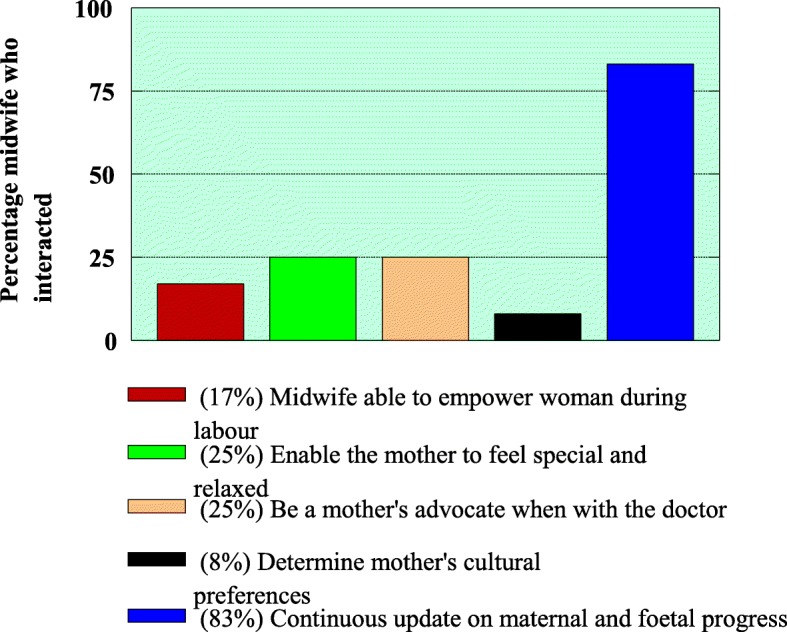
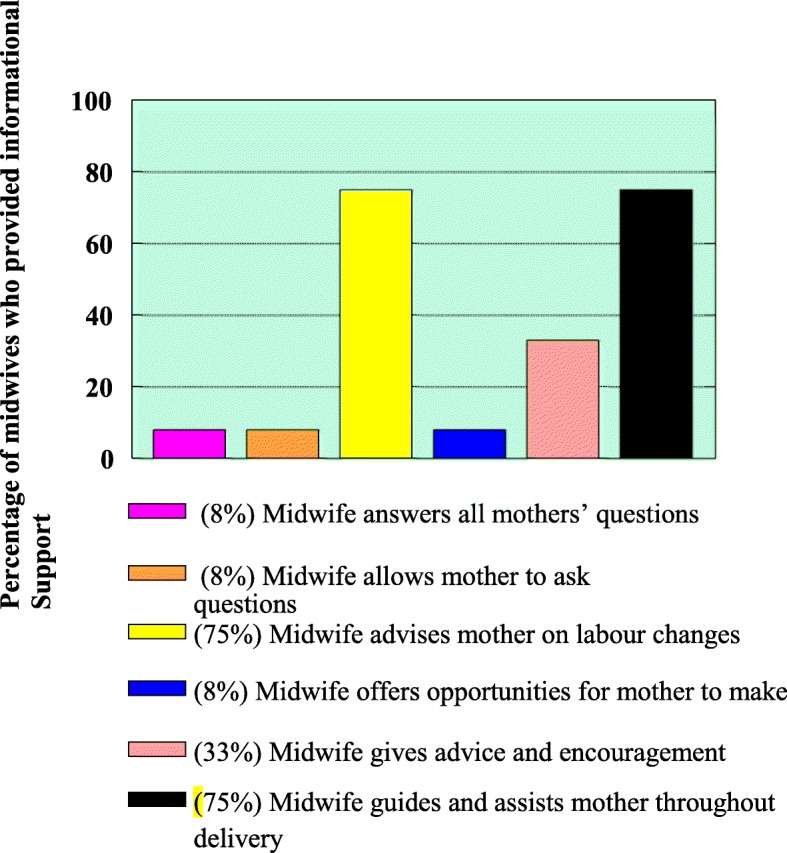
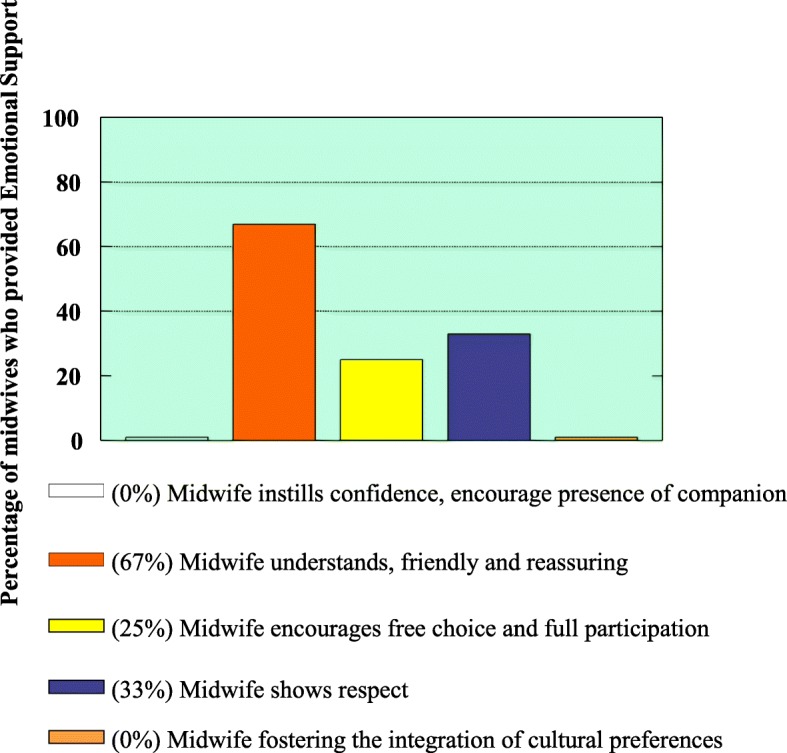
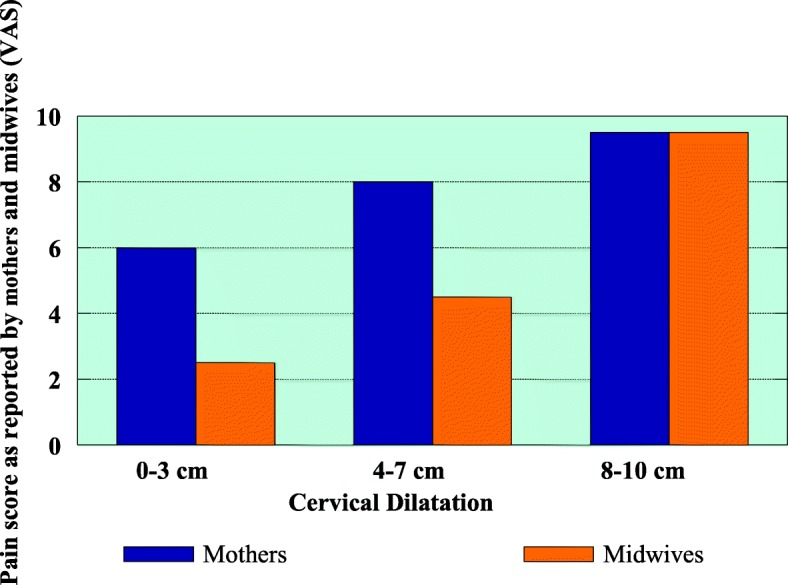
Results: Five themes emerged as support provided by midwives during labour, namely; communication between women and midwives, informational support, emotional support activities, interpretation of the experienced labour pain and supportive care activities during labour.
Conclusion: The communication between woman and midwife was occurring as part of midwifery care and very limited for empowering. The information sharing focused on the assistive actions rather than on the activities that would promote mothers' participation. The emotional support activities indicated lack of respect and disregard cultural preferences and this contributed to inability to exercise choices in decision-making. The study recommended the implementation of Batho Pele principles in order to provide woman-centred care during labour.
Keywords: Communication between women and midwives; Emotional support; Informational support; Labour pains; Physical comforting measures; Support offered.
Conflict of interest statement
Ethics approval and consent to participate
The study was approved by the Human research Ethics Committee of the University of Venda (SHS/11/PDC/001). Participants gave written informed consent for their participation which included consent for observation semi-structured observation, unstructured conversations/ interview and anonymous reporting of person details such as demographic profile.
Competing interest
The author declares that she has no financial or personal relationship(s) which may have inappropriately influenced her in writing this article.
Publisher’s Note
Springer Nature remains neutral with regard to jurisdictional claims in published maps and institutional affiliations.
Figures
References
-
- Department of Public Services and Administration. White paper on transforming public service delivery, Government Gazette 388 (18340), Government Printer, Pretoria. 1997.
-
- Raphael-Leff J. Psychological processes of childbearing. 4. Guildford, UK: Anna Freud Centre; 2005.
-
- Lundgren I. Releasing and relieving encounters. Experiences of Pregnancy and Childbirth: Faculty of medicine, Uppsala University, Uppsala, Sweden; 2002.
-
- Hodnett ED, Gates S, Hofmeyr GJ, Sakala C, Weston J. Continuous support for women during childbirth. Cochrane Database Syst Rev. 2013;2:CD003766. - PubMed
Publication types
MeSH terms
LinkOut - more resources
Full Text Sources
Other Literature Sources
Medical
