


Comprehensive skin microbiome analysis reveals the uniqueness of human skin and evidence for phylosymbiosis within the class Mammalia
- PMID: 29871947
- PMCID: PMC6016819
- DOI: 10.1073/pnas.1801302115
Comprehensive skin microbiome analysis reveals the uniqueness of human skin and evidence for phylosymbiosis within the class Mammalia
Abstract
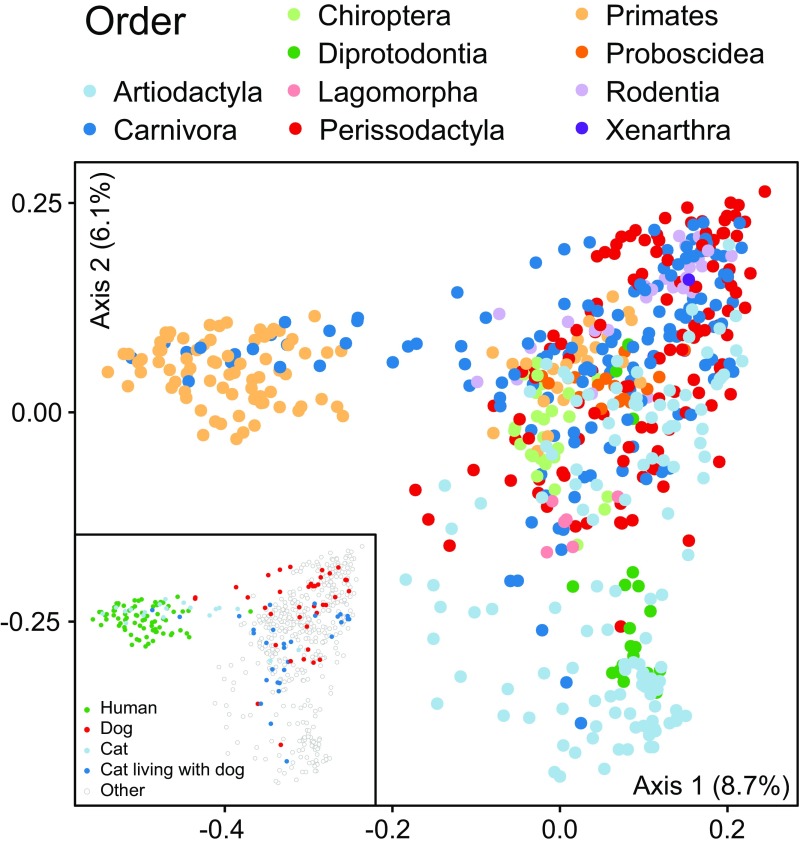
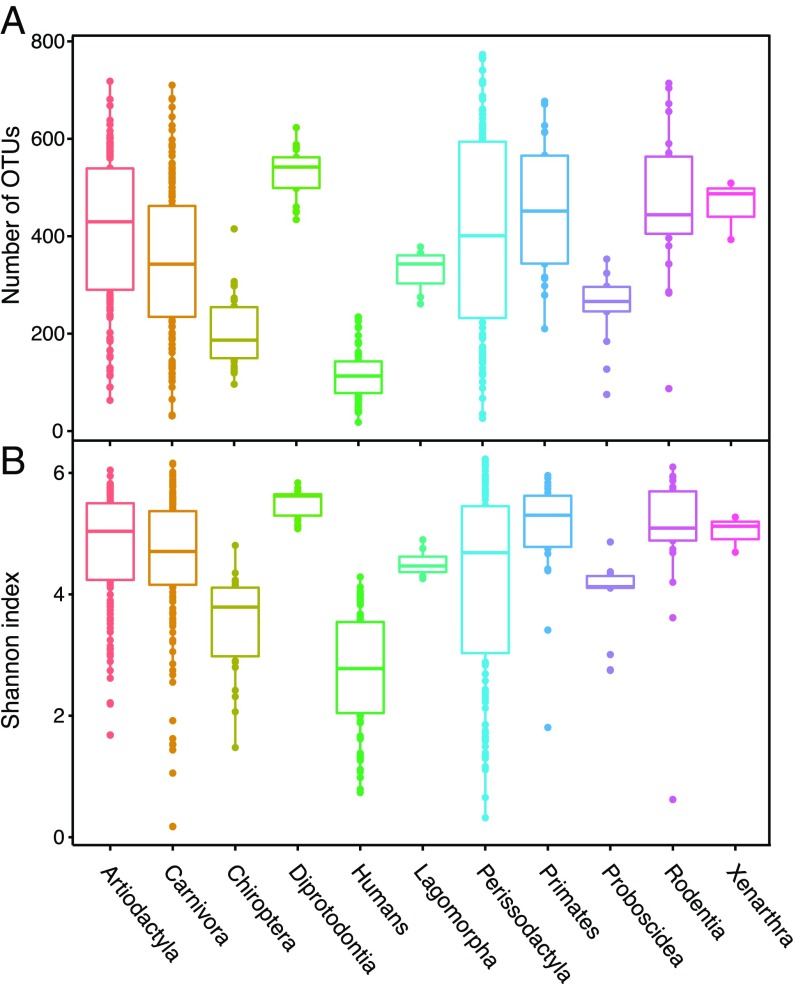
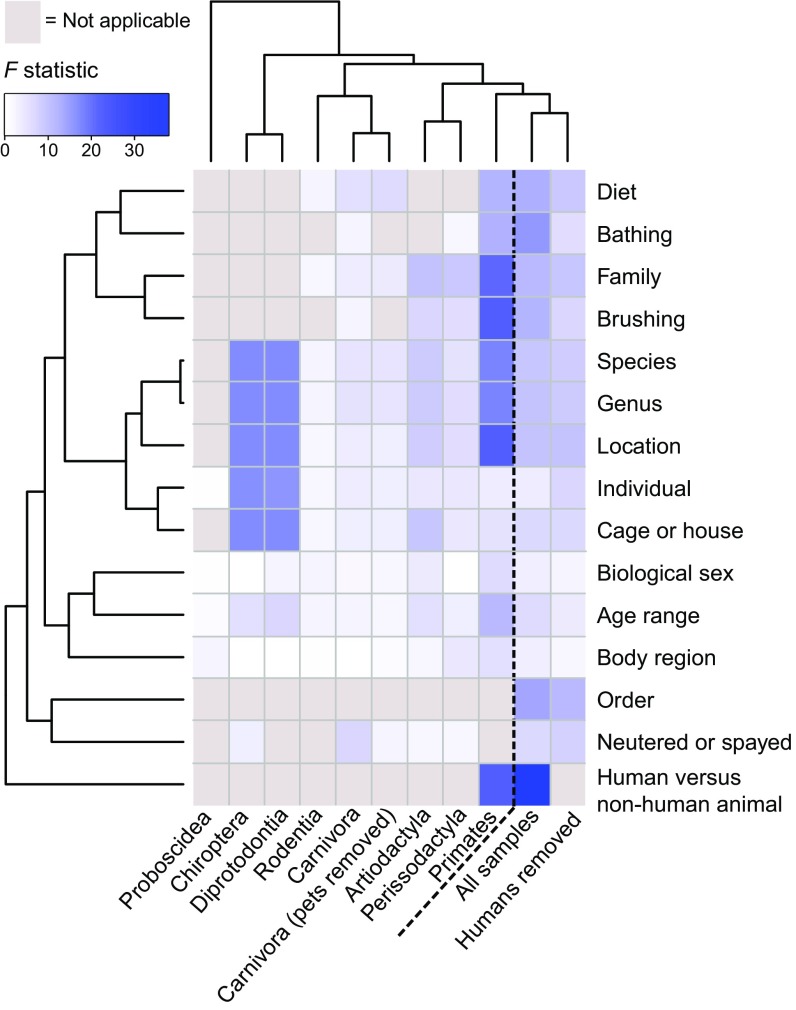
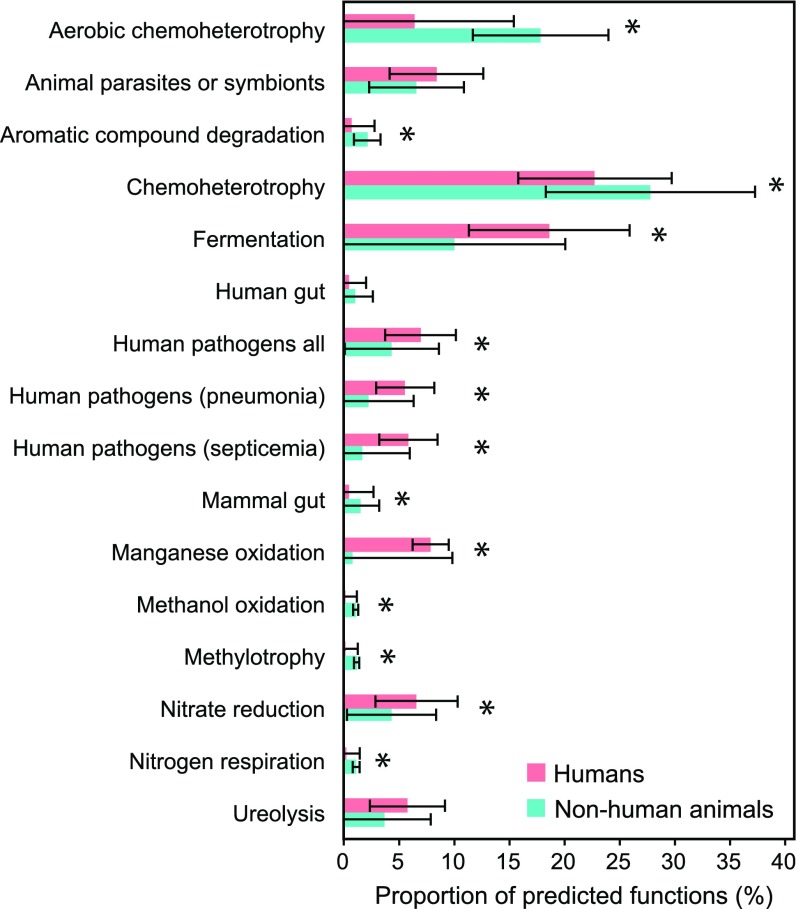
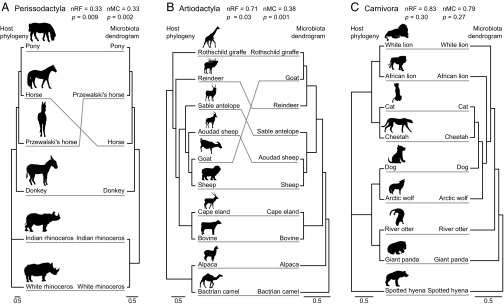
Skin is the largest organ of the body and represents the primary physical barrier between mammals and their external environment, yet the factors that govern skin microbial community composition among mammals are poorly understood. The objective of this research was to generate a skin microbiota baseline for members of the class Mammalia, testing the effects of host species, geographic location, body region, and biological sex. Skin from the back, torso, and inner thighs of 177 nonhuman mammals was sampled, representing individuals from 38 species and 10 mammalian orders. Animals were sampled from farms, zoos, households, and the wild. The DNA extracts from all skin swabs were amplified by PCR and sequenced, targeting the V3-V4 regions of bacterial and archaeal 16S rRNA genes. Previously published skin microbiome data from 20 human participants, sampled and sequenced using an identical protocol to the nonhuman mammals, were included to make this a comprehensive analysis. Human skin microbial communities were distinct and significantly less diverse than all other sampled mammalian orders. The factor most strongly associated with microbial community data for all samples was whether the host was a human. Within nonhuman samples, host taxonomic order was the most significant factor influencing skin microbiota, followed by the geographic location of the habitat. By comparing the congruence between host phylogeny and microbial community dendrograms, we observed that Artiodactyla (even-toed ungulates) and Perissodactyla (odd-toed ungulates) had significant congruence, providing evidence of phylosymbiosis between skin microbial communities and their hosts.
Keywords: 16S rRNA; coevolution; mammals; phylosymbiosis; skin microbiome.
Copyright © 2018 the Author(s). Published by PNAS.
Conflict of interest statement
The authors declare no conflict of interest.
Figures
References
-
- Colston TJ, Jackson CR. Microbiome evolution along divergent branches of the vertebrate tree of life: What is known and unknown. Mol Ecol. 2016;25:3776–3800. - PubMed
-
- Shelley WB, Hurley HJ, Jr, Nichols AC. Axillary odor; experimental study of the role of bacteria, apocrine sweat, and deodorants. AMA Arch Derm Syphilol. 1953;68:430–446. - PubMed
Publication types
MeSH terms
Substances
Grants and funding
LinkOut - more resources
Full Text Sources
Other Literature Sources
