


Plasma N-glycans in colorectal cancer risk
- PMID: 29872119
- PMCID: PMC5988698
- DOI: 10.1038/s41598-018-26805-7
Plasma N-glycans in colorectal cancer risk
Abstract
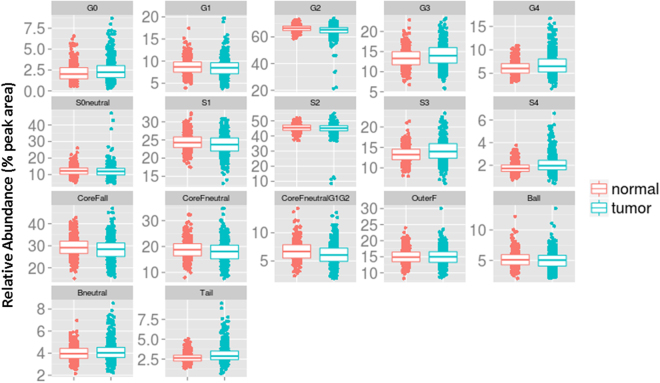
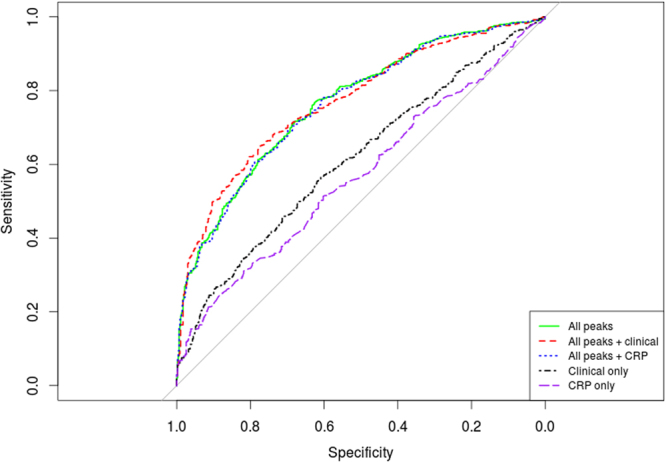
Aberrant glycosylation has been associated with a number of diseases including cancer. Our aim was to elucidate changes in whole plasma N-glycosylation between colorectal cancer (CRC) cases and controls in one of the largest cohorts of its kind. A set of 633 CRC patients and 478 age and gender matched controls was analysed. Additionally, patients were stratified into four CRC stages. Moreover, N-glycan analysis was carried out in plasma of 40 patients collected prior to the initial diagnosis of CRC. Statistically significant differences were observed in the plasma N-glycome at all stages of CRC, this included a highly significant decrease in relation to the core fucosylated bi-antennary glycans F(6)A2G2 and F(6)A2G2S(6)1 (P < 0.0009). Stage 1 showed a unique biomarker signature compared to stages 2, 3 and 4. There were indications that at risk groups could be identified from the glycome (retrospective AUC = 0.77 and prospective AUC = 0.65). N-glycome biomarkers related to the pathogenic progress of the disease would be a considerable asset in a clinical setting and it could enable novel therapeutics to be developed to target the disease in patients at risk of progression.
Conflict of interest statement
Professor Gordan Lauc is founder and owner of Genos Ltd – a private research organization that specialises in high-throughput glycomic analysis. ITA and FV are employees of Genos Ltd.
Figures


References
-
- Roitsch T, Lehle L. Structural requirements for protein N-glycosylation. Influence of acceptor peptides on cotranslational glycosylation of yeast invertase and site-directed mutagenesis around a sequon sequence. Eur J Biochem. 1989;181:525–529. doi: 10.1111/j.1432-1033.1989.tb14755.x. - DOI - PubMed
Publication types
MeSH terms
Substances
Grants and funding
- MC_UU_00007/1/MRC_/Medical Research Council/United Kingdom
- 22804/CRUK_/Cancer Research UK/United Kingdom
- MC_PC_U127527198/MRC_/Medical Research Council/United Kingdom
- 12076/CRUK_/Cancer Research UK/United Kingdom
- C31250/A22804/CRUK_/Cancer Research UK/United Kingdom
- MC_U127527198/MRC_/Medical Research Council/United Kingdom
- MR/K018647/1/MRC_/Medical Research Council/United Kingdom
- 18927/CRUK_/Cancer Research UK/United Kingdom
- C348/A12076/CRUK_/Cancer Research UK/United Kingdom
- G0600237/MRC_/Medical Research Council/United Kingdom
- G0600329/MRC_/Medical Research Council/United Kingdom
LinkOut - more resources
Full Text Sources
Other Literature Sources
Medical
