


Anticancer Activity and Mechanism of Xanthohumol: A Prenylated Flavonoid From Hops (Humulus lupulus L.)
- PMID: 29872398
- PMCID: PMC5972274
- DOI: 10.3389/fphar.2018.00530
Anticancer Activity and Mechanism of Xanthohumol: A Prenylated Flavonoid From Hops (Humulus lupulus L.)
Abstract
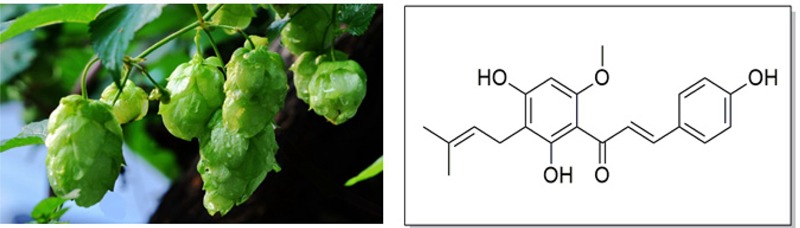
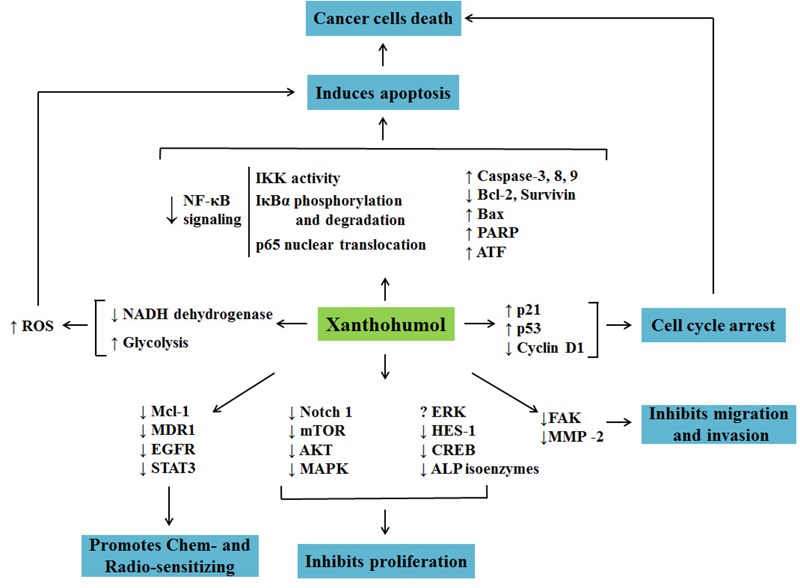
It has been observed that many phytochemicals, frequently present in foods or beverages, show potent chemopreventive or therapeutic properties that selectively affect cancer cells. Numerous studies have demonstrated the anticancer activity of xanthohumol (Xn), a prenylated flavonoid isolated from hops (Humulus lupulus L.), with a concentration up to 0.96 mg/L in beer. This review aims to summarize the existing studies focusing on the anticancer activity of Xn and its effects on key signaling molecules. Furthermore, the limitations of current studies and challenges for the clinical use of Xn are discussed.
Keywords: anticancer; hops; molecular mechanism; phytochemical; xanthohumol.
Figures
References
-
- Bassey-Archibong B. I., Kwiecien J. M., Milosavljevic S. B., Hallett R. M., Rayner L. G., Erb M. J., et al. (2016). Kaiso depletion attenuates transforming growth factor-beta signaling and metastatic activity of triple-negative breast cancer cells. 5:e208. 10.1038/oncsis.2016.17 - DOI - PMC - PubMed
Publication types
LinkOut - more resources
Full Text Sources
Other Literature Sources
