


Role of nonresolving inflammation in hepatocellular carcinoma development and progression
- PMID: 29872724
- PMCID: PMC5871907
- DOI: 10.1038/s41698-018-0048-z
Role of nonresolving inflammation in hepatocellular carcinoma development and progression
Abstract
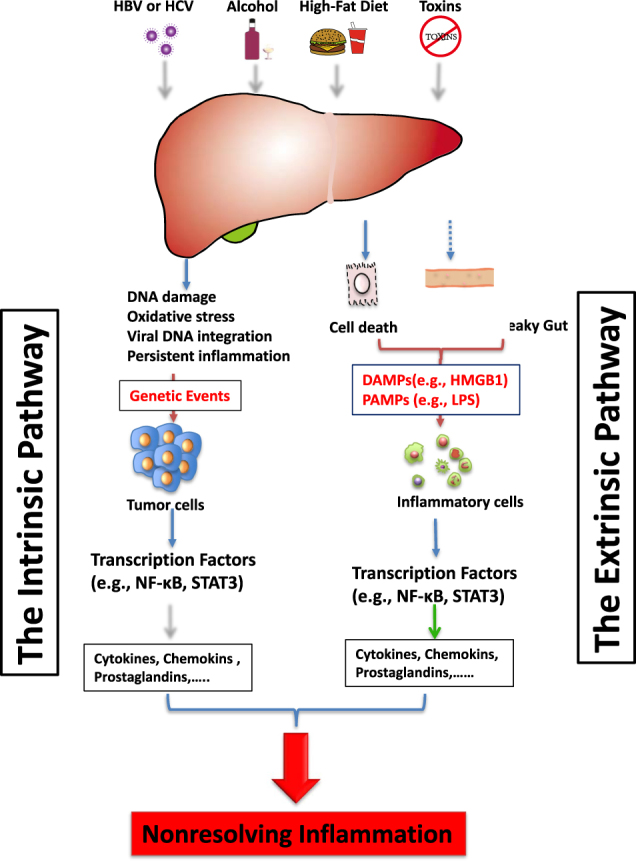
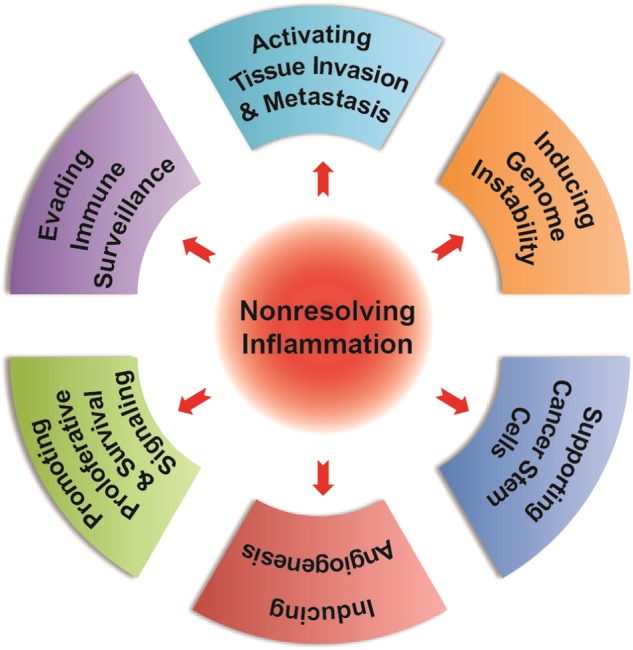
Hepatocellular carcinoma (HCC) has become a leading cause of cancer-related death, making the elucidation of its underlying mechanisms an urgent priority. Inflammation is an adaptive response to infection and tissue injury under strict regulations. When the host regulatory machine runs out of control, nonresolving inflammation occurs. Nonresolving inflammation is a recognized hallmark of cancer that substantially contributes to the development and progression of HCC. The HCC-associated inflammation can be initiated and propagated by extrinsic pathways through activation of pattern-recognition receptors (PRRs) by pathogen-associated molecule patterns (PAMPs) derived from gut microflora or damage-associated molecule patterns (DAMPs) released from dying liver cells. The inflammation can also be orchestrated by the tumor itself through secreting factors that recruit inflammatory cells to the tumor favoring the buildup of a microenvironment. Accumulating datas from human and mouse models showed that inflammation promotes HCC development by promoting proliferative and survival signaling, inducing angiogenesis, evading immune surveillance, supporting cancer stem cells, activating invasion and metastasis as well as inducing genomic instability. Targeting inflammation may represent a promising avenue for the HCC treatment. Some inhibitors targeting inflammatory pathways have been developed and under different stages of clinical trials, and one (sorafenib) have been approved by FDA. However, as most of the data were obtained from animal models, and there is a big difference between human HCC and mouse HCC models, it is challenging on successful translation from bench to bedside.
Conflict of interest statement
The authors declare no competing interests.
Figures
References
Publication types
LinkOut - more resources
Full Text Sources
Other Literature Sources
Molecular Biology Databases
