


Turning Uridines around: Role of rRNA Pseudouridylation in Ribosome Biogenesis and Ribosomal Function
- PMID: 29874862
- PMCID: PMC6023024
- DOI: 10.3390/biom8020038
Turning Uridines around: Role of rRNA Pseudouridylation in Ribosome Biogenesis and Ribosomal Function
Abstract
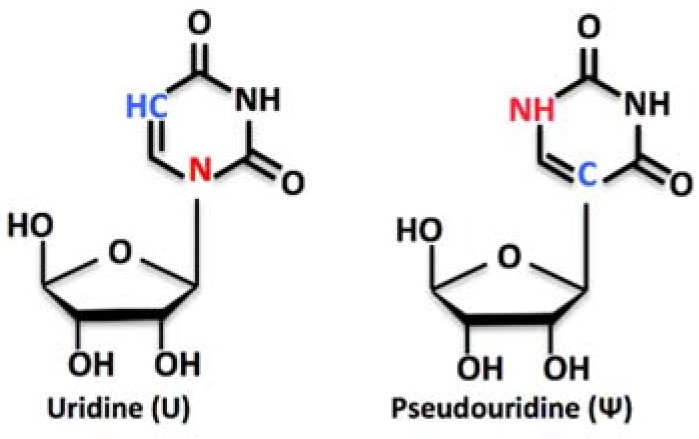
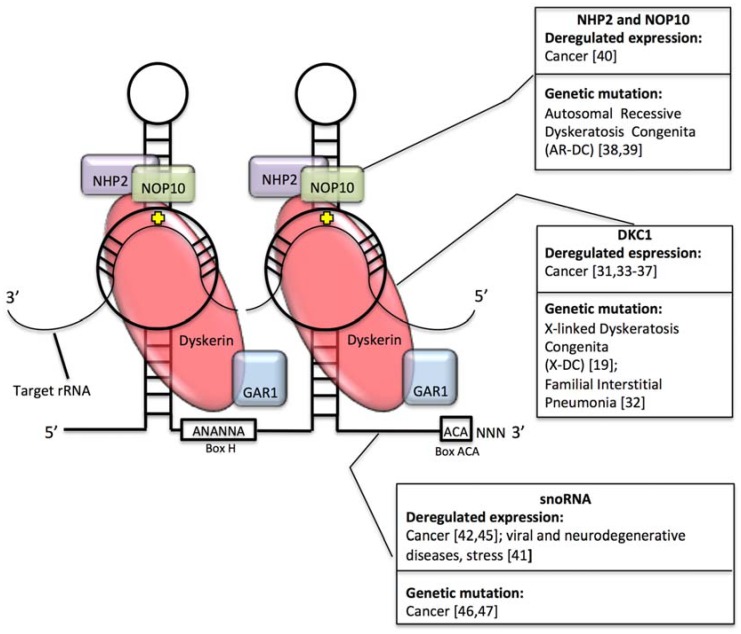
Ribosomal RNA (rRNA) is extensively edited through base methylation and acetylation, 2'-O-ribose methylation and uridine isomerization. In human rRNA, 95 uridines are predicted to by modified to pseudouridine by ribonucleoprotein complexes sharing four core proteins and differing for a RNA sequence guiding the complex to specific residues to be modified. Most pseudouridylation sites are placed within functionally important ribosomal domains and can influence ribosomal functional features. Information obtained so far only partially explained the degree of regulation and the consequences of pseudouridylation on ribosomal structure and function in different physiological and pathological conditions. This short review focuses on the available evidence in this topic, highlighting open questions in the field and perspectives that the development of emerging techniques is offering.
Keywords: X-linked dyskeratosis congenita; cancer; internal ribosome entry site-mediated translation; mRNA translation; pseudouridylation; rRNA; ribosome biogenesis; ribosome diversity; translational control.
Conflict of interest statement
The authors declare no conflict of interest.
Figures
References
-
- Machnicka M.A., Milanowska K., Osman Oglou O., Purta E., Kurkowska M., Olchowik A., Januszewski W., Kalinowski S., Dunin-Horkawicz S., Rother K.M., et al. MODOMICS: A database of RNA modification pathways—2013 update. Nucleic Acids Res. 2013;41:D262–D267. doi: 10.1093/nar/gks1007. - DOI - PMC - PubMed
-
- Ofengand J., Fournier M.J. The pseudouridine residues of rRNA: Number, location, biosynthesis, and function. In: Grosjean H., Benne R., editors. Modification and Editing of RNA. ASM Press; Washington, DC, USA: 1998. pp. 229–253.
Publication types
MeSH terms
Substances
LinkOut - more resources
Full Text Sources
Other Literature Sources
